As a Polyether TPU supplier, I often get asked about the fatigue properties of Polyether TPU. It’s a crucial aspect that many of our customers, especially those in industries like automotive, sports equipment, and industrial machinery, care about deeply. So, let’s dive right into what makes the fatigue properties of Polyether TPU stand out. Polyether TPU
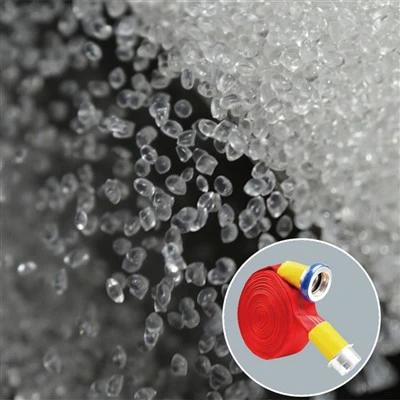
First off, what exactly is fatigue in the context of materials? Fatigue refers to the progressive and localized structural damage that occurs when a material is subjected to cyclic loading. In simpler terms, if you keep bending, stretching, or compressing a material over and over again, it will eventually start to wear out and might even break. This is where Polyether TPU really shines.
One of the key factors contributing to Polyether TPU’s excellent fatigue properties is its molecular structure. Polyether TPU is a thermoplastic polyurethane made with a polyether – based soft segment. This soft segment gives the material a high degree of flexibility and elasticity. When it comes to cyclic loading, this flexibility allows the material to deform under stress and then return to its original shape repeatedly without significant damage.
Let me give you an analogy. Think of a rubber band. You can stretch it hundreds of times, and it will go back to its normal size. Polyether TPU has a similar behavior, but on a more advanced and engineered level. The polyether soft segment acts like a molecular spring, absorbing the energy from the cyclic loading and releasing it as the material returns to its original form.
Another important aspect is the hard segment in Polyether TPU. The hard segment is responsible for providing strength and stability to the material. When combined with the soft segment, it creates a balanced structure. During cyclic loading, the hard segment helps to prevent the material from deforming permanently. It acts as a support system, keeping the molecular chains in place and ensuring that the material maintains its integrity over a large number of cycles.
In real – world applications, the fatigue resistance of Polyether TPU is highly valuable. For example, in the automotive industry, it’s used in parts like suspension bushings and vibration dampers. These parts are constantly exposed to cyclic stresses from the movement of the vehicle. Thanks to Polyether TPU’s fatigue properties, they can last a long time without failing. This not only reduces maintenance costs for the vehicle owners but also improves the overall safety and performance of the vehicle.
In the sports equipment industry, Polyether TPU is used in items such as shoe soles and protective gear. When you’re running, jumping, or playing sports, these products are under continuous stress. The ability of Polyether TPU to withstand repeated impacts and deformations means that the equipment will remain functional and provide the necessary support for a long period.
But how do we measure the fatigue properties of Polyether TPU? Well, there are several standard tests that we use. One common test is the flex fatigue test. In this test, a sample of the Polyether TPU is bent back and forth at a specific frequency and angle for a set number of cycles. The sample is then examined for signs of cracks or other damage. We can also use the compression set test, which measures how well the material recovers its shape after being compressed over a long period.
When we conduct these tests on our Polyether TPU products, we’re consistently impressed with the results. Our Polyether TPU can often withstand hundreds of thousands, if not millions, of cycles without significant degradation. This high level of fatigue resistance is one of the reasons why it’s such a popular choice in various industries.
However, it’s important to note that the fatigue properties of Polyether TPU can be affected by several factors. Temperature is one of the most significant factors. At high temperatures, the material becomes softer, which can reduce its fatigue resistance. On the other hand, at very low temperatures, the material can become brittle, also leading to a decrease in fatigue performance.
The type of loading also matters. Different types of cyclic loading, such as tension, compression, or shear, can have different effects on the material. For example, tensile loading might cause the material to stretch and thin out over time, while compressive loading could lead to buckling or permanent deformation if the stress is too high.
The environment is another factor. Exposure to chemicals, UV light, and humidity can all impact the fatigue properties of Polyether TPU. Chemicals can react with the material, changing its molecular structure and reducing its strength. UV light can break down the molecular chains, causing the material to become weaker. And high humidity can lead to hydrolysis, which can also degrade the material.
As a supplier, we’re constantly working on improving the fatigue properties of our Polyether TPU. We invest in research and development to find new ways to enhance the molecular structure of the material. We also develop special additives that can improve the material’s resistance to environmental factors.
For example, we’ve developed a UV – resistant additive that can be mixed with the Polyether TPU during the manufacturing process. This additive helps to protect the material from the harmful effects of UV light, increasing its fatigue life even when exposed to sunlight for long periods.
In addition, we offer customized solutions to meet the specific needs of our customers. If a customer has a particular application where the Polyether TPU will be exposed to extreme temperatures or a specific type of loading, we can adjust the formulation of the material to optimize its fatigue properties for that application.
So, if you’re in an industry that requires materials with excellent fatigue properties, Polyether TPU is definitely worth considering. Whether you’re in automotive, sports equipment, or any other field where cyclic loading is a concern, our Polyether TPU can provide the performance and durability you need.

If you’re interested in learning more about our Polyether TPU products or want to discuss your specific requirements, don’t hesitate to reach out. We’re here to help you find the best solution for your application and ensure that you get the most out of our materials.
Polyester Polyol BG Series References
- ASTM International standards on fatigue testing of polymers.
- Journal articles on the mechanical properties of thermoplastic polyurethanes.
Singbon New Materials(Shandong) Co., Ltd.
With abundant experience, we are one of the most reliable polyether TPU manufacturers and suppliers in China. We warmly welcome you to wholesale advanced polyether TPU at low price from our factory. If you have any enquiry about quotation and free sample, please feel free to email us.
Address: Qixia Cuiping Industrial Park Yantai City, Shandong Province, China.
E-mail: DBG1@singbonpu.com
WebSite: https://www.tpusingbon.com/
