Hey there, if you’re reading this, you’re probably deep in the weeds of trying to figure out how much those self-cleaning solar street lights actually cost—and let’s be real, it’s not like picking up a pack of light bulbs from the corner store. I’m Jake, and I run a small, no-BS self-cleaning solar street light supply company, so I deal with these numbers on a daily basis. No fancy corporate jargon here, just real talk about what goes into pricing, why it varies, and how to avoid getting ripped off. Self-cleaning Solar Street Light

First off, let’s get one thing straight: there’s no one-size-fits-all price. I’ve had guys call me asking “how much for a light?” and I just have to laugh a little because it’s like asking “how much for a car.” Are we talking a tiny commuter hatchback, a fully loaded SUV, or something for off-roading? Same with these solar lights—size, features, build quality, even where you’re putting them changes everything. But let’s break down the basics so you can stop guessing.
First, let’s talk about the core stuff that every self-cleaning solar street light has, and how each part affects the cost. The solar panel is the biggest hitter, right? If you’re in a sunny place like Arizona or Dubai, you can get away with a slightly smaller panel, but if you’re in cloudy Washington or the UK, you need a bigger, more efficient one. For a standard unit that can light up a 20-30 meter stretch of road all night (that’s the sweet spot for most residential streets and small commercial areas), a 60W monocrystalline panel is the go-to. Those run anywhere from $80 to $150, depending on quality. The cheap ones from overseas might be $50, but let’s be real—they’ll die in two years, and you’ll end up spending more on replacements. I’ve seen that happen so many times, I won’t even source panels from those fly-by-night factories anymore.
Then there’s the battery. This is another make-or-break part. Lithium-ion is the standard now—lead-acid is just outdated and not reliable. For that same 60W panel, you need a 10-15 kWh lithium battery to keep the light running 10-12 hours on a full charge, even if it’s a few cloudy days in a row. Those batteries run $100 to $200. Again, the difference is in the cycle life: good lithium batteries can last 5-7 years, while the cheap ones die after 2-3. I always tell clients, “We can put a $100 battery in and save you $20 upfront, but you’ll be replacing it twice before the good one dies.” Most people pick the good one after I lay that out.
Now the self-cleaning part—this is what makes these lights different from regular solar street lights, right? There are two main self-cleaning techs out there: hydrophobic nano-coatings and robotic wipers. The nano-coating is the cheaper option—$20 to $40 extra. It’s a thin layer that repels dust, rain washes it right off, so you don’t have to climb up to clean the panel every six months. That’s perfect for places with mild dust or rain, like most US cities. But if you’re in a super dusty area, like parts of Texas or the Middle East, a nano-coating might not cut it—dust builds up too thick, and rain can’t get it all off. Then you need a robotic wiper, which is $80 to $150 extra. It’s a small motor with a microfiber pad that wipes the panel when it gets too dirty, triggered by a light sensor or timer. The wipers are more reliable for harsh environments, but they do have moving parts, so a tiny bit more maintenance down the line, though way less than manually cleaning panels.
The light fixture itself matters too. LED is the only way to go now—they’re way more efficient than old fluorescent or halogen. A high-quality 30W LED can put out the same light as a 100W old bulb, and lasts 50,000+ hours. Those fixtures run $50 to $100. The cheap ones might be $30, but they flicker, don’t put out even light, and die in a year. I test every LED batch we get; last quarter, we had a bad shipment that failed our stress test, we sent it back no questions asked, even though it cost us a little extra. Reputation matters more than saving a buck.
Then there’s the pole. You can get steel poles, aluminum poles, even fiberglass, but steel is the most common because it’s durable and cheap. For a 6-meter pole (the standard height for street lights), a good steel pole runs $70 to $120. If you need a taller pole for a highway or a big parking lot, 8-10 meters, add another $30 to $50. Also, installation hardware—bolts, mounting brackets, that stuff is negligible, like $10 to $20 total.
Wait, but hold on—what about extra features? That’s where the price can jump even more. If you want motion sensors so the light dims to 20% when no one’s around, then spikes to 100% when a car or person walks by, that’s an extra $30 to $50. Motion sensors save a ton of energy, so they extend battery life and lower long-term costs, but they’re not for everyone. Some places want remote monitoring—so you can track battery levels, panel performance, even get alerts if the light is broken. That’s a $50 to $100 add-on. Perfect for city maintenance teams who have hundreds of lights, they can fix issues before people even call them. And if you need the light to work in super cold or super hot climates, like -20°F in Alaska or 120°F in Arizona, you have to get reinforced components, which adds $40 to $80.
So let’s add this all up for a standard unit, no fancy extra features, good quality parts: 60W panel ($100), battery ($150), nano self-cleaning coating ($30), LED fixture ($70), 6m steel pole ($90). That’s around $440 per unit. If you upgrade to a robotic wiper ($120) instead of the nano coating, that jumps to $530. If you add motion sensors, add $40, so $570. If you go remote monitoring, add another $70, so $640. That’s the baseline for a good, reliable unit from a legitimate supplier.
But wait—why would someone charge less? I’ve seen units online for $200, even $150. Let’s be real: that’s parts made from garbage. The panel is low-efficiency, maybe 15W instead of 60W, the battery is a cheap lead-acid that dies in a year, the LED is a cheap Chinese knockoff that’s dim and burns out fast, the self-cleaning coating is just a wax that wears off in a month. Those lights won’t last two years, and by the time you replace two or three, you’ve spent more than you would’ve on a good one upfront. I get calls from people all the time who bought those cheap lights, complaining they’re broken, and want to switch. I always tell them: you get what you pay for.
Now, what about bulk orders? That’s where the real savings kick in. If you’re ordering 100 lights for a new subdivision, or 500 for a city project, the price per unit drops. I usually give 10-15% off for orders over 50 units, 20% off for 200+, because bulk shipping, bulk parts, it’s cheaper for me too. A lot of first-time buyers don’t realize that—they think the price per unit is the same whether you buy one or 500, but it’s not. I’ve had a city council guy call me, say he got a quote from some supplier for $350 a unit, but only for 1000 units, and they wouldn’t give a sample. I told him, “Give me your address, I’ll send you a sample for $50, you can test it for a month, if you like it, we work out the bulk price.” That’s the kind of supplier I am—no pressure, no hidden fees.
Another big thing: installation costs. Wait, I’ve been talking about the light itself, but you can’t just plop a pole in the ground, right? Digging the hole, pouring concrete, running wiring (though solar lights don’t need grid wiring, but you still need to set the pole). Installation runs anywhere from $100 to $300 per unit, depending on how easy the terrain is. If it’s flat, paved ground, it’s cheaper; if it’s hilly, rocky, or you have to get permits, that adds more. A lot of suppliers will quote you a “turnkey” price that includes installation, so make sure you’re getting that in writing. I always break it down for clients: light cost, installation cost, any extra fees, no surprises.
Wait, let’s also talk about long-term costs, because that’s part of the “value” of these lights, not just the upfront price. Solar street lights save you thousands on electricity bills—grid-tied street lights cost like $50-$100 a year per unit in electricity, plus maintenance for regular bulbs, climbing to clean panels, replacing parts. A self-cleaning solar light? Almost zero electricity cost, and maintenance is way lower. The nano-coating means you don’t have to clean panels for years, the robotic wiper only needs a checkup once a year, the LED lasts 50,000 hours, so you’re not replacing bulbs every year. I calculate for clients: a $500 unit will pay for itself in 3-5 years, and then you get 10+ years of free light. The cheap $200 unit? It’ll die in 2 years, cost you $200 to replace, plus whatever installation, so you’re actually losing money in the long run.
Now, what about special cases? Let’s say you need a light for a remote area, like a hiking trail or a farm, where there’s no way to get power. You might need a bigger panel, 100W, and a bigger battery, 20 kWh, so that’s $600-$800 per unit, plus maybe a solar-powered charger for emergency vehicles if it’s a trail. Or if you’re putting lights in a historic district, you can’t have a generic steel pole, you need a decorative black or bronze pole, that adds $50-$100 per unit. I did a project last year for a small town in New England that wanted historic-style lights, custom poles, robotic wipers, motion sensors, and the total came out to around $950 per unit, but they loved how they looked, and they knew they’d last.
I get it, price is a big factor. When I first started this business, I was tempted to undercut the big guys, sell cheap lights to make a quick buck. But after three years, I’ve built a list of repeat customers—small towns, construction companies, subdivision builders—who come back because my lights work, my customer service is good, and I don’t gouge people. Last month, a guy who built a 40-home subdivision called me, said his previous supplier’s lights died 6 months after installation, he wanted 20 lights from me. I gave him a good bulk price, threw in a year of free maintenance checks, and he referred three other builders right after that. That’s how this works, man—word of mouth, not fake reviews or sky-high sales pitches.
So let’s recap, to make this easy for you:
- Basic, reliable self-cleaning solar street light (nano coating, no extras): $400-$500 per unit
- Mid-tier, robotic wiper, basic extras like motion sensors: $500-$700 per unit
- Custom or heavy-duty (remote areas, harsh climates, decorative poles): $700-$1000+ per unit
- Bulk orders get 10-20% off, samples available if you want to test before buying
And don’t forget: installation is separate, usually $100-$300 per unit, and always get a written quote with no hidden fees.
If you’re shopping around, ask the supplier some questions: What’s the warranty on the panel, battery, and light? (I offer 5 years on panels, 3 years on batteries, 2 years on parts—any less is a red flag.) What’s the cycle life of the battery? How bright is the LED in lumens? (You want at least 3000 lumens for residential streets, more for highways.) What kind of self-cleaning tech is it, and does it work in your local climate?
I get so many calls from people who’ve been burned by suppliers who said “self-cleaning” but it just doesn’t work. Last year, a guy from Phoenix called me, said he bought lights with nano coating, but the dust was so thick they didn’t work, so he needed robotic wipers. I got him set up, and he’s been happy ever since. That’s the stuff I care about—making sure the light does what it’s supposed to, no matter where you are.
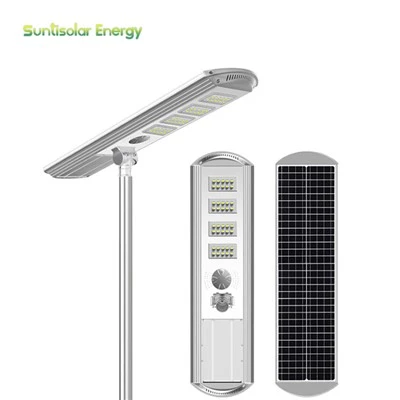
At the end of the day, a self-cleaning solar street light is an investment, not a purchase. You want something that’s gonna work for 10+ years, not something you have to replace every two. I’ve seen clients go the cheap route, regret it, spend more in the long run, and then come to me for the good stuff. So if you’re tired of dealing with broken lights, high electricity bills, or suppliers who don’t answer their phones when something goes wrong, hit me up. We can chat about your project, figure out what size and features you need, get you a fair, transparent quote, and even send a sample if you want to test. No pressure, no fine print, just a solid light that works.
High Way All In One Solar Street Light References
- International Energy Agency. (2022). Solar Street Light Market Report: Global Trends and Projections.
- North American Electric Reliability Corporation. (2021). Off-Grid Solar System Performance and Longevity Guidelines.
- Lighting Facts. (2023). LED Street Light Efficiency and Lifecycle Analysis.
- Solar Energy Industries Association. (2022). Self-Cleaning Solar Technology: Applications and Durability.
- Municipal Electric Association. (2021). Cost-Benefit Analysis of Solar Street Lighting for Urban and Rural Infrastructure.
Yantai Xutai New Energy Technology Co., Ltd.
Yantai Xutai New Energy Technology Co., Ltd. is one of the most professional self-cleaning solar street light manufacturers and suppliers in China. With a professional production team, we are able to meet the needs of the majority of our customers. Please rest assured to buy premium self-cleaning solar street light made in China here from our factory.
Address: No.229, Tongshinan Road, Zhifu District, Yantai City, Shandong Province, China
E-mail: Joe.chu@suntisolar.com
WebSite: https://www.suntisolar.com/
