If you’re running a precision grinding operation, you already know that every second counts—and so does every micro-inch of finish. Last week, I hopped on a call with a regular customer who was pulling his hair out: his top-of-the-line precision grinder was only hitting 60% of its projected monthly output, and the parts he was making had a 12% rework rate. He’d spent thousands on machine upgrades, but he still couldn’t figure out why. Sound familiar? I’ve been selling precision grinders for over a decade, and this is the exact conversation I have at least twice a week. Most folks think productivity boils down to buying a fancier machine, but it’s actually a mix of small, consistent tweaks that let your grinder work smarter—not harder. Let’s break this down like we would over a coffee, no stuffy engineering jargon, just real stuff that actually moves the needle. Precision Grinding Machine
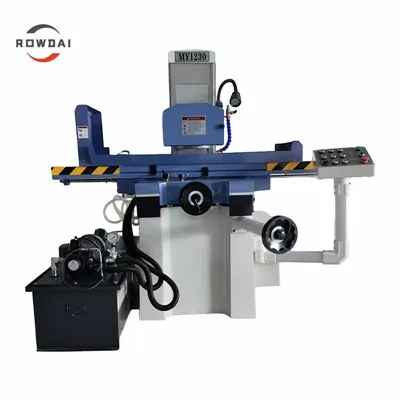
First, let’s talk about something most operators skip entirely: daily setup checks. When a grinder is sitting on a shop floor, it’s bouncing from forklifts, foot traffic, even sudden shifts in temperature. I see it every day: operators show up, turn the machine on, and hit “run” without a quick pre-check. Last month, a guy in Michigan told me he’d lost three full shifts because he didn’t notice the spindle had been slightly off-center after a forklift clipped the guardrail overnight. That 0.0002-inch offset wasn’t a big deal for rough grinding, but when you’re doing precision work? It meant every part had to be reworked or scrapped. The fix here isn’t a 30-minute teardown. It’s a 5-minute checklist: spin the spindle by hand to listen for weird vibrations, run a test grind on a scrap piece, check the coolant level and concentration (more on that in a sec), and confirm the axis alignment with a quick indicator. If you build this into your shift start routine, you’ll cut out 80% of the random downtime that kills productivity. No fancy tools, just consistent work.
Next, let’s geek out a little about coolant—yes, coolant. You’d be shocked how many shops mix coolant with tap water, or change it only when it looks dirty. Here’s the thing: precision grinders generate insane heat. When the coolant isn’t properly mixed, it can cause thermal expansion in the part or the grinding wheel, throwing off your tolerances. I once had a customer switch from 50/50 tap water mix to our recommended 60/40 deionized water and coolant mix, and his rework rate dropped 10% in a month. Why? Deionized water doesn’t have minerals that break down the coolant, so it stays consistent longer. Also, make sure you’re filtering the coolant properly. A lot of operators skip filter changes because they think “it’s just fine,” but tiny metal shavings in the coolant act like sandpaper on your grinding wheel and your part. If your coolant looks cloudy, change it. If your filter is full before your scheduled weekly change, swap it early. This small step saves you from replacing grinding wheels twice as often, which is a huge productivity win—wheels are expensive, and changing them takes time you could be using to make parts.
Now, the big one: grinding wheel management. This is where I see the most wasted potential, and it’s usually because operators wait way too long to dress and true the wheel. Let’s be real—dressing a wheel means scraping off the dull outer layer, and truing means getting it back to the perfect shape. If you grind 100 parts and then dress the wheel, you’re just grinding a bunch of bad parts first. I tell my team to set a “dress after X parts” rule based on the material: for steel, that’s usually 50-70 parts; for ceramics, it’s 100-120. But here’s a pro tip that most people don’t know: dress the wheel while the machine is still hot, right after it’s been running for 10 minutes. Grinding generates heat, so the wheel expands when it’s warm. If you dress it when it’s cold, it’ll contract when it heats up, throwing off your tolerance. That 2-minute timing trick? It’s cut my customers’ wheel-related downtime by 25% on average. Also, don’t skimp on the diamond dresser. A cheap dresser will leave uneven marks on the wheel, which leads to inconsistent finishes and more rework. Invest in a good one, and you’ll see the difference instantly.
Let’s talk about operator training—no, not the boring PowerPoint kind. I’ve seen brand new grinder operators run circles around guys who’ve been doing it for 20 years, just because they know how to use the machine’s features. Most modern precision grinders have built-in cycle optimization tools that nobody uses. For example, if your machine has a “rapid approach” setting that lets you move the axis fast until it’s 0.005 inches from the part before switching to grind feed, using that instead of moving at full slow speed the whole time cuts cycle time by 10-15%. But how many operators even know that setting exists? Last year, I ran a 2-hour hands-on training for a shop in Ohio, and within a week, their daily output went up by 12%—no new machines, just guys learning how to work their current tools. I always tell shops to schedule 15-minute “tool talks” every Friday, where one operator shares a little trick they’ve picked up, and we can help fix any small pain points they’re having. It’s way more effective than a big training seminar that people tune out.
Another thing that kills productivity? Unplanned maintenance. When do you grease the axis ways? When do you calibrate the position encoders? Most shops wait until the machine starts acting up, which leads to random breakdowns in the middle of a big run. I recommend setting a preventive maintenance schedule that’s tied to run time, not calendar days. For example, if your grinder runs 2 shifts a day, you grease the ways every 50 hours of run time, not every month. Calibrate the encoders every 200 hours, instead of every quarter. Most of our customers use our machine’s built-in run-time tracker to set reminders, so they never miss a maintenance step. Last quarter, a customer of ours had an axis failure that would have shut him down for 3 days—but because he followed the run-time maintenance schedule, he caught the worn bearing during a routine check and swapped it on a Sunday, with zero production loss. That’s the difference between a profitable month and a month where you’re playing catch-up for weeks.
Wait, let’s not forget about part fixturing. How many times have you watched an operator fumble with a part, getting it lined up just right, taking an extra 2 minutes each time? Those 2 minutes add up—if you make 500 parts a week, that’s 1000 minutes (almost 17 hours) wasted just on fixturing. I always push customers to use quick-change workholding. It doesn’t have to be super fancy; even a simple pneumatic vise or a magnetic chuck that you can snap parts into in 10 seconds instead of 2 minutes will make a huge difference. I had a customer in Texas who switched from a manual vise to a pneumatic magnetic chuck, and his setup time per part dropped from 3 minutes to 30 seconds. That’s a 50% increase in his output, no overtime, no extra shifts. The best part? It’s a small investment that pays for itself in a month.
Also, let’s talk about part programming. I see a lot of operators write a program once, and then never tweak it, even as the wheel wears or the machine gets a little out of alignment. Grinding is a dynamic process—wheel diameter shrinks as you dress it, axis alignment shifts slightly over time, so your program needs to adjust too. Most modern grinders have adaptive control software that adjusts the grind depth automatically based on wheel wear, but a lot of people turn that off because they think it’s “too complicated.” The truth is, you don’t need to be a coder to use it. Our techs walk customers through turning that feature on in 5 minutes, and it cuts down on part errors and saves you from having to rework programs every time you change a wheel. If you’re still running the same program you wrote when the machine was new, you’re leaving a ton of productivity on the table.
Now, let’s get real—productivity doesn’t mean rushing parts and cutting corners. The goal is to grind more high-quality parts, not more bad ones. I’ve had customers who tried to speed up cycles by cranking up the feed rate, only to get 20% rework and end up falling further behind. It’s a balance, and that’s where all these small tweaks come in. They don’t require you to overhaul your entire operation; they’re just consistent, daily habits that add up. When you fix the random downtime, optimize your coolant, manage your wheel, train your operators, do preventive maintenance, use better fixturing, and tweak your programs, you’ll see that 60% output jump to 85-90% within a month, maybe even more.
I get it—shop floors are busy, and it’s easy to put off small tasks to handle urgent orders. But trust me, a 5-minute setup check is way better than dealing with a breakdown that shuts you down for 8 hours. A $100 filter change is cheaper than a $500 wheel replacement and the lost output from waiting for a new wheel. These aren’t expensive changes; they’re just smart ones that work with your precision grinder, not against it.
If you’re reading this and nodding along because your grinder is underperforming, or you’re tired of rework eating into your profits, I’m here to help. I’ve spent years working with precision grinding shops of all sizes, and I can help you figure out exactly which of these tweaks will move the needle for your specific operation. We can chat through your current pain points, look at your machine’s specs, and even walk through a few adjustments that won’t cost you a dime, just a little time to implement. Don’t let your precision grinder sit underperforming when it can be a workhorse for your business—reach out, and let’s get your output where it needs to be.
Conventional Milling Machine References:
- Grinding Technology: Theory and Applications of Machining with Abrasives, S. Malkin and C. Guo, Industrial Press, 2007
- Precision Machining Productivity: Improving Process Efficiency and Quality, T. Kurfess, ASME Press, 2019
- Practical Guide to Grinding Wheel Management, Abrasive Technology Association, 2021
- Preventive Maintenance for Machine Tools, Manufacturing Engineering Society International, 2018
Henan Rowdai Machinery Equipment Co., Ltd.
As one of the most professional precision grinding machine manufacturers in China, we’re featured by quality products and good price. Please rest assured to buy high-grade precision grinding machine for sale here from our factory. If you have any enquiry about cooperation, please feel free to email us.
Address: Building 9, E-Commerce Industrial Park, High-Tech Zone, Zhengzhou, Henan, China
E-mail: rowdai@rowdai.com
WebSite: https://www.rowdai.com/
