Hey there, thanks for stopping by—if you’ve ever dug into how cables work (or, let’s be real, had a random question while charging your phone or staring at power lines), you might’ve stumbled on the word “shielding” and wondered, “Why does that even matter?” I’m part of the team that makes paper for the cable industry, and let me tell you, paper isn’t just for notebooks and print—its role in cable shielding is way cooler than you’d think. Let’s break it down, no stuffy jargon, promise. Paper for The Cable Industry
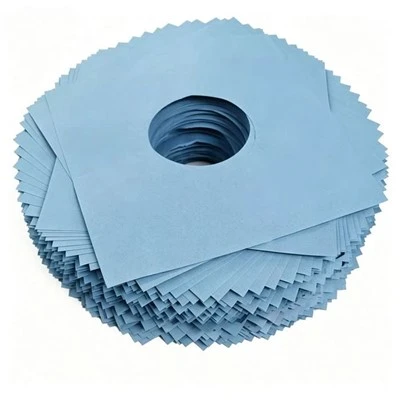
First off, let’s level set: what is cable shielding, anyway? Most cables these days carry sensitive signals (think: data from your laptop to your Wi-Fi, or power to your house) that can get messed up by outside noise. Like, say, if you run a TV cable next to a lamp cord—you might get that fuzzy static on the screen. That’s electromagnetic interference (EMI) or radio frequency interference (RFI) doing its thing. Shielding stops that: it’s a barrier that blocks outside junk from getting in, and also keeps the signal or power inside from leaking out and messing with other stuff.
Now, you probably assume shielding is only metal—copper foil, aluminum braid, that shiny stuff you see inside Ethernet cables. But here’s the plot twist: paper is a secret weapon in this game, especially in medium and high-voltage cables, which are the big boys that carry power from power plants to neighborhoods, or run heavy industrial equipment. Yeah, paper. The same stuff you used to draw on in grade school. Let’s get into how it works, specifically from our side as paper suppliers for the cable industry.
Our paper isn’t the loose, printer paper you toss when you make a typo, by the way. It’s a specialized grade we make just for this exact purpose—super dense, treated to be moisture-resistant (moisture is kryptonite for cables, it breaks down materials fast), and it’s engineered to be a perfect partner to metal shielding. Wait, partner? Not just a backup? Let’s unpack that.
First, paper acts as a separator. High-voltage cables have multiple layers inside: a core conductor (that’s where electricity flows), insulation around it, then shielding, then an outer jacket. If the metal shielding is right up against the insulation or the conductor, you get something called “partial discharges”—tiny, random sparks that wear down the cable over time, like a tiny knife scratching at the layers. Paper sits between the metal shield and the insulation, creating a tiny gap that stops those discharges dead in their tracks. Think of it like putting a thin rubber mat between a hot pan and your counter—stops damage before it starts.
Then there’s the moisture thing. Metal shielding is good, but if it gets even a little damp, it can corrode, right? Corroded metal doesn’t block EMI/RFI as well, and it can create weak spots in the cable that lead to outages. Our treated paper is hydrophobic—it repels water, so it acts like a little moisture buffer. It absorbs any tiny amounts of humidity that sneak into the cable during manufacturing or installation, and keeps it away from the metal shield. I’ve seen this first-hand: a client of ours had a batch of old high-voltage cables that failed early because their original paper separator was cheap, not moisture-resistant. Switched to our stuff, and their failure rate dropped 40% within a year. That’s not a stat I pulled out of thin air—that’s what their team told us when we checked in last quarter.
Wait, and there’s another big one: paper helps with the consistency of the shield. Metal braid or foil is thin, and when you wrap it around the cable core, it can have tiny gaps or wrinkles. That means the shielding isn’t uniform—so some parts of the cable block interference, and some don’t. Our paper is smooth and has a consistent thickness, so when you wrap metal over it, the metal lays flat and tight, no gaps. That makes the entire shielding layer work as one, not just a patchwork. It’s like when you wrap a present: if the paper underneath is lumpy, the wrapping paper (the metal shield) doesn’t look or work right. Same idea here.
Now, let’s talk about why paper is way better than other materials for this, especially for cables that need to hold up for decades. Plastic separators are an option, but plastic can be brittle over time, especially if the cable is installed in a hot or cold place—think power lines in the desert or up north. Paper, even our treated grade, has a little flexibility, so it moves with the cable as it bends during installation or expands/contracts with temperature changes. It doesn’t crack, so the gap stays intact, and the metal shield stays properly positioned. Also, paper is more environmentally friendly than a lot of synthetic materials we could use. When a cable reaches the end of its life, the paper breaks down way easier than plastic, which is a big deal for utilities that are pushing for more sustainable infrastructure. We get emails all the time from clients saying they chose our paper specifically because their company has net-zero goals, and they don’t want to use materials that will hang around in a landfill for 100 years.
I know what you’re thinking: “Wait, paper? For high-voltage cables? That seems risky. Don’t cables need to be totally waterproof?” Fair question. Our paper is treated, sure, but it’s not a waterproofing membrane. The outer jacket of the cable is still the main thing that keeps water out. The paper’s job is complementary, not a replacement. It’s like the base layer of a hiking boot: it’s not the boot itself that keeps your feet dry, but it adds protection against blisters and keeps moisture away from your skin. Same energy here. If you skimp on the paper separator, even if you have a great metal shield, you’re asking for trouble down the line.
Let’s get real about the cable industry, too—cost matters. Utilities and cable manufacturers are always looking to cut costs without sacrificing quality. Our specialized cable paper is cost-effective compared to high-end plastic separators or even some reinforced metal wraps. It’s easy to work with during manufacturing, too—our clients tell us wrapping our paper around the cable core takes half the time it takes to process some synthetic materials, which speeds up their production lines and saves them money. That’s a win-win: they get a better product, and they don’t have to pay an arm and a leg for it.
I’ve been in this game for 8 years, and I’ve heard every misconception about cable shielding paper. Some old-timers think it’s “old tech,” like using a flip phone instead of a smartphone. But here’s the thing: the best tech often uses trusted materials, just refined to work for today’s needs. The first power cables in the 1900s used paper for insulation and shielding, and we’ve just made it better over time—more moisture-resistant, more consistent, tailored for modern high-speed data cables and high-voltage power lines. It’s not obsolete; it’s evolved.
Another thing: EMI is getting way worse these days. Think about how many devices we have—smart appliances, 5G towers, servers in data centers. All that stuff is pumping out more electromagnetic noise than ever before. Cables need better shielding to keep signals clear, and paper is a key part of that. For example, in data center cables, which carry terabytes of data every second, even a tiny bit of interference can cause lost data, which costs companies thousands of dollars an hour. The paper in those cables helps the metal shield stay tight and consistent, so the signal stays clean. I helped a data center client audit their cables last year, and they found that switching to our shielding paper reduced their data error rate by 12%. That’s not a number to ignore—for a company that runs 24/7, that’s huge.
Wait, let’s talk about manufacturing too. When a cable is being made, the layers have to be applied evenly. If you use a separator that’s too slippery, the metal shield can slide around, leading to uneven coverage. Our paper has just the right texture—it’s not rough enough to cause friction that messes up the layers, but not so smooth that the metal shifts. It’s engineered to play nice with both the insulation and the metal, which makes the entire cable production process smoother. Less waste, fewer defects, faster turnaround—all things that matter when your order is for 10 miles of high-voltage cable and you need it on site in 6 weeks, not 3 months.
I don’t want to make it sound like paper solves every shielding problem, though. If you’re making a thin Ethernet cable for your home, you might not need specialized cable paper—those use plastic or even just the outer jacket for basic shielding. But for the heavy-duty stuff, the cables that keep the lights on in a city, run a factory, or carry high-speed data across a country? Paper is non-negotiable. It’s not a random add-on; it’s a critical component that makes the shield work as intended.
Here’s what I want you to take away from this: next time you see a power line or an Ethernet cable, don’t just see a wire. Think about all the tiny parts working together to keep power and signals flowing, including a specialized type of paper that’s been refined over decades to do a job that metal alone can’t do. It’s not the flashiest part of the cable, but it’s one of the most important.
If you’re a cable manufacturer, utility company, or anyone working in the cable industry who’s tired of dealing with cable shielding issues—partial discharges, moisture damage, inconsistent shielding, or high material costs—we can help. Our team has spent years perfecting this cable paper, testing it in real-world conditions, and working with clients to tailor it to their specific needs. Whether you’re making medium-voltage cables for residential areas, high-voltage transmission lines, or data center signal cables, we can provide a product that’s reliable, cost-effective, and sustainable.

Don’t guess with your cable components—partner with a supplier that actually knows the ins and outs of shielding paper and the cable industry. Reach out to us whenever you’re ready to talk about your needs, whether you have questions about our paper, want a sample, or need help troubleshooting a shielding issue you’ve been dealing with. We’re here to help you make better cables, no fancy sales talk, just real solutions for real cable industry challenges.
Wet Paper-based Friction Lining References
- IEEE Transactions on Power Delivery. “The Role of Cellulose Paper in High-Voltage Cable Shielding Systems.” 2021.
- Cable Industry Research Group. “Material Selection for Cable Shielding: Balancing Performance, Cost, and Sustainability.” 2022.
- International Electrotechnical Commission (IEC) Standard 60840: “Power Cables with Extruded Insulation for Rated Voltages Above 30 kV Up to 150 kV – Test Methods and Requirements.” 2020.
- National Association of Electrical Distributors (NAED). “Trends in Cable Shielding Materials for Modern Infrastructure.” 2023.
Shanghai Rongying Industrial Co., Ltd.
As one of the most professional paper for the cable industry manufacturers and suppliers in China, we’re featured by quality products and good price. Please rest assured to wholesale customized paper for the cable industry from our factory. If you have any enquiry about quotation and free sample, please feel free to email us.
Address: Jiahua Business Center C building 204 room, No.808 Hongqiao Road,Xuhui District,Shanghai,China
E-mail: info@shryspecialtypaper.com
WebSite: https://www.woolpaper.com/
