If you’ve ever stood near a power substation on a quiet evening and noticed a faint, high-pitched hum or wondered why smart meters sometimes glitch when new equipment is installed nearby, you’ve probably brushed up against electromagnetic interference—more commonly called EMI. As someone who’s spent 12 years as an instrument transformer supplier, I get asked about this all the time. Clients don’t just want to know what EMI is; they want to know how it ties to the device we make, why it matters, and how our products solve the very problems EMI causes. Let’s break this down without the textbook jargon, because at the end of the day, EMI isn’t just a technical footnote—it’s a headache that costs industrial and utility teams time, money, and reliability. Instrument Transformer
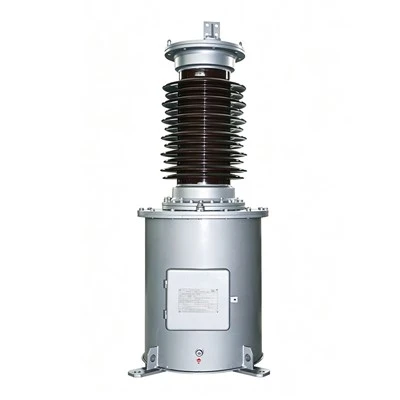
First, let’s ground this in what instrument transformers actually do, because you can’t understand their EMI without knowing their core job. We don’t make big power lines or circuit breakers. We make voltage transformers (VTs) and current transformers (CTs), and our whole reason for existing is simple: high-voltage power lines carry hundreds of thousands of volts that would fry any monitoring or protection device, and our CTs take that massive current and scale it down to a safe, usable 5 amps or 1 amp for meters, relays, and control systems. VTs do the same for voltage, stepping hundreds of kV down to 120V or 240V that small devices can handle. That scaling means instrument transformers are the critical middlemen between high-risk grid power and the delicate electronics that keep the grid running. If their signals are corrupted by EMI, the whole system breaks.
Now, what is EMI in this specific context? It’s any electromagnetic signal that’s not part of the intended power or data flow, and that disrupts, degrades, or distorts signals traveling through or generated by instrument transformers. There are two broad types, and both are relevant to our products: conducted EMI and radiated EMI. Conducted EMI travels through physical wires, usually in the same power cables that connect CTs and VTs to monitoring equipment. A common example here is a nearby variable frequency drive (VFD) on a factory floor—VFDs adjust motor speed by switching current on and off thousands of times a second, creating high-frequency noise that travels down the same conduit as our CT’s current signal. That noise makes its way to the motor’s controller, which misreads the current and either runs too fast, too slow, or shuts down entirely, causing production lines to idle for hours.
Radiated EMI is the other type, and it’s even more noticeable in outdoor substations. All current-carrying equipment, including our CTs and VTs, emits small electromagnetic fields. When these fields overlap, especially in cluttered substations with dozens of transformers, capacitors, and switching gear, the resulting signal gets picked up by our devices’ internal windings. This is especially tricky because modern grids rely more on digital relays and smart sensors that are far more sensitive to high-frequency noise than old analog equipment. Last year, I worked with a Midwest utility team that had three separate relay misoperations in a single month—turns out, the noise from an adjacent bank of VTs was radiating into their new line of digital current meters, causing them to trip breakers for no reason. They thought it was a bad meter or a wiring error, but it was plain old radiated EMI from neighboring equipment.
Here’s the part most people don’t talk about: not all EMI comes from external sources. Instrument transformers can actually generate their own EMI too, a phenomenon called internal self-EMI. How does that happen? Our devices have copper windings stacked tightly around iron cores, and when high current or voltage runs through those windings, the iron core can experience something called core saturation. That’s when the core gets so magnetized it can’t hold any more flux, leading to distortion in the output signal. That distortion isn’t just inaccurate—it’s high-frequency noise that leaks back into the grid or onto the signal lines, causing interference with other nearby devices. For example, a CT with an undersized core might saturate during a short circuit event, sending a distorted current signal to a relay that’s supposed to trip during a fault. The relay sees a messed-up signal, delays tripping, and that small fault turns into a full blackout. We see this happen when cheap, underrated CTs are installed to save a few bucks upfront—they don’t handle fault currents well, generate their own EMI, and cause way more expensive problems down the line.
So why does this matter for instrument transformer suppliers like us? Because our products aren’t just components—they’re the front line of defense against EMI, and against the problems EMI causes. A lot of our competitors cut corners on EMI mitigation to lower costs, which is bad for everyone. Last quarter, we lost a client to a company that offered 20% cheaper CTs, only for the client to call us two months later because the new CTs were causing persistent EMI in their substation, leading to 12 unplanned outages. Those outages cost them over $150,000 in lost revenue, and they had to replace the cheap CTs anyway. That’s not a unique story—EMI isn’t a problem that goes away on its own, and it hits hardest when you don’t plan for it upfront.
Let’s get into the specifics of how our products are designed to handle EMI, because that’s what sets us apart. First, we test every single CT and VT at our in-house EMI lab to make sure they meet or exceed international standards like IEC 61869, which lays out exact requirements for low- and high-voltage instrument transformers. That means we test for both conducted and radiated EMI, simulating everything from nearby VFDs to lightning strikes to the dense EMI environment of a large substation. We use a few key design choices to beat EMI: for one, we shield our windings with layered conductive materials that block radiated noise from getting in or out. We also size our cores properly for the maximum current they’ll ever see, so they never saturate even during a short circuit, eliminating that internal self-EMI. And we terminate all signal wires with shielded cables and grounding systems that isolate our CT/VT signals from other power lines, cutting down on conducted EMI.
Another thing we do that most suppliers skip is tailored EMI analysis for each project. It’s one thing to build a transformer that meets generic standards; it’s another to build one that works in your specific environment. If you’re in a busy industrial plant with a lot of VFDs, we’ll recommend a CT with a specialized high-frequency shield that targets that exact type of noise. If you’re a utility building a new substation next to a hospital, we’ll adjust our VT designs to meet stricter EMI limits so they don’t interfere with life support equipment. A few years back, we worked with a team of renewable energy developers building a large solar farm in Arizona, where the inverters generate extremely high-frequency EMI that’s worse than traditional grid equipment. We designed custom VTs and CTs for them that reduced radiated EMI by 92% compared to standard models, and they haven’t had a single EMI-related outage in three years. That’s the kind of solution that makes our work matter, not just checking boxes on a spec sheet.
I’ll be honest—EMI isn’t a problem that goes away as grids get smarter. In fact, it’s getting worse. Modern grids are full of more electronics: smart meters, IoT sensors, EV chargers, and variable frequency drives are everywhere, all generating their own EMI and making the overall electrical environment noisier. The International Energy Agency estimates that global demand for instrument transformers will grow by 4.5% a year through 2030, and 60% of those new units will need specialized EMI mitigation to work in mixed, high-noise environments. That means teams can’t just pick any off-the-shelf transformer anymore—they need a supplier who understands EMI, who can test products under real-world conditions, and who will tailor solutions to their specific site.
Let me wrap this up with a note that’s rooted in 12 years of talking to utility and industrial teams: EMI isn’t something you can ignore. It doesn’t announce itself loudly half the time—it shows up as a random glitch in a meter, an unplanned trip, or a month of missed revenue that you can’t trace back to anything else. As an instrument transformer supplier, we don’t just sell devices that step down voltage or current. We sell reliability, and reliability starts with beating the noise that breaks systems. If you’re dealing with EMI-related issues in your current equipment, or if you’re planning a new project and want to make sure your transformers won’t be the cause of problems down the line, we’re here to work with you. We do free, no-obligation site assessments to map your EMI environment, test your existing equipment, and design solutions that fit your needs, not just our inventory.
If you’re ready to stop dealing with EMI headaches and build a more reliable power system, reach out to our team to start a conversation about your project. We don’t do one-size-fits-all solutions, and we don’t cut corners on quality to save a dollar. Let’s work together to make sure your equipment works, reliably, no matter what the electrical environment throws at it.
Load Switch References
IEC 61869-1: Instrument transformers – Part 1: General requirements, International Electrotechnical Commission, Geneva, 2020
NIST Handbook 133: Checking the Net Content of Packaged Goods, National Institute of Standards and Technology, Gaithersburg, 2022
Power Quality and Electromagnetic Compatibility in Smart Grids, IEEE Press, Piscataway, 2019
Zhongtai Electric Power Technology Co., Ltd.
With abundant experience, we are one of the most professional instrument transformer manufacturers and suppliers in China. We warmly welcome you to wholesale bulk customized instrument transformer from our factory. If you have any enquiry about quotation, please feel free to email us.
Address: High-tech Industrial Park, Chongren County, Fuzhou City, Jiangxi Province (No. 261 Yingbin Avenue)
E-mail: info@zhongtaielectric.com
WebSite: https://www.zhongtaipower.com/
