If you’ve ever stood next to a massive grain silo on a farm, a feed mill, or a food processing plant, you might’ve just thought “that’s a big metal box for storing stuff”—but let me tell you, as a silo supplier who’s been in this game for over a decade, those things are way more than just storage. People ask me all the time how we make sure the product going in is exactly the same when it comes out, especially when you’re talking about tons of grain, animal feed, or even specialty ingredients like flour or pet food. Silos don’t just hold product; they’re a core part of keeping that product safe, consistent, and integrity intact. And no, it’s not just “thick walls” (though that helps a lot). Let me break down how we actually pull this off, from the design we build into every silo to the daily checks we push for. Silo
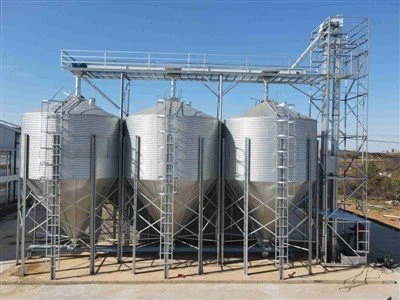
First off, let’s get one thing straight: product integrity isn’t just about not spilling grain. It’s about making sure you don’t get cross-contaminated between batches, that moisture doesn’t sneak in and turn your feed moldy, that pests don’t move in and chew through your whole stock, and that when a farmer or plant manager pulls a sample from the bottom of the silo, it’s the same as the sample they sent up on a truck last week. Cross-contamination is the biggest headache here, right? Say you just stored non-GMO soybeans and next week you need to put conventional corn in the same silo—you can’t have even a speck of corn ending up in the non-GMO batch. That’s where our silo design starts to shine. We don’t do one-size-fits-all, for starters. If a client needs to run high-value non-GMO grains, we spec out smaller diameter discharge cones, smooth interior panels, and dedicated sweep augers that never get near old product. No rough edges where grain can get stuck and rot, no dead spots where two different batches mix accidentally. I had a client last year who thought their old silo was ruined because they cross-contaminated organic wheat with conventional rye—they fixed their problem by switching to our segregated silo system, and now they run three different organic grains in the same silo without a single complaint.
Then there’s moisture and temperature control. That’s the silent killer of product integrity. Grain that’s too wet heats up, molds, and loses nutritional value within weeks. Feed that’s stored at the wrong temp gets bacteria growth, and before you know it, animals are getting sick. Our silos come with two key features we’ve refined over years of trial and error: aeration systems and temperature sensors. Wait, not just basic aeration—we use variable-speed fans that adjust based on real-time data from sensors spaced every 10 feet up the silo wall. If the sensor at the 20-foot mark detects a 2-degree spike in temperature, the fan kicks on low to pull cool, dry air through the grain without blowing it around too hard. We’ve had clients tell us they’ve cut grain spoilage by 80% just by upgrading to our aeration system—old setups were either blowing too much air (wasting electricity) or not enough (letting hot spots form). Temperature sensors also give us peace of mind during long storage, like if a farmer stores wheat over winter. Last year, a farmer in Iowa had a cold snap that dropped temps to -10°F; our sensors kept track, and when the temp rose a little in the lower cone (because it’s closer to the ground), the aeration system kicked on just enough to prevent condensation at the bottom. That’s the kind of thing nobody thinks about until their whole batch is ruined.
Pest control is another big one, and people forget that silos are perfect hiding spots for rodents, birds, and even insects like weevils. I once had a client with a 50,000-bushel silo that got weevils—they had to dump half the grain because they couldn’t get rid of them. Our silos are designed with pest-proof features, but not the clunky, old-school kind that look like something out of a horror movie. We seal all the seams with food-grade silicone that’s impervious to rodent teeth and weevil burrowing. The discharge gates have rubber seals that lock tight when closed, so mice can’t squeeze through. We also add optional mesh screens on the vent pipes that let air flow but keep bugs out—way better than old wooden vent covers that fall apart after a year. For clients who need extra protection, we can add a gentle heat treatment system that runs on low when the silo’s not in use, hot enough to kill any pest eggs but not hot enough to damage the product. No chemicals, no weird residues, just peace of mind.
Wait, let’s talk about batch management too, because that’s not just equipment—it’s how we set our silos up to keep track of what’s going where. A lot of old silo setups mix batches because they don’t have clear separation lines, but we integrate our silos with basic inventory tracking software that lets clients label each batch with everything from harvest date to moisture content to GMO status. The discharge augers have counters that track how much product is pulled out, so you never accidentally empty half a previous batch into a new one. I recommend clients use a “first in, first out” (FIFO) system, and our silo design supports that perfectly—because the discharge cone is angled just right, every particle of product moves down at the same rate, so old product doesn’t get stuck at the top. No waiting around for months to pull the first grain you stored, and no old, stale product sitting at the bottom rotting. I’ve seen other silo manufacturers cut corners on cone angle, leading to product bridging (that’s when a chunk of grain gets stuck like a bridge across the cone, and you can’t get it out) — but that’s a huge integrity issue, because the product that’s stuck there can mold or grow pests for months without anyone knowing. We test every silo’s discharge angle in our warehouse before we even ship it, so bridging is almost non-existent for our clients.
Now, let’s be real—silos aren’t maintenance-free, right? Even the best design means nothing if you don’t take care of them. That’s why we don’t just sell you a silo and ghost you. We offer quarterly check-up services, where our techs go out and calibrate the temperature sensors, tighten any loose seals, and test the aeration system. We also provide a free app for all our clients that sends alerts if something’s off—like if the temperature spikes, or if a sensor stops working. A couple months ago, a client got an alert at 2 a.m. that their aeration fan had stopped, so they could go check it before any hot spots developed. That saved them an estimated $15,000 in spoiled feed. Old-school silo suppliers would make you call them for every little thing, but we get that time is money, so we make this easy.
I know a lot of people think “silo” just means something big and generic, but after 12 years in this industry, I’ve seen how a poorly built silo can ruin a whole year’s work for a farmer or a food processor. Product integrity isn’t just a buzzword—it’s the difference between getting a good grade on your grain at market, and losing thousands of dollars because your batch was contaminated. It’s the difference between keeping your livestock healthy and having to call the vet because their feed had mold. It’s the difference between a food brand keeping its reputation, and having to recall products because of cross-contamination.
At the end of the day, every silo we build is tailored to what the client needs. You don’t need the same silo for corn as you do for organic oats, or for pet food as you do for livestock feed. We work with you to figure out what your biggest risks are—cross-contamination, moisture, pests, whatever—and build the silo that addresses those specific issues. No upselling unnecessary features, no cutting corners on the stuff that actually matters. I’ve been in the field so many times, standing next to a client’s old failing silo, and seeing how our setup has completely changed their operations. That’s the part I love most about this job.
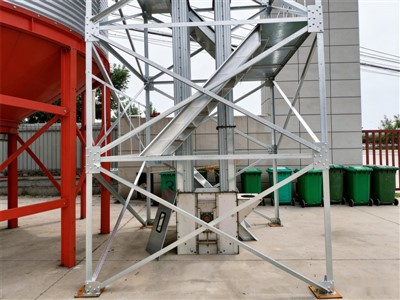
If you’re dealing with product integrity issues right now—spoiled batches, cross-contamination, pests ruining your stock—or you just want to upgrade your current silo setup to be more reliable, reach out to our team. We can walk you through what you need, no pressure, no jargon, just straight talk about how to keep your product safe, consistent, and worth every dollar you put into it. Let’s make sure your silo works for you, not against you.
Silo References:
- American Society of Agricultural and Biological Engineers. (2020). Standard S352.1: Storage and Handling of Grains and Oilseeds.
- Food and Agriculture Organization of the United Nations. (2019). Silo Design and Operation for Food Safety.
- Journal of Stored Products Research. (2021). “Silo Aeration Systems: Impacts on Grain Quality and Storage Integrity.” Vol. 92.
Henan Oumu Intelligent Storage Equipment Co., Ltd.
As one of the most professional silo manufacturers and suppliers in China, we’re featured by quality products and good service. Please rest assured to buy customized silo made in China here from our factory. For quotation, contact us now.
Address: No. 681, Xinzhong Avenue, Hongqi District, Xinxiang City, Henan Province
E-mail: luna@oumu-silo.com
WebSite: https://www.oumu-silo.com/
