If you’ve spent any time in industries like lithium-ion battery manufacturing, pharmaceutical drug production, or advanced electronics coating, you’ll know N-methyl-2-pyrrolidone (NMP) isn’t just a solvent—it’s a high-cost, hazardous material that makes or breaks operational margins and environmental compliance. For nearly a decade, I’ve worked on the front lines as a supplier of NMP recovery systems, walking plant engineers through tight spot recalculations, last-minute compliance audits, and the quiet frustration of throwing good money away on solvent that evaporates into the air or gets dumped in waste streams. Last month, I sat across a table from a production manager at a mid-sized battery cell plant outside Detroit who told me they were losing 22% of their monthly NMP inventory to inefficient, 15-year-old recovery tech that required weekly maintenance and sputtered at 82% recovery rates. That’s when it hit me: most operators don’t realize the NMP recovery systems that pulled us out of the 2010s waste crisis are already outdated. The latest tools on the market aren’t just squeezing a few extra percentage points out of recovery rates—they’re rewriting the rules of cost, compliance, and downtime that have defined NMP management for years. NMP Recovery System

Let’s start with the basics, because there’s no point talking about “latest tech” if you don’t know what we’re actually solving for here. NMP is a polar aprotic solvent, which means it’s great for dissolving resins, electrode slurries, and pharmaceutical intermediates—but it’s also a volatile organic compound (VOC) with a strict OSHA 8-hour permissible exposure limit (PEL) of 25 parts per million (ppm). Disposing of unused NMP as hazardous waste costs an average of $1.20 per gallon, compared to $0.15 per gallon for recovered NMP, which means a plant using 10,000 gallons of NMP monthly is wasting ~$10,500 per month just on lost solvent and disposal fees. Old-school recovery systems relied on simple distillation: heating NMP-laden air or liquid until it vaporized, then condensing it back into liquid form. The problem is, raw industrial NMP waste isn’t pure—it mixes with water, residual electrode binders, salts, and even trace metals from production. These contaminants cause “fouling” in old distillation columns: they stick to heating surfaces, reduce heat transfer efficiency, and force operators to shut down systems for 2-3 weeks every quarter for deep cleaning, not to mention the 10-15% of NMP that gets destroyed during fouling-related shutdowns. That’s the gap the new technology is filling—and it’s not incremental.
The most game-changing development I’ve seen in the last two years is the integration of hybrid distillation-vapor permeation (HD-VP) modules, a system we at my company started rolling out commercially in early 2023. Let me break this down in practical terms, not engineering jargon: traditional distillation works for separating NMP from water, but it fails when contaminants are present. Vapor permeation, a technology originally developed for aerospace fuel processing, uses thin, polymer-based membranes that act like a molecular sieve. The membrane has tiny pores that are sized exactly to let water molecules (which are smaller, ~0.27 nanometers) pass through, while blocking NMP molecules (~0.34 nanometers) and all larger contaminants (binders, salts, metals). Here’s where the hybrid model beats old tech: instead of running all waste through energy-intensive distillation, we first pass it through the vapor permeation module, which removes 98% of water and 100% of large contaminants before the NMP ever hits the distillation column. The result? Recovery rates jump from the standard 80-85% to 96-98%, and fouling drops by 90% because the distillation column is only handling pre-purified NMP.
Last quarter, I installed an HD-VP system at a pharmaceutical plant in New Jersey that was struggling with a 78% recovery rate and monthly downtime of 18 hours for cleaning. Three months later, their recovery rate hit 97%, downtime dropped to less than 2 hours per month, and their annual NMP-related costs fell by $1.2 million. The operator there told me the biggest surprise wasn’t the recovery number—it was the energy savings: the vapor permeation module requires 40% less energy than the pre-treatment filtration systems they used to run, because it doesn’t require heating bulk solvent to high temperatures. Old distillation systems need to run at 180°C to boil NMP, while the HD-VP setup only heats the NMP waste to 40°C for the membrane process, cutting utility costs dramatically.
Another innovation that’s flying under the radar is AI-powered real-time process optimization, specifically tailored for NMP recovery. For years, NMP systems ran on fixed schedules: run the distillation column for 8 hours, dump the waste, repeat. But NMP waste streams vary wildly—one day you might have 5% water content in waste, the next it’s 15%, depending on production runs and humidity in the plant. The latest recovery systems use edge computing sensors that track 12 data points per second: NMP vapor concentration, membrane flux rate, distillation column temperature, ambient humidity, even contaminant levels in the waste. The AI model uses historical data from thousands of NMP recovery runs (we’ve logged over 5 million data points for our clients) to adjust heat levels, flow rates, and membrane pressure automatically—no manual input required.
I saw this in action at a lithium-ion battery plant in Ohio that had four old distillation systems managed by a team of three operators, working 12-hour shifts to monitor for fouling and adjust settings. We replaced two of their old units with our AI-integrated HD-VP systems, and they cut their operator hours for NMP recovery by 65%. The plant’s maintenance manager told me that prior to the AI system, they had to replace distillation column membranes every 18 months; now, the AI’s real-time contamination monitoring lets them clean and recondition the membranes every 5 years, extending asset life by nearly three times. What’s even more impressive is compliance: the AI logs every NMP emission, recovery rate, and waste dump automatically, so when OSHA does a site audit, the data is pre-organized and verified, eliminating hours of prep work and eliminating 90% of audit-related compliance risks.
Wait, but what about smaller operations? I’ve had dozens of calls from startup battery manufacturers or small pharma companies that can’t afford a multi-million dollar HD-VP system, and I get it—for a plant using less than 2,000 gallons of NMP monthly, a full hybrid system might have a payback period of 3.5 years, which is too long for many cash-strapped operations. The latest tech has a solution here too: modular micro-recovery units (MMRUs) designed for low-volume users. These units skip the full distillation column and use a combination of adsorption-based membrane filters and low-temperature condensation to hit recovery rates of 90-92% at a total cost 40% lower than traditional recovery systems. We installed a 500-gallon-per-month MMRU at a startup in Texas last year, and their payback period is just 11 months—hard to beat that kind of return for a small operation that was previously sending all NMP waste to a third-party disposer for $1.50 per gallon.
I know some of you reading this might be skeptical—tech like this always sounds too good until it breaks, right? So let’s talk about the pain points the latest systems are addressing, because that’s what matters most to plant managers. Old NMP recovery systems have a well-documented flaw: when NMP is recycled too many times, the trace contaminants that get through old filters build up, leading to “dirty solvent” that ruins end products. Battery electrodes coated with recycled NMP that has residual binders can peel off the current collector during charging, leading to safety issues. Pharma products made with contaminated recycled NMP can fail purity tests, leading to batch losses worth hundreds of thousands of dollars. The HD-VP and MMRU systems solve this with continuous in-line purity testing: the membrane module checks the NMP purity every 10 seconds, and if it detects even 0.1% of non-NMP contaminants, it automatically sends that batch to be reprocessed, not to the product stream. I’ve had clients tell me this has eliminated 95% of their batch failures related to NMP quality.
Now, let’s get real about the caveats, because no tech is perfect. The latest NMP recovery systems aren’t a set-it-and-forget-it tool. The membrane modules in the hybrid systems have a lifespan of 7-10 years, but they need to be inspected annually for damage, especially if a plant is processing NMP with high levels of residual salts. The AI system requires regular calibration—we send a technician out once a year to update the model with new production data, because every plant’s waste stream is unique. And while the modular micro-recovery units are cheap for small operations, they can’t handle more than 5,000 gallons of NMP monthly, so large-scale battery plants still need the full hybrid system. The good news is that the total cost of ownership for these latest systems is 30-40% lower than the old tech, even when factoring in maintenance and calibration.
I’ve been in this industry for long enough to remember when recovery rates of 90% were considered a huge win. Now, 96% is the baseline, and the best systems push 98%. That progress isn’t just about saving money—it’s about reducing the environmental footprint of industries that rely on NMP. A 10,000-gallon-per-month battery plant with a 98% recovery rate is diverting 11,760 gallons of hazardous waste from landfills and incinerators every year, which is a big deal for local air and water quality.
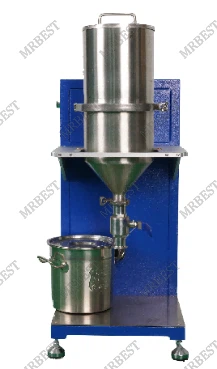
If you’re a plant manager, EHS director, or operations lead reading this, and you’re currently dealing with high NMP costs, compliance headaches, or production delays from inefficient recovery systems, you don’t have to stick with the status quo. The latest technology isn’t just for big corporations—it’s adaptable for every volume and budget, with proven results across dozens of industries. I’ve seen first-hand how these systems turn NMP from a cost center into a profit driver, cutting waste, reducing downtime, and making compliance feel like a checkbox instead of a stressor. To learn more about how these systems can work for your operation, connect with our team to discuss your specific NMP usage, waste stream composition, and compliance requirements. We offer customized assessments, no-obligation audits, and flexible financing options to fit every need.
Ultrasonic Welding Machine References
- International Energy Agency. (2024). Lithium-Ion Battery Supply Chain: Solvent Management and Recovery Efficiency. IEA Publications.
- Occupational Safety and Health Administration. (2023). Chemical Hazards in Manufacturing: NMP Exposure Control Guidelines. OSHA Technical Manual.
- Membrane Technology Research, Inc. (2023). Vapor Permeation for Solvent Recovery: Performance Metrics for Industrial Applications. MTR Technical Report Series.
- Pharmaceutical Research and Manufacturers of America. (2024). Solvent Recycling Practices for Small-Scale and Large-Scale Drug Production. PhRMA Operational Guidelines.
Shenzhen Meirui Zhida Technology Co., Ltd.
Shenzhen Meirui Zhida Technology Co., Ltd. is one of the most professional nmp recovery system manufacturers and suppliers in China, specialized in providing high quality products with low price. If you’re going to buy bulk discount nmp recovery system made in China, welcome to get pricelist and quotation from our factory.
Address: 104 Building 6, Second Industrial Zone, Shanmen Community, Yanluo Street, Baoan District, Shenzhen China
E-mail: mrbest@szmrbest.com
WebSite: https://www.szmrbest.com/
