As a cabinet LED driver supplier, I get this question A LOT: "Can I use my cabinet LED drivers in damp locations?" And honestly, it’s one that makes total sense when you think about where people actually install these things. I’ve walked into so many homes, cafes, small retail spaces, even gym locker rooms where cabinets with LED strips are right next to sinks, shower areas, or outdoor overhangs that get regular splashes. No one wants to rewire everything because they picked the wrong driver, right? Let’s break this down like I would with a regular customer—not a bunch of jargon that’ll make your eyes glaze over. Cabinet LED Driver
First, let’s get one thing straight: not all "damp locations" are the same. That’s the mistake a lot of suppliers and even some electricians make—they lump every slightly moist space into one category. A damp location isn’t a full-on swimming pool, obviously. It’s places where there’s exposure to moisture, but not direct immersion. Think under kitchen cabinets above a sink where steam from pots rises, bathroom medicine cabinet LED setups, or even a covered patio cabinet that gets raindrops occasionally. Contrast that with a wet location, which is things like the inside of a hot tub, outdoor fixtures fully exposed to rain, or splashes directly from a shower head. That’s a key distinction you need to know right off the bat.
Now, what makes a cabinet LED driver work (or not work) in these spaces? Drivers are the unsung heroes of any LED setup—they convert your wall’s AC power to the low DC power that LED strips need, and they stabilize voltage so your lights don’t flicker or burn out too fast. But their internal components? They’re little circuits with capacitors, resistors, and wiring that hate moisture. If water gets into the driver’s casing, it can cause short circuits, corrosion, or even electrical hazards. That’s why IP ratings matter here. Wait, IP rating—you’ve probably seen that number, but let’s translate it from geek-speak. The first digit is for solid dust protection, the second for water resistance.
A lot of standard cabinet LED drivers are IP20. That means they’re totally open to the air, only protected against fingers bigger than 12mm (so small kids don’t stick things in them). No water protection at all. You put an IP20 driver above a kitchen sink where steam is constantly going, or splashes from washing dishes, and over time, moisture will seep into the gaps. Even condensation from humidity can build up on the circuit board. I’ve had a customer tell me their kitchen LED strips died after three months, and when we took the driver out, there was a little bit of rust on the wires from the steam. That was an IP20 driver—totally wrong for the space.
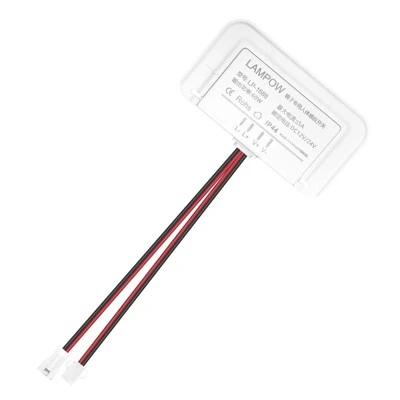
But here’s the good news: not all our drivers are IP20. We make cabinet LED drivers with IP44 ratings, which are the sweet spot for most damp locations. IP44 means they’re protected against solid objects bigger than 1mm (like tiny dust particles) and splashing water from any direction. So that’s perfect for above sinks, bathroom cabinets, or covered outdoor cabinets. They have a sealed casing—usually plastic or aluminum with gaskets around the edges—to keep out splashes and condensation. I installed a test unit in my own bathroom’s medicine cabinet last year, right next to the shower, and it’s still going strong after 18 months with no issues.
Wait, but can you go higher? IP65 is dust-tight and protected against low-pressure water jets. That’s overkill for most damp locations, but if you’re installing a cabinet on an uncovered porch that gets hit with heavy rain, or in a commercial kitchen where there’s regular hose-down cleaning, IP65 works too. The downside? They’re a tiny bit more expensive, and bulkier, so if you’re working with small under-cabinet spaces, you might not want that extra size. But for the right space, it’s worth it.
Another thing that’s often overlooked: installation. Even if your driver has the right IP rating, if you mount it wrong, it’s going to fail in a damp space. I see this all the time. A customer will mount an IP44 driver flat against the bottom of a cabinet, right above where water drips off a faucet. All the water that runs down the cabinet will pool on top of the driver, and even with the seal, it can seep in over time. The rule for damp locations: mount the driver horizontally, above any potential water splash points, with the cable entry pointing down. That way, any water that does hit it will run off the top, not pool on it. Also, make sure all your cable connections are sealed with heat shrink tubing or waterproof wire nuts if they’re inside the driver’s casing. I always tell customers: a good driver is only as good as how you install it.
Now, what about UL listings? That’s a big one for commercial spaces, and even a lot of residential electricians require it. A lot of cheap no-name drivers out there say they’re "damp-rated" but they don’t have the certification to back it up. When we test our cabinet LED drivers for damp locations, we get them UL-listed for damp use, which means they’ve gone through hours of testing in high humidity, simulated splashes, to make sure they don’t short out or become a fire hazard. Last quarter, we had a client who owns a chain of coffee shops—they needed drivers for under-cabinet lights above their espresso machines, where there’s constant steam and splashes from water. We recommended our UL-listed IP44 drivers, and they’ve had zero issues after a year of operation. Before that, they were using generic drivers that died every couple months.
Wait, but let’s address a common myth I hear all the time: "LEDs are low voltage, so they’re totally safe in damp spaces." That’s half-true. The LED strip itself is low voltage (usually 12V or 24V), but the driver is connecting to your 120V or 240V wall power. If the driver isn’t sealed, moisture can let that high voltage escape, which is a shock hazard. I’d never advise anyone to use an unprotected driver in a damp space, no matter how safe the LED strip is. That’s a risk you don’t want to take.
Another angle: longevity. A driver in a damp location with the wrong IP rating will fail much faster. Standard cabinet drivers have a lifespan of around 50,000 hours, but when exposed to constant moisture, that drops to 10,000 or even less. So even if you save a few bucks buying a cheap IP20 driver, you’ll end up replacing it way more often. Our IP44 drivers are rated for 50,000 hours in damp locations, same as standard drivers in dry spaces. That adds up to way less hassle and cost over time.
Let’s talk about specific use cases, because that’s what matters most. If you’re doing a residential kitchen, under-cabinet lights above a sink: go with IP44. If you’re a bathroom vanity cabinet with LED lights right above the mirror: IP44 works, but make sure it’s mounted where steam won’t pool (maybe in the attic space above the cabinet, not in the cabinet itself? Wait, no—some people prefer it inside, but if it’s inside, get a sealed driver). If you’re doing a covered outdoor cabinet for string lights or storage: IP44 is fine, but if it’s fully exposed to rain, go IP65. If you’re in a commercial space like a bar, where there’s constant washing of glassware and splashes on cabinets: IP65 is the way to go, because they can handle heavy splashes.
I should also mention something called "conformal coating." Some drivers have a thin protective layer on the circuit board that repels moisture, even if the casing isn’t fully sealed. That’s a good backup, but it’s not a replacement for a proper IP rating. Our damp-location drivers have both: a sealed casing plus a conformal coating on the circuit board, so double the protection. That’s why they hold up so well in tough spaces.
Wait, what about if you already installed a standard IP20 driver in a damp location? Can you do anything to fix it? If it’s just minor condensation, you can drill a tiny hole in the bottom of the driver casing to let moisture escape, but I wouldn’t recommend it long-term. The better move is to swap it out for a rated damp-location driver. I know switching parts is a hassle, but it’s way less than dealing with flickering lights, short circuits, or even an electrical issue.
Let me share a customer story that stuck with me. A guy named Mike reached out a few months ago, he was remodeling his basement bar. He had installed under-cabinet LED lights above his kegerator, and the standard drivers he bought were dying every 2 months. He thought he had bad LEDs, but when he called us, we realized the kegerator was constantly releasing cold air, which caused condensation to build up on the drivers. His original drivers were IP20, so they couldn’t handle the temperature swings and moisture. We sent him a couple of our IP44 damp-location drivers, and he texted me a photo last week saying they’ve been going strong for 6 months. That’s exactly the kind of problem we’re here to solve.
Now, I want to be clear: there are definitely cabinet LED drivers that can’t be used in damp locations—all the IP20 ones, basically. But that doesn’t mean every cabinet driver is off-limits. The key is knowing the difference between dry-location drivers and damp-location rated ones, and matching the driver’s IP rating to your specific space.
I get that it can be confusing, especially with all the numbers and ratings out there. That’s why we’re here—we don’t just sell drivers, we help people pick the right one for their project. Whether you’re a homeowner doing a small kitchen remodel, an electrician working on a commercial space, or a retail manager outfitting a store, we can walk you through what you need. No pressure, no confusing jargon, just straightforward advice.

If you’re not sure whether your space counts as damp, or you want to make sure you’re picking the right driver, just reach out. We can answer all your questions, help you check the specs, and get you the right part for the job. Don’t risk your lights or your safety using the wrong driver in a moist space. That’s a mistake we see way too often, and we’re here to help you avoid it.
Cabinet Sensor Switch References
- National Electrical Code (NEC) Article 410, Fixed Luminaires: Requirements for damp and wet locations, 2023 Edition
- International Electrotechnical Commission (IEC) Standard 60529, Degrees of Protection Provided by Enclosures (IP Code), 2013 Edition
- UL 8750, Standard for Safety for LED Power Supplies, Damp Location Rating, 2021 Edition
- Lighting Industry Association (LIA) Technical Note TN-08, LED Driver Installation in Damp Environments, 2022
Dongguan Lanbaoli Intelligent Technology Co., Ltd.
As one of the most professional cabinet led driver manufacturers and suppliers in China, our products have good reputation in the market. We warmly welcome you to buy durable cabinet led driver for sale here and get pricelist from our factory. Quality products and low price are available.
Address: 10th Floor, Building 32, Golden Town, No.7 Technology Avenue, Houjie Town, Dongguan City, Guangdong Province
E-mail: anna@lampow.cn
WebSite: https://www.lblsensors.com/
