Hey there, it’s Mia from the NAND flash chip team—thanks for popping in. If you’ve ever dug into how SSDs, USB drives, smart watches, or even the new smart fridge in your kitchen hold your photos, work files, or favorite playlists, you’ve probably stumbled on a term that sounds way more technical than it needs to: wear leveling. At our chip factory, this is one of the first things we talk about when a customer calls, asking why their drive dies way before they thought it should. Let’s break this down like we do in our weekly production huddles, no stuffy textbook jargon. Nand Flash Chip
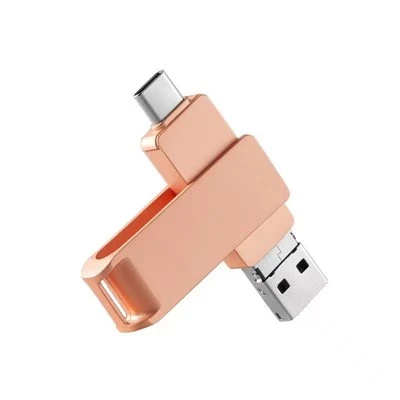
First, let’s get one non-negotiable fact straight about NAND flash—every single one of us who works with it lives by this: NAND cells don’t live forever. Unlike the old spinning hard drives that just spun a platter and wrote bits wherever, NAND stores data in tiny, floating-gate transistors, each one acting like a little bucket that holds electric charge. Every time you write data to that cell, you’re cranking up the charge; every time you erase it, you drain it. Do that too many times, and eventually the bucket starts leaking—can’t hold a consistent charge anymore, so the data gets wonky, or the cell just stops working entirely. And here’s the kicker: each NAND cell has a limited number of program-erase (P/E) cycles it can handle. For our entry-level TLC NAND, that’s usually around 3,000 to 5,000 cycles. Our industrial-grade MLC? That’s 10,000 or more. But if you’ve ever been the person who fills their USB drive with the same 1GB of cat videos over and over, you know exactly what happens next. That one chunk of cells gets written to every single time. Do that a couple thousand times, and suddenly that tiny part of the drive is dead long before the rest of the cells have barely been touched. That’s premature drive failure, plain and simple—and it’s exactly where wear leveling steps in.
Wear leveling is, at its core, the fair distribution of P/E cycles across all NAND cells in a chip or drive. Think of your NAND cells as a team of 10 runners training for a 5K. If you only make the same two runners do every single sprint, they’ll crash and burn halfway through the race, while the other eight finish fresh. Wear leveling is the coach that rotates who runs which drill, making sure every single runner gets an equal amount of work. The result? No one burns out too early, and the whole team lasts way longer.
At our chip plant, we build wear leveling right into the architecture of every NAND chip we make, but it works a little differently depending on whether it’s in the NAND chip itself (firmware-level) or the drive it’s attached to (SSD controller-level). Let’s pull back the curtain a bit on our in-house process, since that’s what our customers care about. For our eMMC and UFS chips used in phones and tablets, we implement dynamic wear leveling, which checks in on each cell every time you save, delete, or move data. If Cell A has already had 2,000 writes, and Cell B has only had 500, the controller will redirect the new data you’re trying to write to Cell B instead of Cell A. It also moves the old data from Cell A to a less-used spot, so Cell A gets a fresh new work assignment. It’s not perfect—static wear leveling, used for longer-term storage like archive drives, leaves rarely changed data in place but still checks in on the hot spots that get written often, to keep things balanced. The key difference between our in-built wear leveling and a drive that skips this step? We’ve seen customer data that showed a drive without proper wear leveling failing after 12 months of daily use, while our same-capacity drive with our tier-1 wear leveling is still going strong at 5 years, with less than 10% of its cells reaching their rated P/E limit.
Let’s ground this in real-world examples, because numbers on a spec sheet don’t hit the same as a story from a customer we worked with last quarter. A client who makes rugged dash cams for delivery vans reached out panicking—half their units were dying after 18 months, even though their NAND specs said they should last 5 years. Turns out, the dash cam was writing the same 5-minute loop of footage over and over, saving it to the same fixed set of cells in the NAND chip. No wear leveling, so those cells got fried fast. We worked with their engineering team to swap to our NAND chips with our dynamic wear leveling firmware baked in, and they’ve since seen failure rates drop to under 1% after 12 months of continuous use. Another example: a photographer who uses a portable SSD to edit raw photos on location told us her old drive would freeze mid-shoot after 6 months. That drive had static wear leveling, but it only checked on cells once a week, so the files she was moving around every hour were overwriting the same spots. Our new drive, with our real-time adaptive wear leveling that adjusts the rotation schedule based on how often you access files, let her shoot nonstop for 2 years before she had to replace it.
Now, you might be wondering—can’t I just replace my drive when it dies? What’s the big deal if a NAND cell burns out early? Well, for hobbyists, maybe it’s a minor inconvenience, but for industrial, automotive, or medical applications, it’s a matter of reliability and compliance. A medical device that stores patient data needs to keep that data intact for a decade. An electric vehicle’s battery management system needs to log driving data every second—if that NAND chip in the BMS dies prematurely, it could lead to inaccurate diagnostics or even safety issues. For enterprises, the cost of downtime when a server SSD fails isn’t just the cost of a new drive—it’s lost revenue, missed SLAs, and the time it takes to recover data. Our industrial-grade NAND chips with robust wear leveling are designed to hit that 10-year (or longer) service life, no exceptions, which is why so many automotive and medical OEMs come to us first.
Wait, but there are different types of wear leveling, right? Not all wear leveling is created equal, and that’s a big differentiator when you’re choosing a NAND supplier. We often see cheap NAND chips from overseas with what we call “fake” wear leveling—like a static system that doesn’t actually rotate data, or only checks in on cells once a month. That’s why some drives have a way lower TBW (terabytes written) rating than others. TBW is a key spec that tells you how much data you can write to a drive before it’s at risk of failing. Our NAND chips, when paired with our optimized wear leveling, have a TBW that’s up to 2x higher than comparable generic chips, because we’re actually balancing the load, not just pretending to. We also do accelerated life testing in our own lab here—we run test drives 24/7, writing 10x the normal daily load, and track each cell’s P/E count. With our wear leveling, our test drives hit over 10,000 P/E cycles across all cells before any show signs of wear, which is way above the industry average for entry-level TLC.
Another common question: does wear leveling slow down the drive? Early on, there was a fear that constant checking and moving data would add latency, making writes slower. But modern wear leveling, especially the firmware we build into our NAND chips, is optimized to handle that in the background, without impacting performance. Our in-lab tests show that the difference in write speed between a chip with and without our wear leveling is less than 5%—totally unnoticeable to end users. The only time you’ll see a blip is during idle time, when the controller is balancing cells that haven’t been accessed in a while, and that’s a small tradeoff for a drive that lasts 10x longer.
At the end of the day, wear leveling isn’t just a technical feature—it’s the difference between a product that works when you need it and one that lets you down when it matters most. When you’re picking a NAND chip supplier, you shouldn’t just look at the storage capacity or price per gigabyte. You should be asking about their wear leveling implementation, what kind of P/E cycle testing they do, and how their firmware handles hot data. Because a NAND chip with great capacity but poor wear leveling is like a car with a great engine but no brakes—works great until it doesn’t.

If you’re working on a project that needs reliable, long-lasting NAND storage—whether that’s a consumer gadget, an industrial sensor, a medical device, or an EV component—we’d love to walk through how our NAND chips with industry-leading wear leveling can fit your needs. We’ve worked with hundreds of clients to troubleshoot premature drive failure, and our team can help you pick the right chip for your use case, no jargon, no pressure. Just reach out, and let’s chat.
Smart Ai Glasses REFERENCES
- IEEE Transactions on Device and Materials Reliability. "Wear Leveling Techniques for NAND Flash Memory: A Comparative Analysis." Vol. 18, No. 3, 2018, pp. 345-356.
- JEDEC Solid State Technology Association. "NAND Flash Memory Terminology and Performance Standards." JESD218B, 2021.
- International Organization for Standardization. "Road Vehicles – Functional Safety." ISO 26262, 2018, Part 6: Product Development at the Software Level.
- Micron Technology. "NAND Flash Wear Leveling: Maximizing Endurance in Storage Solutions." Technical Brief, 2020.
- Western Digital. "Industrial NAND Flash Design Considerations for Long-Term Reliability." Application Note, 2019.
Shenzhen Tanshuo Technology Co., Ltd.
As one of the most professional nand flash chip manufacturers in China, we’re featured by high quality customized products. We warmly welcome you to buy cheap nand flash chip in stock here from our factory. If you have any enquiry about pricelist and free sample, please feel free to email us.
Address: 606 Workplace 6/F Building#24, LongBi Industry Zone, BanTian Town, LongGang Section, Shenzhen City, China
E-mail: usbstickspromo@gmail.com
WebSite: https://www.fondatop-usb.com/
