If you’ve ever stood inside a busy power plant, a sprawling manufacturing facility, or even a large apartment complex that keeps thousands of units running, you’ve relied on a quiet, unassuming piece of equipment that does most of the heavy lifting behind the scenes: high-voltage distribution cabinets. But not all high-voltage cabinets are built the same, and over the last decade, modular designs have shifted the way industrial and commercial teams approach power distribution. As a supplier who’s spent 12 years building and troubleshooting these systems, I’ve watched firsthand how modular high-voltage distribution cabinets solve problems old, fixed cabinets never could—and why so many operators are making the switch right now. Let’s break down what they are, how they work, and why they might be the right fit for your next project. High-Voltage Distribution Cabinet

First, let’s start with the basics to set a foundation. A standard high-voltage distribution cabinet (HVDC? No, wait—let’s clarify: high-voltage here refers to anything above 1kV, up to medium voltage ranges common in industrial use, usually 1kV to 35kV, per industry standards like IEC 62271, which governs high-voltage switchgear). Its core job is simple: take incoming bulk electrical power from a utility grid or on-site generator, split it into separate, manageable circuits, and route that power safely to individual loads—think factory assembly lines, office building wing circuits, or mining equipment. It also includes critical safety features: circuit breakers to stop overcurrent fires, insulation to prevent electrical arcing, and metering to track energy use in each segment.
Now, what makes a modular version different? Traditional fixed high-voltage cabinets are built as a single, integrated unit in a factory, then shipped fully assembled to a site. Modular cabinets, by contrast, are made of separate, self-contained modules—each housing one function: a circuit breaker, a busbar section, a metering unit, or a safety disconnect switch. These modules connect to a central frame or bus system on-site, rather than being welded or bolted permanently in the factory. That single design choice unlocks almost every benefit operators tell me they struggle with: flexibility, shorter installation times, easier maintenance, and lower long-term costs.
Let’s dive deeper into the components that make a modular cabinet work. Each module is tested individually before it ever leaves the factory, which cuts down on site errors. For example, a breaker module is pre-wired, calibrated, and tested to trip at exactly the amperage it’s designed for, so there’s no guesswork during assembly. The central bus system is a set of insulated copper bars that run the length of the cabinet frame, and each module plugs or bolts into this bus. Some systems even use quick-connect interfaces that eliminate the need for crimping or wiring on-site, which is a huge win for teams that work on tight deadlines. There’s also a common control panel that ties all the modules together, so operators can monitor power flow, reset breakers, and adjust settings from one interface, no matter how many modules they’ve added.
Now, let’s talk about why modular cabinets matter so much for today’s work sites. Ten years ago, when a factory planned to expand its production line, they’d have to shut down half their operations for two weeks while a crew installed a new fixed cabinet. With a modular system, a crew can add a new module in a single shift, often with only a small, temporary power disruption—or sometimes none at all, if they use hot-swappable modules, which allow you to replace or add parts without turning off the main power feed. That’s not just convenient; for a factory that makes consumer goods with tight delivery timelines, avoiding even a day of downtime can save tens of thousands of dollars.
I see this play out all the time with my clients. Last year, a food processing plant in the Midwest came to me with a problem: they’d just bought three new freeze-drying units, each drawing 500 amps of power, and their existing fixed cabinet only had two open circuit bays. A fixed cabinet would have meant pulling the old unit out, rerouting wiring, and shutting down production for 10 days. We worked with their electrical team to add two new breaker modules to their existing modular cabinet, all while the plant stayed in operation. The total installation time was 12 hours, and they were back to full production the same day. That’s the kind of agility you can’t get with a traditional design.
Maintenance is another big one. With a fixed cabinet, if a breaker goes bad, you have to shut down the entire cabinet (or at least a large section of it) to access the old breaker, remove it, and install a new one, all while sourcing a replacement part that might not be in stock. Modular cabinets let you pull a faulty module in 10 minutes, swap it for a pre-tested spare module you keep on hand, and get back to work. No rewiring, no custom fitting, no waiting for parts to be drilled or adjusted. For sites that run 24/7—hospitals, data centers, chemical plants—this reduces unplanned downtime to almost zero.
Wait, but there’s a misconception I run into all the time: some people think modular cabinets are less safe than fixed ones. Let’s set that straight. Every modular cabinet we build meets the same international safety standards as fixed units: IEC 62271-200 for high-voltage switchgear, NEC Article 450 for electrical installations in the U.S., and CSA standards for Canadian sites. The modules undergo the same arc flash testing, insulation resistance testing, and temperature testing as fixed cabinets before they ship. In fact, because each module is tested individually, there’s a lower chance of wiring errors on-site, which are one of the top causes of safety incidents in electrical cabinets. We also include interlock systems: if a module is not properly seated, the cabinet can’t be turned on, which prevents accidental arcing or power surges.
Another advantage is scalability, especially for businesses that don’t know exactly how their power needs will grow. A new warehouse might start with 5 circuits, but plan to add 3 more in two years. With a fixed cabinet, you have to overbuild from day one, spending money on extra bays you’ll never use for years. With a modular cabinet, you can start with the modules you need today, add more as you go, and only pay for what you use. That upfront cost is usually lower too, because you don’t have to pay for a large, assembled unit before you need it. For small to mid-sized businesses, that’s a huge financial win.
Of course, modular cabinets aren’t the right fit for every job. If you need a custom, one-of-a-kind cabinet for a unique industrial process—say, a specialized mining operation with very specific power requirements—a fixed unit might still be better. Or if you’re working in a space with extremely limited floor space, a fixed cabinet can be built to fit an exact footprint that a modular system can’t match. But for 70% of the projects I work on—manufacturing facilities, commercial office buildings, renewable energy sites like wind farms or solar farms, and municipal water treatment plants—modular cabinets check every box.
Let’s talk about renewable energy, because that’s a fast-growing area where modular cabinets are making a big impact. Solar farms and wind turbines generate power in variable amounts, and the distribution system has to adjust as energy output changes. Modular cabinets let operators add or remove circuit modules as solar panels come online or go offline for maintenance, without disrupting the rest of the grid connection. A few months ago, a solar farm in Arizona reached out because they needed to add 10 new string inverters to their existing cabinet, and they couldn’t afford to shut down the farm during peak sunlight hours. We added 10 new inverter modules to their modular cabinet over a weekend, and they didn’t lose a single watt of production. That’s the kind of application where modular design excels.
Now, as someone who’s been in this industry for years, I’ll be honest: when modular high-voltage cabinets first came out, there were some growing pains. Early designs had flimsy connectors that worked themselves loose, or modules that didn’t fit right on-site. But over the last 15 years, manufacturers like us have refined the design. We use heavy-duty, silver-plated connectors that resist corrosion and carry high amperage without overheating. The modules are precision-machined to fit the central bus system with a tolerance of less than a millimeter, so there’s no play or risk of poor connections. We also include remote monitoring capabilities in most modern modular cabinets, so operators can check power flow, breaker status, and temperature from a phone or laptop, which adds another layer of safety and convenience.
If you’re still using fixed high-voltage distribution cabinets, you might be dealing with hidden costs you don’t even notice. The time your team spends waiting for parts during maintenance. The lost revenue from unplanned downtime when a breaker fails. The extra upfront cost of overbuilding to account for future expansion. Modular cabinets eliminate most of those hidden costs. For example, a client I had in Texas switched from fixed to modular cabinets three years ago, and they calculated that their annual maintenance costs dropped by 30%, and their unplanned downtime fell by 80%. That’s not a small number—over a 10-year period, that’s hundreds of thousands of dollars back in their pocket.
So, how do you choose the right modular high-voltage distribution cabinet for your needs? First, work with a supplier who understands your specific industry. A cabinet that works for a solar farm won’t work the same way for a hospital, which requires 100% uptime for critical care equipment. You want a supplier that will assess your current power needs, your projected growth, and your site constraints, then design a system that fits, rather than pushing a one-size-fits-all model.
I’ve spent years building these cabinets, and every day I hear from clients who are tired of dealing with the limitations of traditional designs. They’re tired of waiting weeks for installation, of paying for parts they don’t need yet, of shutting down operations for maintenance. Modular high-voltage distribution cabinets aren’t just a new trend—they’re a solution built for the way businesses operate now, where agility, reliability, and cost efficiency matter more than ever.
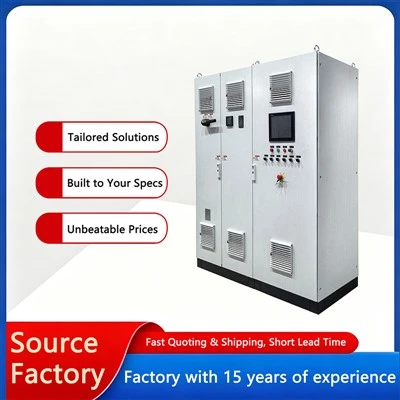
If you’re ready to learn more about how a modular high-voltage distribution cabinet could work for your project, I’m here to help. Whether you’re planning a new installation, looking to upgrade an old system, or just have questions about safety, scalability, or maintenance, my team and I can walk you through your options and help you find the right solution. Reach out to us to discuss your needs in detail, and we’ll work with you to build a cabinet that fits your budget and your operations.
Power Distribution Cabinet References
IEC 62271-1:2017, High-voltage switchgear and controlgear – Part 1: Common specifications
National Electrical Code (NEC) Article 450, 2023 Edition, Electrical Installations Over 1000V
IEEE Std C37.20.2-2019, Standard for Metal-Clad Switchgear
Hangzhou Dagang Electric Co., Ltd.
As one of the most experienced high-voltage distribution cabinet manufacturers in China, our products have good reputation in the market. We warmly welcome you to wholesale high quality high-voltage distribution cabinet for sale here from our factory. If you have any enquiry about cooperation, please feel free to email us.
Address: 1st Floor, Building 11, No.10 Lingang Road, Renhe Subdistrict, Yuhang District, Hangzhou City
E-mail: fang@dagangelectric.com
WebSite: https://www.hzdg-electric.com/
