Hey there, I’m Jake, and if you’re here, chances are you’re either shopping for a reaming machine to up your shop’s precision game or you’ve got a random question bouncing around: just how big of a hole can these things actually make? As someone who’s been selling reaming machines for over a decade—seen everything from tiny prototype parts to massive industrial components—I get why this question matters. Too many folks come in thinking reamers are only for small, tight-tolerance holes, and they leave surprised at what our machines can pull off. Let’s break this down straight, no corporate jargon, no fluff. Reaming Machine

First off, let’s clear up a common mix-up: reaming vs. drilling. Drilling’s what you use to carve out a rough, hole-shaped void in metal, plastic, whatever—you’re okay with a little extra material left to clean up. Reaming’s the finishing step, right? You take that drilled hole and get it to exact size, super smooth walls, tight roundness. But that doesn’t mean reaming’s limited to tiny holes. The max diameter of a ream from a reaming machine depends on three big factors: the machine’s specs, the reamer itself, and your work setup. Let’s dive into each one, because none of this works in a vacuum.
Starting with the machine. Not all reaming machines are created equal. The tiny benchtop units you see for small machine shops, the ones that sit on a workbench for making watch parts or phone components? Their max hole diameter tops out around 1-2 inches (25-50mm), maybe a little more if you’re pushing it, but not reliably. Why? Their spindle isn’t built to hold a big reamer straight—wobble kills precision. If you’re trying to ream a 3-inch hole on a benchtop model, you’ll end up with a hole that’s oval, has rough walls, and doesn’t hit your tolerance. That’s a waste of time and material.
But move up to a mid-sized production reaming machine, the ones we sell a ton for automotive parts, appliance manufacturing, that’s where the numbers get bigger. These machines have heavy-duty spindles with tight runout (runout is just how much the spindle wiggles when it spins—we aim for less than 0.001 inches for most precision work), rigid beds to hold your part steady, and enough power to turn a big reamer without bogging down. For these, max diameter typically ranges from 4 inches (100mm) up to 8 inches (200mm) depending on the model. We recently sold a mid-sized unit to a company making large hydraulic pump housings, and they were reaming 6-inch holes like it was nothing. That’s way bigger than most guys assume reamers can handle.
Now the heavy hitters: industrial reaming machines for aerospace, heavy equipment, energy parts. These are the floor-standing behemoths, sometimes paired with CNC controls, built to take on big, bulky parts. Their max hole diameter? We’ve got models that can hit 12 inches (300mm) — and even bigger, if you need it. Last year we did a custom build for a wind turbine manufacturer that needed to ream a 15-inch hole in a cast iron gear housing. It took a little tweaking (we had to reinforce the spindle a bit and use a custom straight-flute reamer instead of the standard spiral), but it worked like a charm. That’s not some outlier—when you’re dealing with industrial-grade machines, size stops being a hard limit and starts being more about what you’re willing to invest in for rigidity.
But wait—before you get too excited, the reamer itself is make or break here. Even if your machine can handle a 10-inch hole, you can’t just pick any random reamer off the shelf. Reamers come in two main types for hole size: solid reamers and inserted-blade reamers. Solid reamers are what you use for small to medium holes—they’re one piece of tool steel, machined to size. The biggest solid reamers you can buy are usually around 6 inches (150mm) in diameter. Anything bigger than that, and a solid reamer would be too heavy, too expensive, and likely to snap under the pressure of cutting. That’s when you use inserted-blade reamers, which have replaceable carbide blades clamped into a steel body. These are the workhorses for big holes—they’re lighter, cheaper to maintain, and can go as big as 16 inches (400mm) or more.
The blade count on the reamer matters too. For smaller holes (under 2 inches), you can get away with 4-6 flutes. But for big holes, you want more flutes—8, 10, even 12. More flutes mean more cutting edges, which spreads out the load so your machine doesn’t have to work as hard, and it gives you a smoother finish. We once had a guy try to ream an 8-inch hole with a 4-flute reamer, and he burned up the spindle motor in 10 minutes. Lesson learned: match your reamer’s flute count to your hole size.
Next up, how you set up the job. This is the part most people overlook, but it’s make or break for hitting that max hole size. First, your part has to be rigid. If your workpiece is thin or clamped loosely, it’ll vibrate when the reamer spins, leading to an uneven hole. We had a customer a few months back who was trying to ream a 5-inch hole in a 1-inch aluminum plate—his vise only clamped the edge, so the plate bowed a little, and he ended up with a hole that was 0.015 inches off round. Once he added a backup support under the plate, it was perfect.
Then there’s hole depth. Wait—this question was about hole diameter, but depth ties right into it, especially for max size. If you’re reaming a hole that’s 2x the diameter (like a 6-inch hole that’s 12 inches deep), you’ll need a more powerful machine than if you’re reaming a shallow 1-inch deep hole. The deeper the hole, the more the reamer will flex as it goes in, so you have to account for that. For very deep big holes, we even use a process called “peck reaming,” where you pull the reamer out every few inches to clear chips, which prevents clogging and keeps the hole straight.
Oh, and material! Reaming a hole in soft aluminum is way different than reaming a hole in hardened tool steel or cast iron. Soft materials don’t put as much stress on the machine or reamer, so you can push the diameter limit farther. Harder materials require more force, so you might have to go a little smaller than the machine’s max spec, or invest in a higher-torque model. We’ve had customers reaming 10-inch holes in stainless steel, but they had to go with our heavy-duty CNC model instead of the standard industrial one, because the torque on the spindle was way higher.
Now, let’s bust a few myths that come up all the time when I’m chatting with customers. First myth: “Reaming only makes holes smaller.” No way—when you drill a hole, it’s always a little undersized or oversized, depending on the drill. Reaming cuts a tiny amount of material (usually 0.01-0.05 inches, depending on size) to get to your exact diameter. For a 10-inch hole, you’d drill to, say, 9.97 inches, then ream to 10 inches. That makes sense, right? But some people think reaming can only take off a thousandth of an inch, which is true for small holes, but for big holes, the cut is a little more, because you’re removing more material.
Second myth: “The max diameter is written on the machine, so that’s the hard limit.” Not at all—we’ve had customers ream holes 20% larger than the “official max” by modifying the setup, but that’s only if they don’t need super tight tolerance. If you’re making a medical part that needs a 0.0005-inch tolerance, you can’t mess around with pushing beyond the spec. But if you’re making a structural bracket where roundness within 0.01 inches is fine, you can go a little bigger. The official max is the sweet spot for consistent, reliable precision, not a line in the sand you can never cross.
So what’s the takeaway here? If you’re a small shop making parts under 2 inches, a benchtop reamer will work. If you’re doing production parts 2-8 inches, a mid-sized model is your go-to. If you’re tackling industrial parts 8 inches and up, you need a heavy-duty machine with a rigid spindle and a good inserted-blade reamer. And don’t sleep on your setup—rigid clamping, proper chip clearing, and matching your reamer to your material will make or break whether you hit that max diameter.
Now, I know you might be sitting there thinking, “Okay, that’s all well and good, but what do I actually need for my job?” Every shop’s different—some are cranking out tiny automotive engine parts, others are building wind turbine components. You don’t have to guess. This is what we do every day, we’ve walked through hundreds of shop floors, seen all the tricks and mistakes. If you’ve got a part you’re planning to ream, just tell me the hole size, the material, the tolerance you need, and what you’re working with. We can point you to the right machine, no pressure, no hidden fees. No sales pitches, just straight talk about what’ll work for your operation.
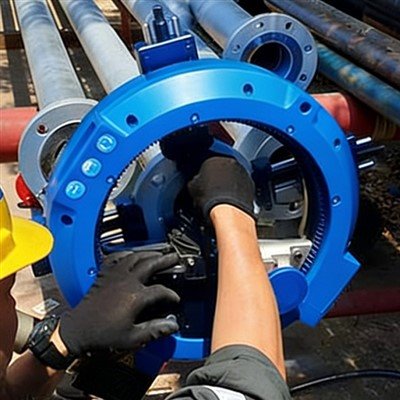
At the end of the day, a reaming machine isn’t just a tool to make holes—it’s a way to make parts faster, more accurate, and consistent. Whether you need a tiny reamer for a prototype or a monster machine for big industrial jobs, we’ve got you covered. Don’t leave your next project to guesswork—reach out, and let’s figure out the right solution for you.
Linear Milling Machine References:
- Machinist’s Guide to Reaming Processes, Association for Manufacturing Technology, 2022
- Machine Tool Rigidity & Its Impact on Hole Making, Journal of Manufacturing Engineering, Vol. 18, No. 3, 2021
- Reamer Design Handbook, Tooling & Manufacturing Association, 2020
Shangqiu JDA Machinery Technology Co., Ltd.
As one of the most professional reaming machine manufacturers and suppliers in China, our products have good reputation in the market. Please rest assured to buy cheap reaming machine for sale here from our factory. Quality products and reasonable price are available.
Address: No.55 Pingyuan Middle Road, Liangyuan District, Shangqiu, Henan, China
E-mail: sales@jdamachines.com
WebSite: https://www.jda-machines.com/
