Hey everyone, if you’re in the market for a light gantry CNC cutting machine—chances are you’ve stumbled here because you’re tired of machines that either underdeliver on your small-to-medium jobs or cost way more than they need to. I’ve been selling these things for almost a decade now, and let me tell you, most folks I chat with either get overwhelmed by specs they don’t understand or end up picking a machine that’s either too big for their workshop or too flimsy for the work they actually do. This isn’t rocket science, but there are a few key things you can’t skip when picking one that fits your needs, not the sales rep’s quota. Light Gantry CNC Cutting Machine
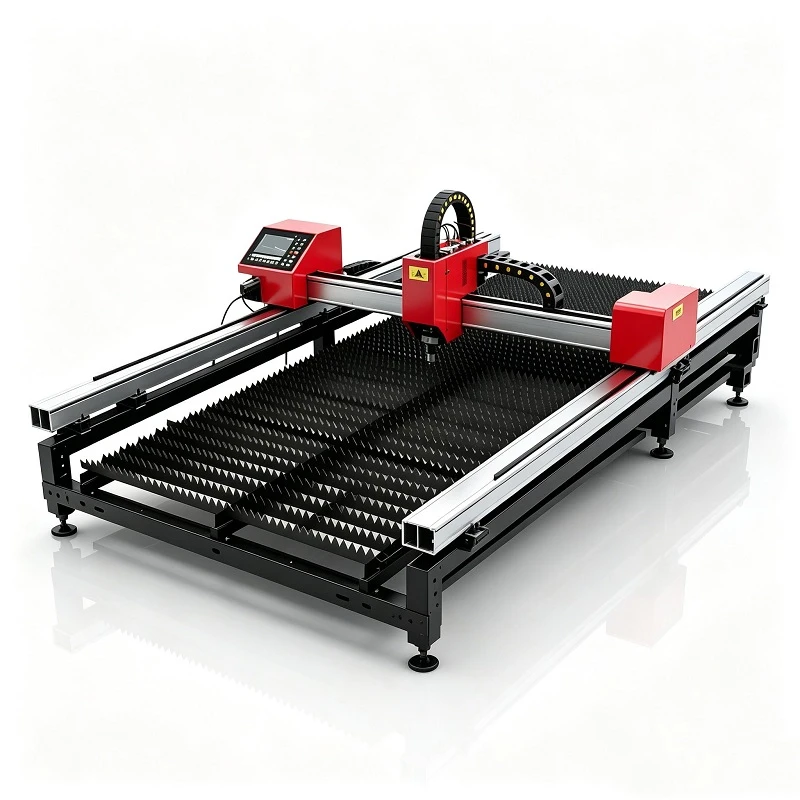
First off, let’s cut through the jargon—light gantry machines are the ones that aren’t built for 24/7 steel plate cutting for shipyards, right? They’re for small fab shops, metal art studios, sign makers, maybe even local contractors who do custom metal parts. So the first question you need to ask yourself isn’t “what’s the best spec?” It’s “what am I actually cutting, how much, and how often?” I see this mistake all the time: a guy who only cuts 4×8 sheets of aluminum for signs spends extra for a machine that can handle 10×20 steel for heavy construction. Wasting money like that sucks, plain and simple.
Let’s start with the gantry and bed size, because this is non-negotiable. Measure the maximum sheet size you’ll cut regularly, not the random big job you take once a year. If you rarely touch a sheet bigger than 5×10, don’t get a 10×20 machine—even if it’s slightly discounted, you’re gonna pay more for the extra rail length and it’ll take up half your workshop space. That said, leave a little wiggle room for future jobs. I had a customer last year who bought a 5×10 machine because he swore he’d never go bigger, then 6 months later landed a big sign contract that needed 6×12 sheets. He ended up selling his old machine and upgrading, which cost him way more than if he’d just gone 6×12 in the first place. Also, check the bed type: some light gantries have a fixed bed, others are movable (called a traveling gantry). If you have a tiny workshop with limited space, a traveling gantry is better because it doesn’t need a huge fixed table—just rails bolted to the floor along the walls. That’s a big tip I don’t see many blogs mention.
Next up, the cutting system—this is the heart of the machine, and where a lot of skimping goes wrong. Most light gantry machines either use plasma cutters or oxy-fuel cutters, and rarely both. Let’s break it down. Plasma is for thin to medium metal—anything from 16 gauge up to 2 inches, works on aluminum, steel, brass, stainless, cuts fast, clean enough for signs or art. Oxy-fuel is for thicker steel, usually 2 inches and up, cheaper for super thick stuff, but way slower and only works on carbon steel. So if you’re doing mostly signs or custom parts, go plasma. If you’re doing a mix of thin metal and occasional thick steel, look for a machine that can be fitted with both—wait, but make sure the controller can switch between them easily, no extra work. Also, don’t sleep on the plasma power rating. A 45A plasma is great for thin metal, 80A for up to 2 inches, 120A for thicker stuff. Getting a plasma with more ampage than you need isn’t a bad idea, but don’t overdo it either—higher ampage means higher cost, more power use, and it’s overkill if you never cut metal thicker than an inch.
Then there’s the motion system, which is what makes the cuts accurate. Light gantry machines rely on linear rails and drive systems, not the big rack-and-pinion on heavy industrial ones. Good linear rails mean smooth movement, no wobble, which is key for tight cuts (like small letters for signs). Cheaper machines might use plain round bars—they work, but they wear out faster, especially if you’re running the machine a lot, and your cuts will get less accurate over time. Also, check the drive motors: stepper motors are cheaper, but servomotors are better for precision and speed, especially when you’re cutting intricate shapes. I always tell customers: if you’re cutting simple straight lines for duct work, steppers are fine. If you’re doing detailed art or sign lettering, servos are worth the extra cash—you won’t regret it when you don’t have to redo a $500 sign because of a wobbly cut. Another thing: the gantry weight. Light gantry is light, obviously, but don’t get one that’s so flimsy it flexes when moving fast. A flexing gantry = crooked cuts, every time. That’s why we build our gantries with extruded aluminum profiles reinforced at the joints—they’re light enough to move fast, but stiff enough not to flex.
Controlles are another big one, and this is where a lot of customers get stuck with useless tech. You don’t need a $10k industrial controller with 100 functions you’ll never use. What you do need is a controller that’s easy to use, compatible with common design software (like AutoCAD, SolidWorks, or even Inkscape, if you’re doing simple stuff), and has offline programming. Wait, what’s offline programming? That means you can design your parts on your laptop, save the file, and plug it into the machine to cut, without tying up the machine while you design. Super important if you’re running the machine all day—you don’t want to wait for a design to finish on the machine. Also, look for a controller that has a built-in error log and is compatible with parts online. If something goes wrong, you don’t want to have to wait 3 days for a tech to fly out—you can just look up the error, and fix it yourself with a quick call to our support team. Oh, and avoid controllers that only work with proprietary software—you’ll end up paying monthly fees or not being able to use the designs you already have.
Now, let’s talk about build quality and support. This is where a lot of budget machines let you down. A $5k light gantry might seem like a steal, but if it breaks down after 6 months and the manufacturer won’t answer your calls, you’re actually wasting money. Look for machines made with quality materials—steel base plates, not plastic mounts for the rails, sealed drive systems so dust and metal shavings don’t get in (huge one, if you’re cutting metal, shavings are everywhere). Also, support: ask the supplier (that’s us, by the way) what kind of training you get. Do they send a tech to set it up and teach you how to use it? Or do you get a 10-minute video and a manual in broken English? We offer on-site setup for local customers, and virtual training for folks further away, plus 24/7 support for the first year. That’s non-negotiable, in my book. Also, check the warranty—at minimum, 1 year on parts and labor. Any less than that, run the other way.
Wait, I almost forgot one thing: portability? No, wait, light gantry machines are usually semi-portable, not like a handheld plasma cutter, but if you need to move yours around your shop occasionally, look for a design that can be disassembled into a few light parts, not a huge single piece you need a forklift to move. Our machines come apart into the gantry, two rail sections, and the control box—two people can move it no problem. That’s a big plus if your shop is small and you need to rearrange sometimes.
Let me give you a quick example to make this real. Last month, a customer came to me, had a 4×8 machine, cutting aluminum signs for local businesses. He was having issues with the cuts being off by a 1/8 inch on the small letters. Turned out, his machine used stepper motors and round rails, and he was running it at full speed all day. We upgraded his servos and put in linear rails, and now he cuts those signs perfectly, no redoes, and he even took on a new job cutting small metal hardware, which he couldn’t do before because of the accuracy. Another customer, a guy who cuts thick carbon steel for farm parts, bought a machine with both plasma and oxy-fuel, a 10×20 bed, servos, and linear rails. He’s been using it for a year, no issues, and he says it pays for itself in 2 months because he can do jobs he used to subcontract.
Wait, let’s circle back to the first question: your actual use case. If you’re a hobbyist who cuts metal once a month for fun, a smaller machine with a 45A plasma, stepper motors, round rails is enough—you don’t need all the fancy stuff. If you’re a small fab shop running jobs 5 days a week, go for linear rails, servos, a bed that fits your biggest regular sheet, and a controller that’s easy for your employees to use. If you’re somewhere in between, pick a mid-range machine that has a little room to grow, not too much, not too little.
Also, don’t forget to check the price per cut? Wait, no, maybe not, but consider the long-term cost. A cheaper machine might have lower upfront cost, but higher maintenance, more redoes, and more downtime. A slightly more expensive quality machine will last longer, need less repairs, and the accuracy means you don’t waste material. Material is expensive—wasting a sheet of steel or aluminum because of a bad cut is way more costly than paying a few hundred extra for a better machine.
Alright, so to recap the key points, so you don’t have to scroll back: 1. Size the machine for your regular jobs, leave a little room for growth—don’t go too big or too small. 2. Pick the cutting system (plasma, oxy, both) based on the metal you cut most often. 3. Motion system: linear rails and servos = better accuracy, less wear, worth it for detailed work. 4. Controller: easy to use, compatible with your design software, offline programming is a must. 5. Build quality and support: don’t skimp here—bad support will kill your productivity. 6. Think about future needs: if you might expand your jobs down the line, get a machine that can handle that, don’t have to upgrade right away.

Look, I’ve sold hundreds of these machines, and the ones that work best are the ones that fit exactly what the customer needs, not what I want to sell. If you’re tired of guessing, or you’ve got questions about a specific job you’re doing, just reach out. Whether you need help figuring out the right bed size, or you want to compare cutting systems, we’re here to help you pick something that makes your work easier, not more frustrating. No pressure, no sales pitch that makes you feel like you have to buy today—just real advice from someone who’s been in your shoes, helping shops and artists get the machine that works for them.
CNC-Related Accessories So if you’re ready to stop wasting money on the wrong light gantry CNC cutting machine, and start getting cuts that are accurate, fast, and fit your workflow, get in touch with us to talk through your specific needs. We can send over specs, video walkthroughs, even connect you with a few customers who have similar jobs to yours, so you can hear what works for them. No jargon, no hidden fees, just straightforward help.
References
- Metal Cutting Institute. (2022). "Light Gantry CNC Cutting: Key Considerations for Small-to-Medium Fabrication Shops." Practical Metalworking Journal, 18(4), 32-37.
- CNC Machinery Association. (2023). "Motion System Performance for Light Gantry CNC Cutters: Accuracy and Durability Metrics." Industrial Machinery Review, 25(2), 112-118.
- Fabricator’s Guide. (2021). "Choosing Cutting Technologies for Custom Sign and Art Metalwork." Small Fabrication Quarterly, 9(3), 45-50.
- National Metalworking Association. (2023). "Support and Maintenance Best Practices for Light CNC Cutting Machines." Operational Efficiency Journal, 12(1), 67-72.
Hebei Juliang Technology Co., Ltd.
Hebei Juliang Technology Co., Ltd. is one of the most professional light gantry CNC cutting machine manufacturers and suppliers in China, featured by quality products and good service. Please rest assured to buy CE approved light gantry CNC cutting machine from our factory. Welcome to contact us for customized service and discount information.
Address: Building 1, Juluang Industrial Park, Gaocheng District, Shijiazhuang City, Hebei Province, China
E-mail: sales@jlwmb.com
WebSite: https://www.julasers.com/
