If you’ve ever walked through a metal fabrication shop, or even seen the thin aluminum foil wrapping your sandwich or the steel beams that hold up modern buildings, you’ve seen the end result of rolling mills. But if you’re here, chances are you’ve heard the term “tandem rolling mill” thrown around in industry chats, and you’re wondering exactly what it is—beyond just another type of metal processing machine. Let me break this down straight, no jargon overload, because as someone who’s been supplying rolling mill equipment for over a decade, I know most folks in the game just want the practical, useful stuff, not the textbook fluff. Rolling Mill Machinery
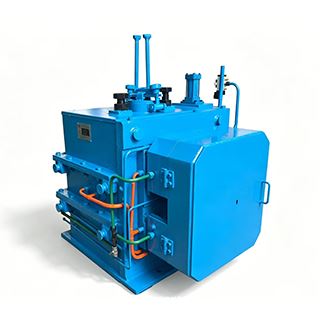
First, let’s start with the basics: a rolling mill in general is a machine that presses metal between rollers to reduce its thickness, shape it, or make it uniform. A tandem rolling mill isn’t just one machine—it’s a whole line of them, strung together in a straight row, each with its own set of rollers. Instead of feeding a metal strip back and forth through a single mill (which is what you’d see in a reversing mill, the older, slower cousin), you run the strip through all the mills in one continuous pass. That’s the big differentiator right there.
Let me paint a picture for you. Say you start with a thick coil of hot steel, like 25mm thick, straight from the hot rolling stage. That coil gets uncoiled, trimmed at the edges, and fed into the first mill in the tandem line. Each mill in the line is set to press the strip down a little more than the one before it. The first mill might take it from 25mm to 15mm, the next to 8mm, then 4mm, and so on, all the way down to the thin foil or thin-gauge sheet you need. Because the strip is moving in one straight line, there’s no downtime waiting for it to reverse direction in a single mill. That’s why tandem lines are way faster—some can process over 1,500 meters of metal per minute. For high-volume jobs, that’s a game-changer.
Now, let’s get into how these lines work, because it’s not just a straight row of rollers. Each individual stand (that’s what we call each mill unit in the line) has rollers, obviously, but they’re built for specific tasks. For hot tandem mills, which handle hot metal right after it comes out of the furnace, the rollers are usually made of tough steel or even cast iron that can handle high temperatures and heavy pressure. Cold tandem mills, on the other hand, work with metal that’s already cooled down, so their rollers are often made of forged steel or even tungsten carbide for extra hardness and a smooth finish. That smooth finish is key if you’re making stuff like car body panels or tin cans—you don’t want scratches or uneven spots ruining the final product.
A lot of people don’t talk about the supporting gear that makes tandem mills actually run, but that’s the stuff we supply day in and day out. You need entry and exit loops between stands, right? Because as the metal gets thinner, it gets longer. If you didn’t have those loops, the strip would get stretched too tight or hang too loose and break. Then there’s the automation system—no one’s manually adjusting roller pressure anymore. Modern tandem lines use PLCs (programmable logic controllers) that tweak the gap between rollers, speed of each stand, and even tension on the strip in real time. Tension is super important here. Too little tension, and the strip will wrinkle; too much, and it’ll snap. Our equipment is built to calibrate that tension perfectly, even for hard-to-process metals like stainless steel or aluminum alloys.
Wait, let’s address a common question: why go with a tandem mill instead of other types? Let’s compare. Reversing mills are cheaper to set up for small runs, but if you’re cranking out 10,000 tons of steel sheet a month, a tandem line is 2-3 times faster, uses less energy per ton of metal, and gives way more consistent results. Think about it: every pass through a single mill can have slight variations in roller pressure or speed, but a tandem line keeps all those variables synced, so your final product is uniform from edge to edge, coil to coil. That consistency is non-negotiable for industries like automotive or aerospace, where even a 0.1mm thickness difference can make a part fail.
I’ve seen a lot of customers come to us with old, outdated tandem lines that are breaking down constantly. Most of the issues aren’t the rollers themselves—they’re the auxiliary parts: loopers, drive motors, tension controls. That’s the stuff we specialize in supplying and upgrading. A lot of folks think they need to replace the whole line, but often a few targeted upgrades can turn a clunky, slow line into something that hits 90% of its designed capacity.
Let’s talk about the different types of tandem mills, because not all are the same. Hot tandem mills are for processing ingots or thick slabs into hot-rolled coils, which are then either sold as-is or sent to a cold tandem mill for further reduction. Cold tandem mills handle those hot coils, pickled (so the scale from hot rolling is removed), and turn them into thin cold-rolled sheet—perfect for appliances, car bodies, and roofing. Then there’s Skin Pass tandem mills, which do a light final pass to improve surface finish and give the metal a slight roughness for better paint adhesion. And we also supply tandem mills for non-ferrous metals: aluminum, copper, brass, even titanium for aerospace parts. Those need custom roller materials and tension settings, which is where our experience comes in.
One thing I love about this industry is that we’re always tweaking tandem mill tech. Ten years ago, a typical tandem line might have had 5 stands; now we’re building 6, 7, even 8 stand lines for ultra-thin products, like aluminum foil that’s just 0.006mm thick. That’s thinner than a human hair, and only a tandem line can produce it consistently. The key here is the speed of each stand—each stand runs slightly faster than the previous one, to keep the strip moving without stretching too much. Our drive systems are designed to handle that variable speed smoothly, no jerks that would break the strip.
Now, let’s get practical for anyone reading this who’s in the market. If you’re a fabricator looking to expand your production, or you’ve got an old mill that’s holding you back, a tandem rolling mill is a big investment, but it pays for itself fast if you’re doing high volume. The energy savings alone are huge: tandem mills use about half the energy per ton of metal compared to reversing mills, because you’re not re-warming the metal every time you pass it through. And the labor savings—less downtime, fewer adjustments, so your team can focus on other stuff instead of babysitting a slow mill.
I’ve had customers tell us they hesitated to go with a tandem line because of the upfront cost, but six months in, they’re kicking themselves for not doing it sooner. One customer, a small steel fabrication shop in the Midwest, upgraded from a 2-stand reversing mill to a 5-stand tandem line, and their output tripled while their scrap rate dropped by 12%. That’s the kind of return on investment you don’t get with a cheaper, outdated machine.
But here’s the thing: not every tandem mill is right for every job. If you’re only making small batches of specialty metal parts, a tandem line might be overkill. They’re built for long runs of the same thickness and width, so if your production mix changes constantly, a reversing mill or a sendzimir mill might be a better fit. But for anyone doing consistent, high-volume production of flat rolled metal, tandem is the way to go.
As a supplier, we don’t just sell you a set of rollers or a full line. We work with you to figure out exactly what you need. Do you need a hot tandem for steel, or a cold tandem for aluminum? Do you need to upgrade your existing line with new automation, or build a whole new one? We handle installation, commissioning, and even ongoing maintenance support. A lot of suppliers just drop off the machine and leave, but we stick around because we know when a mill goes down, your production goes down—and that costs you money.
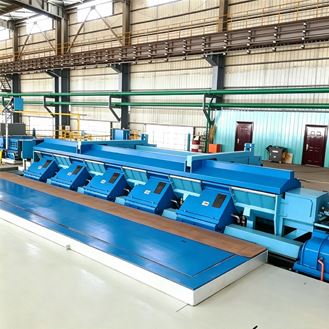
If you’re running a metal fabrication operation, and you’re curious if a tandem rolling mill is right for your business, or you’ve got an old line that’s not performing as it should, reach out to our team to talk through your needs. We’ll give you straight, no-sales-pitch advice—no empty promises, just what will work for your production goals. Don’t waste another day dealing with slow, inconsistent mills that are holding your business back.
Rolling Mill Machinery References
- Roberts, W. L. (1978). Cold Rolling of Steel. Marcel Dekker.
- Tarr, S. (2000). Technology of Rolling Mills. Iron and Steel Society.
- American Iron and Steel Institute. (2021). Tandem Rolling Best Practices for Flat Rolled Metal Production.
Harbin Hafei Industry Co., Ltd.
As one of the most professional rolling mill machinery manufacturers and suppliers in China, we also support customized service. We warmly welcome you to wholesale advanced rolling mill machinery in stock here from our factory. If you have any enquiry about quotation, please feel free to email us.
Address: Fu15, Youxie Streeet, Pingfang Dist, Harbin City, P.R.Of China
E-mail: liutianxiang313@sina.com
WebSite: https://www.hficrollingmill.com/
