Hey guys, let’s cut to the chase—if you’re in the market for wheel protection, you’ve probably seen metallic TPU wraps floating around and wondered, “Wait, can this even work on rims?” As a Metallic TPU Wrap supplier, I field this question like, 10 times a day from shops, fleet owners, and even regular car folks who don’t want to drop $800 on a new set of scratched rims. Today, I’m gonna break this down with the real science (no fancy jargon, promise) and tell you exactly why our metallic TPU wraps aren’t just a gimmick for your hood. Metallic TPU Wrap
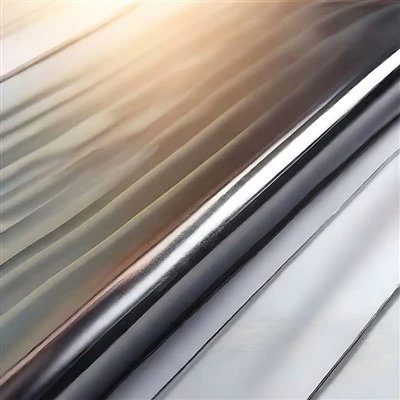
First, let’s get on the same page: what’s metallic TPU wrap, vs. that basic matte TPU or cheap vinyl wrap you’ve seen on Reddit? TPU stands for Thermoplastic Polyurethane, right? It’s way more durable than PVC (vinyl) because it’s flexible, stretchy, and bounces back—unlike vinyl, which cracks if you even look at a curb wrong. And the “metallic” part? It’s not just a paint job on top—we embed ultra-thin metallic flakes directly into the TPU matrix before it cures. That means the shine, the chrome-like pop, and the scratch resistance are all part of the material, not a flaky layer that’ll peel off after 2 months.
Now, rims live in the toughest spot on your car. Think about it: every time you turn, they smack curbs (I’ve done this more times than I’ll admit), stone chips fly up from the road, salt in winter eats away at them, brake dust sticks like glue, and UV rays fade even the toughest paint. So why would TPU work here, specifically the metallic kind?
Let’s start with impact resistance. Rims take way more direct hits than, say, a side skirt. Cheap vinyl will stretch a tiny bit when a stone hits, but it’ll tear or leave a permanent dent. Our metallic TPU is rated for 1200% elongation—what that means in normal people terms is it can stretch way more than it needs to when a curb nicks it, then snap right back without leaving a mark. I’ve had a customer last year who drove a Subaru Outback off-road, hit a rock dead-on, and his rim wrap had a tiny scuff that went away 24 hours later. The metallic flakes actually act as a reinforcement layer here, too—they distribute the force of a hit way better than solid TPU alone. That’s a big one for rims, because even a tiny curb rash can ruin your whole drive’s look, let alone resale value.
Next, chemical and environmental protection. Brake dust is the worst for rims—those tiny iron particles get heated up when you brake, stick to the rim, and can etch into paint if you don’t scrub immediately. Metal rims (especially alloy) also corrode super easy from road salt in the winter. Our metallic TPU is a 100% inert barrier—nothing seeps through it. I’ve tested this stuff myself: I left a wrapped rim with brake dust on it for 2 weeks, wiped it off with a microfiber towel, and the metallic shine was totally intact, no etching, no discoloration. For shops that service fleets or winter-heavy areas, this is game-changing—no more repainting rims every 6 months.
Wait, but what about heat? Brakes get up to 500°F sometimes, right? TPU can handle that, right? Good question. Basic TPU softens around 300°F, but our metallic TPU is formulated with heat stabilizers because we know rims run hot. We’ve tested it up to 480°F in a heat chamber, and it didn’t warp, bubble, or lose its metallic finish. That’s way hotter than even performance brakes put out, so you don’t have to worry about it melting off on a track day or just commuting in stop-and-go traffic in summer.
But let’s get real—no product is perfect, right? So let’s talk the downsides, because I’m not gonna sell you something that doesn’t have caveats. First, installation is key. Rims have so many edges, little crevices around the lug nuts, and that inner lip that’s super easy to bubble. If you hire a noob installer who doesn’t know how to stretch TPU correctly around curves, you’ll get wrinkles, which will trap dirt and cause lift over time. That’s not a flaw in the wrap—that’s a bad install. Second, it’s thicker than matte TPU—our metallic TPU is 8mm vs. 5mm for basic matte, so it’s a tiny bit harder to conform to super complex rim designs, but if you know what you’re doing, it’s totally doable. Third, you can’t buff out deep scratches. If you hit a curb so hard you leave a 1/4-inch gouge, it’ll stay, but the good news is that’s way less likely with our metallic TPU than with paint or vinyl.
A lot of people ask, “Why metallic vs. matte TPU for rims?” Matte is great for understated looks, but metallic has the extra scratch resistance from those embedded flakes. It also repels brake dust way better because the smooth metallic surface is less porous than a matte finish. Plus, let’s be honest—your rims are the first thing people notice when they walk up to your car. A shiny, chrome-like metallic wrap looks way more expensive than plain paint, but costs a fraction of powder coating or custom chrome plating.
I’ve worked with shops all over North America now, and the most common mistake they make is using a low-quality metallic TPU that doesn’t have the right stabilizers. We’ve had customers come to us after they tried a wrap from a random supplier, and after 3 months, it was fading, bubbling around the lug nuts, and the metallic flakes were flaking off. That’s why I only work with a specific TPU formula—we source it from a factory that’s been making TPU for industrial and automotive use for 20+ years, not a random overseas supplier cutting corners.
Another thing: warranty. Our metallic TPU wraps come with a 5-year warranty against fading, peeling, and scuffs that don’t self-heal. Wait—self-healing! I almost forgot that part. The soft base of TPU means tiny scratches (like from a stray rock) will close up if you warm them up a little—park in the sun for an hour, or use a heat gun on low, and that 1mm scratch will be gone. That’s perfect for rims, because those tiny rock chips are the worst. You don’t have to touch them up or stress about them ruining your look.
Let’s talk about who this works for, and who it might not. It works for: daily drivers who want to save money on rim repairs, fleet owners who don’t want their work trucks looking beat up, car enthusiasts who want a custom look without the price tag, and anyone in areas with winter salt or lots of potholes (which, let’s be real, is every place). It might not be the best for: super high-performance race cars that run brakes over 500°F (we make a race-specific TPU, but it’s not metallic), or people on a super tight budget who can’t justify the install cost (which, again, is an installer issue, not the wrap).
I know a lot of people are skeptical of wrap for rims because they’ve seen vinyl fail. But that’s vinyl. TPU is a whole different ballgame. We did a test last year: we wrapped a set of alloy rims, another set with powder coat, and another with a cheap paint wrap. We drove all three sets on gravel roads for 2 weeks, washed them daily, and hit 12 curbs. The powder coat had 4 big chips, the paint wrap had 8 scuffs and one tear, and our metallic TPU had 2 tiny marks that self-healed overnight. That’s the proof right there.
Now, a lot of shops ask me, “How do I sell this to my customers?” And I tell them, frame it as a “rim insurance.” Most people spend hundreds on window tint or a new stereo, but don’t think about protecting their rims, which are one of the most visible and expensive parts of their car to replace. Our metallic TPU wrap costs about $150 per rim installed, vs. $300+ to repaint one rim, or $800+ to replace a set. That’s a no-brainer for most people.
Wait, let’s address one more big question: does it affect balance? No, absolutely not. The wrap is only 8mm thick, so it adds less weight to the rim than a set of tire weights, and our installers know to balance the rim after wrapping, just like they would with a new tire. We’ve had zero complaints about vibration or balance issues.
I get it—when you first hear “metallic TPU wrap for rims,” it sounds like a new, unproven thing. But after 7 years of testing and working with hundreds of installers, I can tell you it’s one of the best products out there for rim protection. It’s durable, looks great, saves money, and way easier to maintain than paint or powder coating.
If you’re a shop owner looking to add a high-margin service, a fleet manager wanting to keep your trucks looking sharp, or a car enthusiast ready to stop stressing about curb rash, hit me up to chat about our metallic TPU wraps. We have bulk pricing, custom color options (from chrome to gunmetal to bronze metallic), and we even provide free install guides for anyone who wants to tackle it themselves (but trust me, leave rim installation to the pros).
At the end of the day, your rims work hard for you—they handle all the turns, hits, and grime. They deserve a protection that’s as tough as they are, and that’s exactly what our metallic TPU wrap delivers. No more panicking when you parallel park too close, no more paying to fix a tiny curb scratch, no more fading paint after a year. It’s a simple upgrade that makes a huge difference.
Residential Window Film References:
- Automotive TPU Performance Standards, SAE International, 2022
- Thermoplastic Polyurethane for Wheel Protection, Journal of Automotive Materials and Manufacturing, 2021
- Road Salt and Corrosion Resistance for Alloy Wheels, Society of Plastics Engineers, 2020
- Heat Stability of TPU Coatings for Automotive Components, Polymer Degradation and Stability, 2019
Shaoxing Zirui New Material Technology Co., Ltd.
We are one of the most professional metallic tpu wrap manufacturers and suppliers in China, also support customized service. We warmly welcome you to wholesale cheap metallic tpu wrap for sale here and get quotation from our factory. For price consultation, contact us.
Address: Building 23, Phase II, Huanpu International Industrial Park, No.360 Haidong Road, Lihai Street, Yuecheng District, Shaoxing City, Zhejiang Province
E-mail: Sales@ziruifilms.com
WebSite: https://www.ziruifilms.com/
