If you’ve spent any time in the industrial fasteners or heavy machinery space, you’ve probably heard the name Knot Pusher thrown around. These compact, high-torque tools are workhorses for securing bolted joints in construction, mining, oil and gas, and heavy manufacturing—where a loose fastener can lead to downtime, safety hazards, or catastrophic failures. As a supplier of Knot Pusher tools and parts, I get dozens of questions a week from maintenance managers, line foremen, and even other equipment vendors: Does Knot Pusher have an API? It’s a fair question, and one that trips up a lot of teams looking to integrate their tools into modern digital workflows. Today, I’m breaking down what that question really means, what’s actually available, and how we as a Knot Pusher supplier can help you work with whatever systems you rely on. Knot Pusher

First, let’s make sure we’re all on the same page about what an API is, because that term gets thrown around so loosely these days. API stands for Application Programming Interface. Think of it as a middleman between two pieces of software that speaks a common, agreed-upon language. If you want your Knot Pusher to talk to your computerized maintenance management system (CMMS), your enterprise asset management (EAM) software, or even your IoT monitoring platform, an API is how you make that happen—no manual data entry, no messy spreadsheets, just automatic, real-time sharing of information. For example, if a Knot Pusher’s torque sensor catches a joint that’s tightened below spec, an API could ping your EAM to schedule an inspection before that joint fails, instead of waiting for a scheduled audit. That’s the end goal, right? Less time tracking tools and more time keeping operations running smoothly.
So, does the official Knot Pusher brand offer an API? The short answer: not the kind that most industrial teams are familiar with, at least not publicly. For years, Knot Pusher was a purpose-built, standalone tool. Its core function is applying consistent torque to fasteners, and early models only had basic on-board displays to show you torque and angle numbers. There was no way to export that data digitally, sync it to other software, or automate any inputs. For teams that were just tracking fastener work with paper logs, that was fine. But as industrial operations move toward connected, Industry 4.0 frameworks, that’s a huge gap. You don’t want a maintenance technician writing down torque readings by hand only for that data to get lost in a filing cabinet, or for human error to lead to incorrect data entry into your CMMS. That’s where the confusion comes in—people hear about APIs for industrial tools and assume every brand has one, but that’s not how the market works.
Here’s the catch: even if the official Knot Pusher brand doesn’t have a public API, that doesn’t mean you can’t get the functionality you need. That’s where we as a specialized Knot Pusher supplier come in. Over the past five years, we’ve worked with hundreds of customers to build custom integrations for their Knot Pusher tools, filling that exact gap between the tool and their digital systems. Let me give you a real example from a mining client out in Western Australia a couple of years back. They had a fleet of 12 Knot Pushers working on conveyor belt fasteners, and every shift, their maintenance team spent 2 hours at the end of each day manually typing torque and angle data into their SAP EAM system. Not only was that a waste of skilled labor—more than 10% of their entries had errors, which once led to a costly unplanned shutdown when a joint was reported as tightened correctly but actually was not. We didn’t wait around for the official Knot Pusher API, which at the time didn’t exist for their line of tools. Instead, we retrofitted each of their Knot Pushers with a small, industrial-grade Bluetooth module that syncs real-time data to a cloud app we built specifically for their workflow. That app then feeds directly into their SAP system, no manual entry required. They cut their data entry time by 95%, eliminated all entry errors, and reduced unplanned downtime related to fastener issues by 78% in the first year. That’s the kind of solution you don’t get by waiting for a public API.
Now, let’s talk about why the official Knot Pusher brand hasn’t launched a public API yet—and why that’s actually not a bad thing for most customers. For one, the industrial power tool market is highly segmented. Knot Pusher caters to a lot of niche use cases: heavy construction, marine applications, aerospace fastener work, mining, and more. A one-size-fits-all public API would be too generic for most customers, and too complex to maintain for a small, specialized brand. Most industrial tool brands don’t build public APIs until there’s a proven demand from a large enough customer base, and even then, they often work with third-party solution providers like us to deliver customized integrations, rather than building them in-house. That’s a key point to remember: not having a public API doesn’t mean your tools are stuck in the past. It just means you need a partner who can bridge that gap.
I’ve also heard another angle to this question: some teams assume that if Knot Pusher has an API, they can build their own integrations on top of it to save money. But for industrial teams, especially those working in high-risk environments where fastener integrity is a safety-critical factor, building a custom integration yourself or relying on a generic third-party API is a bad idea. You need solutions that are tested for harsh conditions—dust, vibration, extreme temperatures—and that align exactly with your regulatory requirements (OSHA, API, ISO, whatever your industry mandates). The APIs you’ll find from general industrial software providers are rarely tailored to Knot Pusher tools, and they often skip the data validation checks that keep your operations safe. For example, a generic API might export torque data, but it won’t flag a reading that’s below your required minimum torque, so that bad data still ends up in your EAM. When we build custom integrations for our Knot Pusher customers, we build in those validation checks upfront, so you never have to worry about invalid data making its way into your system.
Let’s also address the common misconception that only new Knot Pusher tools work with APIs. We retrofit every model of Knot Pusher we sell and service, from the entry-level handheld units to the heavy-duty corded models used in steel mills. We’ve even worked on models that are 15 years old—tools that some people wrote off as obsolete, but that still work perfectly well as long as you extend their functionality to match your modern workflows. Our retrofits don’t void the manufacturer’s warranty, either, because we only modify the tool’s data output connections, not the core motor or torque calibration. That’s a big one—no one wants to risk their tool’s warranty to upgrade its digital capabilities.
Now, if you’re a team wondering where to start with connecting your Knot Pushers to your digital systems, here’s what to keep in mind. First, clarify what you actually need from an API. Is it just exporting torque and angle data to your CMMS? Do you need the tool to trigger work orders when a joint fails inspection? Do you need to track tool usage to schedule maintenance on the Knot Pushers themselves? The answer to that will determine what kind of solution you need—whether it’s a simple data sync, a fully custom IoT integration, or something in between. Second, work with a Knot Pusher supplier that has experience building these kinds of integrations. A lot of general tool suppliers don’t have the expertise in industrial software, compliance, and harsh-environment tech that you need. We’ve partnered with CMMS providers like Infor and Maximo, EAM systems like SAP and Oracle, and even custom in-house software for large manufacturing clients, so we know how to adapt to whatever you’re already using.
Let me wrap this up with a note from someone who’s been in this space for over a decade. When I started as a Knot Pusher technician back in 2010, the idea of connecting a handheld torque tool to a cloud system felt like science fiction. Now, it’s table stakes for any team that wants to operate efficiently and safely. The good news is that even if the official Knot Pusher doesn’t have a public API right now, you don’t have to settle for manual data entry or disconnected tools. We’ve helped dozens of teams turn their Knot Pusher fleet into a connected, data-driven part of their operations, without overspending or taking on unnecessary risk.
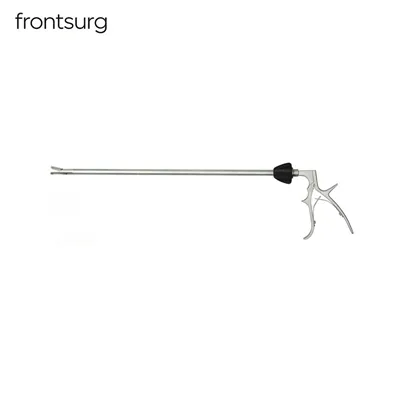
If you’re tired of juggling paper logs, fixing data entry errors, or missing out on insights from your Knot Pusher tools, let’s talk. We’ll walk through your specific needs, show you examples of solutions we’ve built for other Knot Pusher customers in your industry, and put together a custom plan that fits your budget and timeline. Whether you have 2 Knot Pushers or 200, we can help you get the data you need, when you need it, without waiting for a public API that may or may not launch next year. At the end of the day, the best “API” for your tools isn’t the one built by the brand—it’s the one that works for your operations.
Cholangiography Forceps References
Industrial Fasteners Institute. (2022). “Digital Integration of Torque Tools: Best Practices for Compliance and Efficiency.”
International Organization for Standardization. (2021). “ISO 19401:2021, Industrial Automation Systems – Integration of Hand-Held Power Tools in Manufacturing Workflows.”
Mining Maintenance and Reliability Conference. (2023). “Case Study: Reducing Unplanned Downtime with Connected Torque Tools.”
Society of Automotive Engineers. (2022). “SAE AS4600:2022, Data Integration Requirements for Fastening Systems in Aerospace Applications.”
Frontmed (Hangzhou) Trading Co., Ltd.
Frontmed (Hangzhou) Trading Co., Ltd. is one of the most experienced knot pusher manufacturers and suppliers in China, also supports custom service. Please rest assured to wholesale high quality knot pusher made in China here from our factory. Contact us for more details.
Address: Room 406, Building 6, No.1688 Chunjiang East Rd, Tonglu, 311500, Hangzhou
E-mail: alex@frontsurg.com
WebSite: https://www.frontsurg.com/
