If you’ve ever stood in front of a switchgear cabinet at a substation, or watched a lineman work on overhead power lines, you’ve probably heard terms like “loadbreak switch” and “disconnect switch” thrown around. For most people, especially those outside the electrical utility space, the two sound like the same thing—just a tool for cutting power. But after 12 years in the business as a loadbreak switch supplier, I can tell you the difference isn’t just technical; it’s the line between safe, efficient power maintenance and a potential disaster. Let’s break this down, in plain terms I use with utility engineers, line crews, and small-town maintenance teams every day. Loadbreak Switch

First, let’s set the scene: power grids are always live, even when a home or business is marked “off” for repairs. When a lineman needs to work on a transformer that serves a grocery store, they can’t just yank a switch and call it a day—there are kilovolts of energy running through every line connected to it. That’s where these two switches come in, but they handle the job completely differently.
Let’s start with the disconnect switch, because it’s the older, more familiar tool. A disconnect switch—sometimes called a knife switch, though modern versions are more enclosed—works like a giant door lock for a power line. Its whole job is to open a physical gap between two electrical conductors, breaking the circuit. But here’s the catch: you can only use a disconnect switch on a de-energized load. That means you have to turn off all upstream power, or risk arcing. Arcing is what happens when electricity jumps across a gap instead of stopping; it’s a superheated plasma, hot enough to melt metal, and it happens if you try to open a disconnect switch while the circuit is under load (meaning power is actively flowing through it). Most disconnect switches have big, heavy handles and clear, visual indicators—like a metal lever sticking out 12 inches from the cabinet—that let crews see at a glance if they’re open or closed. They’re simple, rugged, cheap, and good for one thing: disconnecting a circuit that’s already dead. But that simplicity is also their limitation.
Now, the loadbreak switch, and why it’s my specialty. A loadbreak switch is designed specifically to break a circuit while it’s under load—no need to de-energize the line first. It does that using a different mechanism, usually a sealed, oil or gas-filled chamber inside the switch that quenches arcing the second the contacts separate. When you open a loadbreak switch, you don’t hear a loud bang from arcing; it’s a smooth, controlled break. That makes it irreplaceable for jobs where you can’t shut down an entire section of grid—think a hospital’s backup power tests, or a neighborhood where a 2-hour outage would cost a local factory $100,000 an hour in lost production. Loadbreak switches are also smaller, often installed right on transformers or underground junction boxes, where space is tight and you need to switch loads quickly.
Let’s get into the practical differences that matter to the people using these switches, not just engineers. For line crews, safety is non-negotiable. A disconnect switch requires a full lockout/tagout (LOTO) procedure before anyone can work on the downstream equipment: shut off upstream breakers, test for dead voltage, lock the disconnect, and tag it so no one accidentally turns it back on. That takes 20 minutes, minimum, and if you skip a step, you’re looking at a life-threatening shock. A loadbreak switch, on the other hand, can be operated live—using a insulated hot stick, so the crew never comes into direct contact with energized lines. I’ve had linemen tell me that when they’re replacing a transformer on a busy street, cutting power to the whole block is not an option. A loadbreak switch lets them switch the transformer out without any LOTO, just a quick operation with a hot stick, and they’re back to work in 5 minutes.
Another difference is maintenance. Disconnect switches, because they have exposed contacts, need regular inspections to make sure the blades don’t corrode or bend. If a disconnect’s blade is even slightly warped, it might not make a solid connection when closed, leading to overheating or arcing under load. Loadbreak switches have sealed chambers, so they’re almost maintenance-free—we’ve supplied loadbreak switches that are still running after 20 years, with zero service calls. The tradeoff is cost: a loadbreak switch is 3 to 5 times more expensive than a comparable disconnect. For small utilities with tight budgets, that makes disconnect switches the obvious choice for rural lines where outages are rare and LOTO procedures are easy to follow. But for urban utilities, where outages cost thousands per minute, the extra cost of a loadbreak switch pays for itself in avoided downtime.
Wait, I should clear up a common misconception: some people think loadbreak switches can do everything disconnect switches can, and vice versa. That’s not true. A loadbreak switch, because it’s built to handle arcing during load break, can actually be used to disconnect a de-energized circuit—though it’s overkill. But a disconnect switch? You can never use it to break a live load. I’ve seen too many mistakes where a young lineman, in a hurry, grabs a disconnect switch to cut a live line, and the arcing burns through the handle and gives them a second-degree burn on their arm. That’s the difference that makes this job matter: the right tool for the job isn’t just about efficiency, it’s about keeping crews safe.
Let’s talk about use cases, to make it real. A disconnect switch is perfect for a residential side line that feeds 10 homes. If that line goes down for repairs, you can shut off the main breaker at the substation, pull the disconnect, and work safely. No one minds a 2-hour outage for a street with few businesses. A loadbreak switch is the only choice for a 10,000-volt line feeding a downtown business district, a data center, or a hospital. When that line needs a minor repair, you don’t shut down a whole block—you use a loadbreak switch to isolate just the faulty section, and the rest of the grid stays online. That’s why, when I meet with a utility, I don’t just sell them switches; I walk through their specific grid layout, point out where they’re wasting time on LOTO, and recommend a loadbreak switch for that downtown line instead of a disconnect.
I should also mention the physical design, because it’s a dead giveaway. Disconnect switches have those big, open, metal blades—you can see them pivot when you flip the handle. Loadbreak switches are usually enclosed in a metal or polymer housing, with no visible moving parts; the operation is done via a stem on the outside, connected to the sealed contact chamber inside. That housing is a key feature: it keeps moisture, dust, and debris out, which is why loadbreak switches work so well in harsh environments, like coastal areas with salt air or desert areas with blowing sand. Disconnect switches, with exposed blades, corrode faster in those conditions and need to be replaced every 5 to 7 years, while a loadbreak switch can last 20 years or more.
Now, a question I get all the time: can you use a loadbreak switch as a disconnect? Technically, yes, but it’s not recommended. Loadbreak switches are rated for load currents, but they don’t have the same visual indicator as a disconnect. If a crew can’t see a gap, they might mistakenly think the circuit is open when it’s not, which leads to bad safety practices. Disconnect switches, by contrast, are designed to have a clear, visual open position—no guessing. So even if a loadbreak is more versatile for load work, a disconnect is still necessary for a final point of isolation where crews need visual proof that the power is off.
As someone who’s been in this industry for years, I’ve seen grids change. Ten years ago, most rural utilities relied almost entirely on disconnect switches, but now with more distributed energy—solar panels on homes, battery storage, electric vehicle chargers—they need switches that can handle frequent load changes. Every time a homeowner adds a solar system, the line load shifts, and a disconnect switch would require a LOTO every time they adjust that system. A loadbreak switch lets them make those changes without taking the whole line offline. That’s why demand for loadbreak switches has gone up steadily, and why I focus on supplying high-quality, reliable ones that hold up to modern grid demands.
So, to wrap this up, the core differences come down to three things:
- Load Handling: Disconnect switches only work on de-energized circuits; loadbreak switches can break live loads safely.
- Safety Protocols: Disconnect switches require full lockout/tagout before use; loadbreak switches can be operated live with insulated tools.
- Design & Use Cases: Disconnects are exposed, simple, low-cost, for de-energized isolation; loadbreaks are sealed, more expensive, for frequent load changes and minimizing outages.
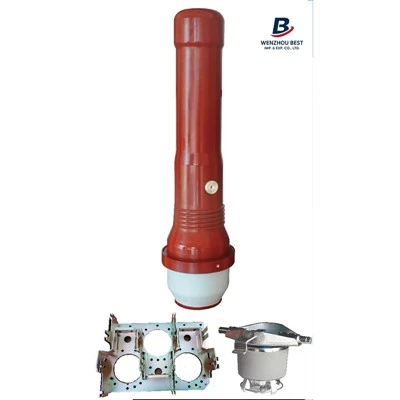
If you’re a utility engineer, line supervisor, or maintenance manager trying to figure out which switch is right for your grid—whether you’re upgrading a substation, replacing old transformers, or dealing with frequent outages that cost your customers (or your business) money—let’s connect. I’ve helped dozens of utilities across the country pair the right switch to their needs, cutting downtime and keeping crews safe. It’s not just about selling a product; it’s about making your job easier, and your grid more reliable. Let’s schedule a chat to go over your specific requirements.
600A Deadbreak Connector References
- IEEE Standard C37.20.1, "Switchgear for Alternating-Current Circuits, 1 kV Through 38 kV"
- National Electrical Safety Code (NESC) Part 4, "Substations, Switching Stations, and Associated Equipment"
- Electric Power Research Institute (EPRI) Report RP-2705, "Distribution Switch Performance and Applications"
- ANSI Standard C119.2, "Loadbreak Switchgear for Overhead Applications"
Wenzhou Best Imp. & Exp. Co., Ltd.
With abundant experience, Wenzhou Best Imp. & Exp. is one of the most professional loadbreak switch manufacturers and suppliers in China. Please feel free to buy durable loadbreak switch made in China here from our factory. Quality products and good service are available.
Address: Room 306, Building 14, Area C, Wuzhou Electrical Appliance City, No.3999, Liujiang Road, Liushi Town, Yueqing City, Wenzhou City, Zhejiang Province
E-mail: admin@bestenergytech.com
WebSite: https://www.besthvelectric.com/
