How to Select the Appropriate Size of a Condenser
As someone who’s been in the condenser supply business for over 12 years, I’ve lost count of how many times clients come to me with a problem: they either ordered a condenser that’s too small, and it can’t keep up with their process demands, or one that’s way too big, wasting money on unnecessary upfront costs and ongoing energy bills. Choosing the right condenser size isn’t just a numbers game—it’s about balancing performance, efficiency, and long-term value. In this post, I’ll break down exactly what goes into selecting the correct size, based on the real-world experience we’ve gained working with everything from small food processing units to large chemical manufacturing plants. Condenser
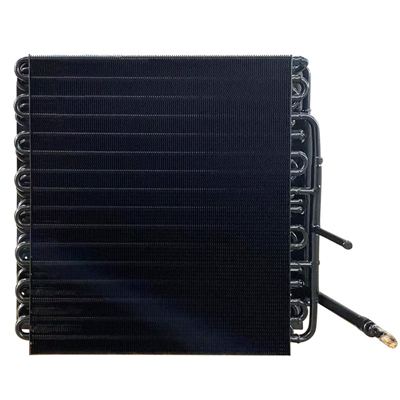
First, let’s get clear on what a condenser does. At its core, a condenser transfers heat from a vapor (the process fluid, like steam, refrigerants, or chemical vapors) to a cooler medium (usually water, air, or a refrigerant). The goal is to turn that vapor back into a liquid efficiently. Size matters here because an undersized condenser will let vapor escape as uncondensed gas, leading to lost product, higher emissions, and even damage to downstream equipment. An oversized condenser? You’re paying for more heat transfer area than you actually need, which inflates initial costs by 20-50% in many cases, according to data from the Heat Exchange Institute (HEI). Plus, oversized units often cycle on and off more frequently, which wears them out faster and uses more energy than a properly sized model.
So, where do you start? The first step is to calculate your total heat duty—that’s the amount of heat the condenser needs to remove from the vapor per unit time. This is non-negotiable, and it’s where a lot of first-timers go wrong. Let’s use a common example: a small brewery using steam to cool wort (unfermented beer). The steam here is water vapor, and you need to condense 500 pounds of steam per hour at 212°F. The latent heat of vaporization for water at that temperature is 970 Btu per pound. Multiply those numbers: 500 lbs/hr x 970 Btu/lb = 485,000 Btu/hr. That’s your heat duty. If you skip this calculation and guess, you’ll almost certainly get the size wrong.
But wait—heat duty isn’t just about the process fluid. You also have to account for heat losses in the system. Pipes, fittings, and even the condenser’s own shell can lose heat to the environment, especially if you’re working in a cold warehouse or outdoor facility. For our brewery example, if the system loses 5% of the heat during transfer, your adjusted heat duty becomes 485,000 x 1.05 = 509,250 Btu/hr. Ignoring that 5% loss could mean ordering a condenser that’s too small, since it’s built for 485k instead of the required 509k. That’s a mistake we see all the time, and it’s why we always tell clients to add a small safety margin to their heat duty calculation—not too big, just enough to cover real-world losses.
Next, you need to understand your cooling medium’s capacity. The condenser’s performance depends entirely on how well your cooling fluid can absorb that heat. If you’re using air as your coolant (an air-cooled condenser), the ambient air temperature is a huge factor. Let’s say you’re running a condensing unit in Arizona, where summer temperatures can hit 110°F. The air leaving the condenser can only be a few degrees warmer than the incoming air (usually 10-15°F warmer for proper operation). That means if the incoming air is 110°F, your condensing temperature (the temperature of the vapor being cooled) might have to be 125°F or higher. If you were in Minnesota, where winter air is 20°F, that same condenser would work much better, because the air can absorb more heat without needing to get so hot. The difference here is that an air-cooled condenser sized for a Minnesota plant would be undersized in Arizona—same heat duty, different cooling capacity.
If you’re using water as a coolant (a water-cooled condenser), the water’s inlet temperature is critical. Most industrial cooling water systems operate between 60°F and 85°F. The rule of thumb here is that the water leaving the condenser shouldn’t be more than 10-15°F warmer than the inlet water. If your inlet water is 70°F, the outlet should be between 80 and 85°F. If your condenser is sized so that the water leaves at 90°F, that means you don’t have enough cooling water flow, or the condenser isn’t big enough. On the flip side, if the water only warms by 5°F, you’ve got an oversized condenser wasting water and energy on pumping excess fluid through the unit. We recently had a client in a textile mill who ordered a water-cooled condenser without checking their water inlet temp—they were using water straight from a river at 55°F, and their oversized condenser made the water so hot they had to add a water chiller just to keep the process running. That’s a $10,000 mistake they didn’t need to make.
Another often-overlooked factor is the type of vapor you’re condensing. Not all vapors are the same, and their properties change how much heat transfer area you need. For example, refrigerants like R-134a have a different latent heat value than water vapor, and they also form a thin film on the condenser tubes that can slow down heat transfer—this is called thermal resistance. If you’re condensing a refrigerant, you might need 15-20% more heat transfer area than you would for water vapor with the same heat duty. Then there are vapors with non-condensable gases, like air or nitrogen, mixed in. Those gases can act like an insulator, coating the tubes and blocking heat transfer. If your process vapor has more than 5% non-condensables, you’ll need to increase the condenser size by another 10% to compensate. We worked with a chemical plant once that didn’t account for non-condensables in their ethylene vapor—their first condenser was so small that the non-condensables built up, and they were only condensing 60% of their vapor. They had to replace it with a larger unit, and it cost them $15,000 in lost production during the switch.
Now, let’s talk about the sizing methods professionals use. The HEI has a set of standard guidelines for condenser sizing that most reputable suppliers follow, and we swear by them. They use a formula called the “overall heat transfer coefficient (U-value)” which accounts for all the thermal resistances in the system: the vapor’s heat transfer through the tube wall, the cooling medium’s heat transfer, and any fouling (the buildup of scale, rust, or other deposits on the tubes). For example, a clean water-cooled condenser has a U-value of around 150-200 Btu/hr/ft²/°F, while a refrigerant condenser might be 80-120 Btu/hr/ft²/°F. The formula looks like this: Heat Duty (Q) = U x A x ΔT, where A is the heat transfer area, and ΔT is the temperature difference between the vapor and the cooling medium. Rearranged to solve for A, you get A = Q / (U x ΔT). That’s the most accurate way to get the right size, but you need reliable U-value data for your specific application.
A lot of small-scale operators try to skip this and use online sizing calculators, which can be risky. Most free online calculators use average U-values that don’t account for your unique vapor or cooling conditions. For example, if you’re using a glycol-water mixture as a coolant instead of plain water, the U-value drops by 20-30%, and a generic calculator won’t adjust for that. We’ve seen clients come to us with a calculator-sized condenser that ended up being 30% too small because the calculator didn’t account for their glycol mix. The moral here: if you use a calculator, double-check it with your specific fluid properties, or talk to a supplier who knows your industry.
Fouling is another big part of sizing that people miss. Over time, deposits build up on the condenser tubes, which reduces heat transfer. A new condenser has a clean tube, but after a year, that scale can add ½°F to the temperature difference, and after five years, it might add 2°F. If you size your condenser for a clean tube, it will perform poorly once fouling sets in. That’s why we always recommend adding a fouling factor to your U-value calculation—usually 0.0005 to 0.002 hr·ft²·°F/Btu, depending on your cooling water quality. For example, if your clean U-value is 180, you’d adjust it to 165 for fouling, which makes your required heat transfer area larger. It might seem like a small adjustment, but it keeps your condenser working efficiently for years, instead of needing replacement every 5 years.
Let’s test this with a real client story, because that’s the best way to show it works. Last year, a food processing plant that makes canned vegetables came to us with a problem: their old condenser was making their steam process inconsistent, leading to 2% more spoiled cans. They had a heat duty of 600,000 Btu/hr, were using city water at 75°F, and had a small amount of non-condensables (3% of their vapor). We didn’t just plug their numbers into a calculator—we calculated the adjusted heat duty (adding 6% for heat losses), adjusted the U-value for their water quality (adding a fouling factor), and accounted for the non-condensables (adding 10% to the required area). The result was a 200 sq ft water-cooled condenser, not the 170 sq ft they had ordered online. A year later, they told us their waste dropped to 0.5%, and their energy bills were down 12% because the condenser wasn’t running at full capacity all the time. That’s the value of getting sizing right.
What about different types of condensers? Air-cooled, water-cooled, shell-and-tube, plate—and does that affect sizing? Absolutely. A shell-and-tube condenser (the most common industrial type) has a different heat transfer rate than a plate condenser, which is smaller but more expensive for high heat duties. For a plate condenser, the U-value is higher (250-350 Btu/hr/ft²/°F), so you need less area, but it’s only suitable for clean, low-fouling fluids. If you use a plate condenser for a dirty water system, fouling will clog the plates quickly, and you’ll have to replace it sooner. So when sizing, not only do you need the right area, but the right condenser type for your application. We always ask clients about their fluid cleanliness and maintenance capabilities before recommending a size, because a big plate condenser that’s too small for fouling will cause more problems than a properly sized shell-and-tube.
Common mistakes to avoid: First, guessing instead of calculating. Even if you’ve had a condenser that worked before, every process is different—changes in vapor flow, cooling water temp, or product formula can throw off your sizing. Second, ignoring ambient conditions. An air-cooled condenser in a hot climate needs to be larger than one in a cool one, no exceptions. Third, skipping the fouling factor. We’ve seen so many clients size for clean tubes, only to have their condenser lose 20% of its performance after a year. Fourth, going too big. It’s easy to think “bigger is better,” but an oversized condenser has higher upfront costs, uses more energy (because pumping water or air through a larger unit takes more power), and has a shorter lifespan from cycling. We once had a client who ordered a condenser twice the size they needed; it cost 40% more than necessary, and their maintenance team said it ran twice as many cycles, leading to 30% more repairs in two years.
So, what should you do when you’re ready to size your condenser? Start by gathering all your data: calculate your total heat duty, account for heat losses, get the properties of your vapor (latent heat, non-condensables), get your cooling medium’s inlet temp and flow rate, and note any fouling in your system. Then, use the HEI guidelines or a specialized sizing tool (not a generic online one) that uses your specific fluid properties. If you’re not sure, don’t hesitate to reach out to a supplier—we have a team of engineers who help clients walk through this, no charge. Sizing is the most important step in getting a condenser that works for you, and we’d rather help you get it right than have you come back later with a problem.
At the end of the day, selecting the right condenser size isn’t just about fitting the equipment to your space or your budget—it’s about keeping your process running smoothly, reducing waste, and saving money over the life of the unit. We’ve been in this business long enough to know that a well-sized condenser pays for itself in a year or two, while a poorly sized one can cost you thousands in lost production and repairs. If you’re currently evaluating condensers for your process, or you’re not sure if your current one is the right size, we’re here to help. We can review your process data, run the calculations, and recommend a size that fits your needs, no hidden fees, no pressure. Don’t settle for a guess—get the right size, and watch your efficiency improve.
Finned Tube To learn more about condenser sizing and our product line, connect with our team to discuss your specific requirements today.
References
- Heat Exchange Institute. (2019). Standards for Steam Surface Condensers. 12th Edition.
- American Society of Heating, Refrigerating and Air-Conditioning Engineers (ASHRAE). (2021). HVAC Applications Handbook.
- Kern, D. Q. (1950). Process Heat Transfer. McGraw-Hill Education.
Xiangshui Derkang Refrigeration Equipment Co., Ltd.
As one of the most professional condenser manufacturers in China, we’re featured by quality products and low price. If you’re going to buy discount condenser, welcome to get quotation from our factory. We also accept customized orders.
Address: No. 2, Xiaojian Town Entrepreneurship Park, Xiangshui County
E-mail: 505745223@qq.com
WebSite: https://www.xsderk.com/
