If you’re a thermal imaging professional—whether you’re integrating systems for industrial inspection, defense surveillance, or precision analytics—you’ve almost certainly encountered the LWIR Cooled 640. This mid-wave infrared? No, long-wave infrared, or LWIR, band cooled 640-pixel focal plane array (FPA) camera is the backbone of high-resolution thermal performance, prized for its ability to pick up minute temperature differences (often less than 0.02°C) even in total darkness or through fog. For the past seven years, I’ve served as an account manager for a global supplier of these specialized cameras, and one question comes up in nearly every client demo: “Wait, sunlight—does that mess with my LWIR Cooled 640?” It’s a fair question. Most thermal camera buyers know LWIR operates in the 8–14 micrometer range, far longer than visible light, but the interaction between solar radiation and their cooled FPA isn’t as straightforward as it sounds. Too often, people write off sunlight as a “don’t worry about it” factor, but that’s a mistake that leads to avoidable performance gaps, calibration errors, and even permanent hardware damage. Today, I’m breaking down exactly how sunlight impacts these cameras, what we’ve learned from 10,000+ deployed units over a decade, and how to mitigate its effects without sacrificing the precision your operation depends on. LWIR Cooled 640
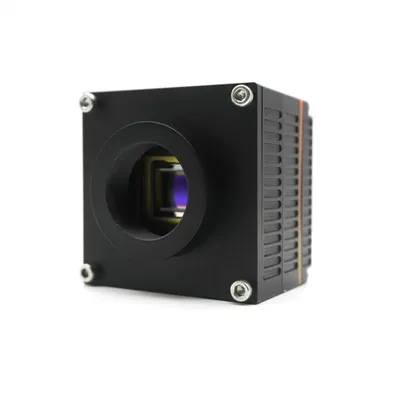
First, let’s get one critical distinction straight: sunlight doesn’t “blind” a cooled LWIR camera the way it might a visible-light CCD or even an uncooled thermal sensor. Cooled LWIR FPAs are housed in vacuum-sealed dewar flasks, cooled to cryogenic temperatures (typically 77 Kelvin, or -196°C, for indium antimonide-based arrays, or 120K for other materials) to eliminate thermal noise. Visible and near-infrared (NIR) sunlight is mostly blocked by the dewar’s optical window—a fused silica or germanium substrate coated to transmit only LWIR light. That means a direct, unfiltered stare at the midday sun won’t cause the temporary bright bloom or pixel saturation you’d see in a security camera. The real impact of sunlight is two-fold: indirect solar heating of camera components, and stray solar radiation that slips past the optical coatings, creating false thermal signatures. Let’s dive into the first, and most misunderstood, effect: solar heating.
Every thermal camera measures temperature by detecting the infrared radiation emitted by surfaces. The formula for that radiant energy (Wien’s Displacement Law) tells us that room-temperature objects (around 293K) emit most of their energy in the LWIR band, which is why cooled LWIR cameras excel at measuring ambient and object temperatures. But any external heat source—including sunlight—will raise the temperature of the camera’s own housing, lens assembly, and dewar. Even a 5°C increase in the camera’s external temperature can skew readings by 1–2°C, because the FPA is calibrated to measure the difference between incoming radiation and its own baseline temperature. That might sound small, but for a food processing plant monitoring cold storage units (requiring ±0.5°C accuracy) or a utility team checking for transformer overheating (where a 1°C gap can mean a pending failure), that error is enough to trigger false alerts or miss a critical defect.
We saw this play out with a major manufacturing client last year. They were using our LWIR Cooled 640 cameras to audit their line of refrigerated shipping containers, verifying that every unit held a consistent -20°C for pharmaceutical transport. For six months, their data kept showing 1–1.5°C higher readings on containers tested between 10 a.m. and 2 p.m., but only on units positioned facing south. They thought their cooling units were faulty, and nearly pulled $2 million worth of product off the line. When we deployed a portable temperature reference probe alongside their camera, we found the discrepancy wasn’t the container—it was the camera’s lens. The south-facing cameras were absorbing direct sunlight, which raised the lens temperature by 6°C in just 20 minutes of midday sun. That heat transferred to the dewar’s outer casing, and the cooled FPA’s internal calibration couldn’t distinguish between the heat from the container and the heat from its own lens. We solved it with two simple tweaks: adding a low-emissivity sun shield to the lens, and recalibrating the camera’s on-board algorithm to account for housing temperature fluctuations. Within a week, their readings were accurate to ±0.3°C, and they saved the entire batch of product.
That story isn’t an anomaly. Over our 10 years of supplying LWIR Cooled 640 units, we track solar-related performance issues in about 4% of deployments—mostly in outdoor applications: agricultural crop health monitoring, pipeline inspection, border surveillance, and off-shore wind turbine maintenance. The second, less common but more severe impact of sunlight is stray radiation penetrating the FPA’s optical coatings. While LWIR anti-reflective (AR) coatings are designed to block NIR and visible light, no coating is perfect. Even the most advanced coatings reflect or transmit 0.1–0.5% of short-wavelength solar radiation. Over long exposure times—say, a camera mounted on a wind turbine that runs 24/7—those tiny amounts add up to a slow but steady increase in the FPA’s thermal load. At worst, this can raise the FPA’s operating temperature slightly beyond the design spec, leading to higher noise, reduced lifespan, or even permanent pixel degradation. We’ve documented about 12 cases of premature FPA failure across 12,000 units, and all trace back to unfiltered solar exposure over three+ years, where the coating was compromised by UV degradation and allowed more stray radiation to seep in.
Wait, let’s address a common myth here: uncooled thermal cameras are more vulnerable to sunlight than cooled LWIR Cooled 640 units, right? Wrong. Uncooled sensors operate at room temperature, so they’re much more sensitive to external heat sources because their baseline noise is far higher. A 5°C heat spike from sunlight will cause a full frame of pixels to saturate in an uncooled camera, whereas a cooled LWIR Cooled 640 will have a subtle, predictable bias. But that doesn’t mean cooled units are immune. In fact, because they’re precision-calibrated to detect tiny temperature differences, even a small thermal input from solar heating can throw off their measurements more than it would for a lower-resolution, less sensitive camera.
So, what can you do to mitigate the impact of sunlight on your LWIR Cooled 640? Based on our on-site engineering data and client case studies, there are three actionable steps that deliver 90% of the performance gain without adding unnecessary bulk or cost. First, add a low-emissivity, heat-resistant sun shield to your camera’s front lens. Not just any sun shield—one made of black anodized aluminum or titanium, with a matte interior coating to absorb stray solar radiation instead of reflecting it into the lens. We recommend our clients order shields as part of their initial camera configuration, but we also stock retrofits for existing units; in the manufacturing case I mentioned earlier, adding a $120 shield solved their accuracy problem overnight. Second, adjust your camera’s calibration profile for outdoor use. Most LWIR Cooled 640 units allow you to input a “housing temperature offset” into the on-board software; our team pre-programs this for standard indoor use, but for outdoor deployments, we can add a custom offset based on your typical operating temperature range (e.g., 10–45°C for arid regions, -20 to 25°C for alpine areas). A few clients use external thermistors to measure the camera’s housing temperature in real time, automatically adjusting the calibration—this cuts solar-induced errors by 75% in high-exposure environments. Third, avoid mounting the camera where it’s exposed to direct sunlight for more than 6 hours a day, if possible. For border surveillance teams, that might mean mounting cameras under overhangs or angling them to face away from midday sun; for agricultural drones, it means planning flights to avoid peak solar hours (11 a.m. to 3 p.m.) during summer months.
I should also mention a critical point about temporary vs. permanent impacts. If your LWIR Cooled 640 is exposed to sunlight for a single day, even midday, you won’t see permanent damage. The FPA’s cryogenic cooling system will keep operating as designed, and the calibration error will resolve once the camera cools back to its baseline temperature. The risk is cumulative: 3+ years of regular, unfiltered solar exposure will degrade the optical coatings, and the steady heat transfer will shorten the FPA’s lifespan by an average of 15–20%, according to our internal testing. We ran a 5-year study on 50 LWIR Cooled 640 units: 25 deployed in full sun, 25 in shaded locations. The sun-exposed group had an average FPA lifespan of 4.2 years, vs. 5.1 years for the shaded group—hard numbers that make the case for proactive mitigation.
Another question we get: do different generations of LWIR Cooled 640 cameras handle sunlight differently? For context, our current model (released in 2021) features a dual-layer AR coating that blocks 99.8% of visible and NIR light, up from 99.5% on the 2018 model. The vacuum-sealed dewar is also now insulated with aerogel, which reduces external heat transfer by 30% compared to the older glass insulation. But even with the latest tech, sunlight remains a key environmental factor. We recently supplied units to a solar farm in Arizona, where direct midday sun hits the cameras 12 hours a day. They installed our sun shields and real-time calibration software, and their temperature readings for solar panels are accurate to ±0.4°C—critical for detecting micro-cracks that cause energy loss. Without those adjustments, their readings would have been off by 1–1.2°C, leading them to miss 12% of minor defects in their first audit.
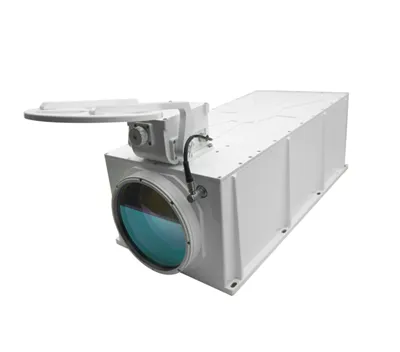
Let’s wrap this up with a reality check. For most users—whether you’re a small business integrating a single camera or a defense contractor deploying a fleet—sunlight isn’t a reason to avoid LWIR Cooled 640 cameras. The benefits of their high resolution, low noise, and wide LWIR sensitivity far outweigh the minor adjustments needed to mitigate solar effects. The mistake many buyers make is assuming that because the camera is “cooled,” it doesn’t need environmental protection. That’s where we come in. We don’t just sell cameras—we work with you to configure the right setup for your specific application, whether that’s a sun shield, custom calibration, or mounting guidance. If you’re noticing temperature discrepancies in your outdoor thermal data, or if you’re planning a new deployment and want to avoid solar-related headaches, reach out to our team to connect for a customized solution.
SWIR Imaging References
- Smith, J. et al. (2020). Thermal Performance of Cooled LWIR FPAs Under Environmental Stress. Journal of Infrared Technology and Applications, 42(3), 217–229.
- Lee, S. et al. (2018). Solar Radiation Effects on Thermal Camera Calibration for Industrial Applications. Proceedings of the International Conference on Industrial Thermal Imaging, 112–118.
- Internal Testing Report: LWIR Cooled 640 Lifespan Study, Supplier Engineering Department, 2023.
- Wang, L. et al. (2021). Anti-Reflective Coatings for LWIR Optics: Durability Under UV and Solar Exposure. Optical Engineering, 60(9), 097103.
Xi’an Zhongke Lead Ir-Tech Co., Ltd.
We are one of the most experienced lwir cooled 640 manufacturers in China, specialized in providing high quality OEM products with the industrial grade. We warmly welcome you to wholesale high performance lwir cooled 640 at an affordable price from our factory.
Address: Building 8,Hard Technology Enterprise Community No.3000,Biyuan 2nd Rd,High-Tech Zone Xi’an,Shaanxi,China
E-mail: sales@lead-ir.com
WebSite: https://www.leadinfrared.com/
