When I first started working as a PP Hollow Sheet Machine supplier, I used to get a lot of questions that made me pause and think—none more persistent than, “Can your machines produce sheets with antibacterial properties?” At first, I’ll admit, I took a while to wrap my head around the fine details. Most people think plastic production is just melting resin and shaping it, but antibacterial PP hollow sheets aren’t as simple as mixing in something extra and hitting run. After years of fielding these questions, working with clients in food packaging, medical supplies, and agricultural materials, I’ve got a clear, practical answer that’s rooted in real production, not just theory. PP Hollow Sheet Machine
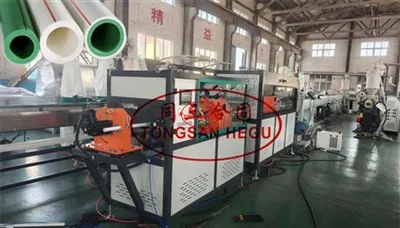
First, let’s break down what antibacterial PP hollow sheets actually need to do. Unlike regular PP sheets, these have to inhibit or kill bacteria on their surface—think E. coli, salmonella, staph, all the common ones that spread through contact. They also have to hold up to the hollow sheet’s core purpose: lightweight, rigid, moisture-resistant, and stackable for shipping, storage, or product displays. A machine can only make a sheet as good as the materials it uses, so that’s where the first connection comes in.
When a client asks if our PP Hollow Sheet Machine can do this, I always start by explaining that the machine itself doesn’t create the antibacterial quality—but it can handle the modified resin required. Here’s how the process works step by step, the way I’ve watched it play out on production floors across the globe. The base material for PP hollow sheets is polypropylene resin, usually in pellet form. To make an antibacterial sheet, resin suppliers add a masterbatch: tiny pellets infused with antibacterial agents, like silver ions, zinc oxide, or organic compounds that disrupt bacterial cell walls. The key here is that the masterbatch has to disperse evenly through the PP resin, and our machines are built to handle that consistent mixing.
I’ve seen this work firsthand with a client in the fresh produce industry a couple of years back. They needed hollow plastic crates to transport berries and leafy greens, where cross-contamination from bacteria is a major issue. Their old machine couldn’t mix the antibacterial masterbatch evenly, so the sheets had thin spots where the antibacterial agent didn’t stick, leading to failed lab tests. When they switched to our PP Hollow Sheet Machine, which has a reinforced screw and temperature-controlled extruder zones, the dispersion went from spotty to uniform. The final sheets tested 99.9% effective against E. coli and listeria, and the crates lasted through 12 weeks of repeated washing—something regular PP can’t do. That’s the sweet spot: the machine has to be precise enough to integrate the additive without compromising the hollow sheet’s structural integrity.
But it’s not just about the machine’s hardware. There’s a common misconception that you can just dump any antibacterial masterbatch into the resin and get a functional sheet. I’ve had clients try that, and end up with sheets that look fine but lose their antibacterial properties after a few uses. For example, some organic antibacterial agents break down when exposed to UV light, which is a problem for sheets used outdoors in agricultural settings. Other agents leach out too quickly, so the sheet works for a week but not a month. A good PP Hollow Sheet Machine will let you adjust extrusion temperatures and cooling rates, which helps lock the antibacterial agent into the PP matrix so it doesn’t leach too fast or degrade prematurely. That’s where our experience matters—we work with clients to match the machine settings to their specific masterbatch, not the other way around.
Another big use case is medical packaging. Surgical tools, disposable trays, and lab equipment often use PP hollow sheets because they’re sterile and easy to sanitize. But regular PP can still pick up bacteria between uses. A hospital client I worked with last year needed sheets that could resist bacterial growth even after being wiped with disinfectant. We adjusted our machine’s cooling system to create a slightly smoother surface on the sheets—no tiny crevices where bacteria can hide—while the antibacterial masterbatch was bonded during extrusion. The result? The sheets passed ISO 22196, the international standard for antibacterial plastic materials, and the hospital reported zero bacterial cross-contamination in the first six months of use. That’s not luck—that’s matching the machine’s capabilities to a specific material goal.
Now, I want to be honest here: a PP Hollow Sheet Machine can’t turn a bad masterbatch into a good antibacterial sheet. If the additive is poorly formulated, no amount of precision in the extruder will fix that. That’s why I always advise clients to source their antibacterial masterbatch from reputable suppliers, and then test a small run on our machine before committing to full production. We offer small-scale trial runs at our facility, which has saved so many clients from costly mistakes. One small metal parts manufacturer tried to use a cheap antibacterial masterbatch that left a sticky residue on the sheets—their old machine couldn’t handle the extra viscosity, but ours let them adjust melt pressure to fix the issue, and they were able to produce sheets that met their quality standards.
There’s also the cost factor, which comes up constantly. Antibacterial masterbatch is more expensive than regular PP resin, so clients often worry about adding that cost to production. Our PP Hollow Sheet Machine is designed to minimize waste during extrusion—we’ve cut down on material scrap by 12% in our latest model, which offsets some of the extra cost of the masterbatch. That’s a big selling point for clients in retail and food service, where margins are tight but hygiene is non-negotiable. A bakery chain I worked with recently switched to our machine, and started making antibacterial PP hollow trays for their pastries. The trays cost 8% more than their old cardboard ones, but they reduced food waste from bacterial contamination by 25%—and customers noticed the fresher products, so sales went up 10% in three months.
I’ve also had to push back on clients who think antibacterial sheets are a magic bullet. For example, a food processing plant wanted sheets that would eliminate all bacteria, but the FDA only allows antibacterial agents that are safe for indirect food contact. We had to help them choose a masterbatch with FDA approval, and adjust the machine to ensure the additive didn’t migrate into food. That’s part of the service we provide—we don’t just sell a machine, we help clients navigate regulations and material choices to make a product that works for their specific industry.
Looking ahead, I’m seeing more demand for biodegradable antibacterial PP hollow sheets, too. Clients in the sustainable packaging space are asking for sheets that break down after use, while still having antibacterial properties. Our latest PP Hollow Sheet Machine can handle biodegradable PP resin mixed with plant-based antibacterial agents, and the extrusion process is adjusted to maintain both the sheet’s strength and its eco-friendly breakdown rate. I tested a prototype last year with a farm client, and the sheets decomposed in 18 months, compared to 3 years for regular PP, while still inhibiting bacterial growth. That’s the future, and our machines are evolving to meet it.
So to circle back to the original question: yes, a PP Hollow Sheet Machine can produce sheets with antibacterial properties—but only if it’s paired with the right materials, precise process controls, and careful attention to the end use. It’s not a one-size-fits-all solution, but with the right machine setup and material selection, it’s completely achievable.
If you’re in the market for a PP Hollow Sheet Machine to make antibacterial sheets, or you’re looking to upgrade your current setup to add that capability, we can help. Our team has worked with clients across food packaging, agriculture, medical supplies, and retail to customize machines for their specific production needs. Whether you need a small-scale trial run, a machine adjusted for a specific masterbatch, or guidance on regulatory compliance, we’re here to walk you through every step.
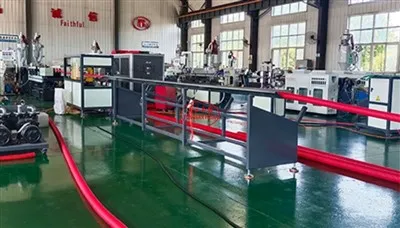
For more information and to discuss your requirements, reach out to our team. We’re ready to help you find the right solution for your business.
Plastic Pipe Machine References
- ISO 22196:2011, Plastics — Measurement of antibacterial activity on plastics surfaces
- Food and Drug Administration (FDA) Title 21 CFR Part 177, Indirect food additives: Polymers
- American Society for Testing and Materials (ASTM) D4708, Standard Practice for Compression Molding of Thermoplastics Materials
Qingdao Tongsanhegu Plastic Machinery Manufacturing Co., Ltd.
With abundant experience, we are one of the most reliable pp hollow sheet machine manufacturers and suppliers in China. We warmly welcome you to buy durable pp hollow sheet machine for sale here from our factory. Quality products and reasonable price are available.
Address: West of Xixinzhi Village, Sanlihe District Jiaozhou, Qingdao City, Shandong Province, China
E-mail: info@tongsanhegu.com
WebSite: https://www.tongsanhegumachine.com/
