If you’ve ever priced out a plumbing, irrigation, or infrastructure project, you know HDPE pipes and fittings aren’t one-size-fits-all. Over the 12 years I’ve been in the HDPE pipes and fittings supply business, I’ve lost count of how many times a contractor, plumber, or project manager has asked, “Just give me a ballpark number—no need for all the details.” The problem is, that ballpark doesn’t exist. HDPE prices shift faster than most people expect, and every variable from pipe diameter to project quantity can swing costs by hundreds or even thousands of dollars. Today, I’m breaking down exactly how we price our products, what factors actually matter, and what you need to know to budget right. HDPE Pipes and Fittings
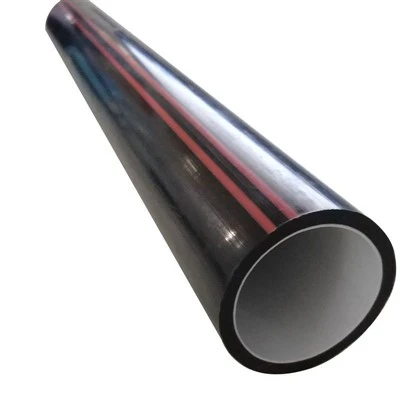
Let’s start with the basics: what makes HDPE different from other pipe materials, and why does that change its cost? HDPE (high-density polyethylene) is a thermoplastic polymer, which means it’s lightweight, flexible, corrosion-resistant, and flexible enough to bend around obstacles instead of needing dozens of joints. Unlike PVC, which can crack under extreme pressure or freeze, or metal pipes that rust over time, HDPE holds up to chemicals, UV rays (if you get the right compound), and ground movement. That durability comes at a cost that’s not just the plastic itself, though. The manufacturing process for HDPE requires specialized extrusion equipment, and raw material resin prices fluctuate based on oil and natural gas costs—since most HDPE is a byproduct of fossil fuel processing. That’s one of the biggest drivers of price volatility, and it’s why you’ll often see quotes from 6 months ago that are no longer relevant today.
Now, let’s get into the core question: How much do HDPE pipes cost, specifically? I’m not going to throw out generic per-foot numbers because they’re meaningless. A ½-inch pipe for a residential sprinkler system is way cheaper than a 48-inch pipe for a municipal water main. Let’s break down pipe pricing first, since that’s what most people ask about.
For small-scale projects, like residential irrigation, landscaping, or small plumbing runs, we stock HDPE pipes in diameters from ½ inch to 2 inches. These are usually for low to medium pressure applications. The average price here ranges from $0.50 per foot to $3.50 per foot. Wait, that’s a huge gap, right? That’s not just for different sizes—let’s explain: a ½-inch SDR 11 pipe (SDR means Standard Dimension Ratio, the ratio of outer diameter to wall thickness, so lower = thicker wall, higher pressure rating) is about $0.55 per foot for a 100-foot roll, perfect for residential drip lines. A 2-inch SDR 7 pipe, which can handle 160 psi for a small commercial system, is around $2.20 per foot. The thickness of the wall is non-negotiable here, and that’s the biggest factor for small pipes. SDR ratings matter a lot—SDR 11 is thicker, more expensive, for higher pressure; SDR 17 is thinner, cheaper, for lower pressure like landscape water lines.
Moving up to medium-scale projects: small commercial plumbing, residential water service lines, farm irrigation mains. Diameters here are 2.5 inches to 12 inches. Prices jump to $3 to $25 per foot. A lot of people forget that the manufacturing costs for larger pipes don’t just scale linearly. A 10-inch pipe doesn’t cost 5 times a 2-inch pipe—extruding a 10-inch diameter, thick-walled pipe requires more energy, specialized molds, and stricter quality checks, so the cost is closer to 8 times the 2-inch pipe. For example, a 6-inch SDR 11 water main pipe is about $12 per foot, while a 12-inch SDR 11 is around $22 per foot. These are also usually sold in longer rolls—often 20-foot or 40-foot lengths, instead of 100-foot small rolls, which affects shipping too.
Then there are the large-scale industrial and municipal projects: water transmission lines, sewage force mains, mining slurry lines, offshore applications. Diameters here go from 14 inches all the way up to 63 inches, and prices range from $28 per foot to $150 per foot. Again, it’s not just size—these pipes are built for extreme conditions. A 20-inch SDR 9 pipe, which can handle 200 psi for a municipal water main, is around $45 per foot, while a 48-inch SDR 17 pipe for a heavy-duty mining slurry line is about $120 per foot. The resin here is often a higher grade, with additives to resist abrasion, chemicals, and UV exposure, which adds to the cost. Also, these pipes are usually fused on-site, so extra fittings and fabrication costs factor in, which we’ll get to in a minute.
Now, fittings. This is where most new buyers get surprised. Fittings are not just little add-ons—they’re often the most expensive part of a piping system, especially for custom sizes or specialized applications. HDPE fittings include elbows, tees, couplings, reducers, flanges, end caps, and adapters to connect to other materials like metal or PVC. Unlike pipes, which are extruded in standard rolls, fittings are molded, so their cost is based on the complexity of the shape, the size, and the number needed.
For small projects, fittings for ½-inch to 2-inch pipes are cheap, ranging from $1 to $20 per fitting. A standard ¾-inch elbow is about $1.50, a 2-inch tee is around $8. But here’s the catch: if you need a specialized fitting, like a reduced tee to connect a 1-inch pipe to a ½-inch branch, that’s $12, and a threaded adapter to connect HDPE to a metal pipe for a home faucet is around $5. For commercial projects, fittings from 2.5 inches to 12 inches cost $25 to $500 each. A 6-inch coupling is about $45, a 10-inch elbow is around $220, and a mechanical flange adapter to connect HDPE to a steel line for a commercial building can run $400. For large municipal or industrial projects, fittings for 14-inch to 63-inch pipes are $600 to $5,000 each. A 24-inch tee is around $2,800, a 48-inch flange adapter is about $4,500. That’s a big expense, and many first-time buyers underestimate how many fittings they’ll need—for example, a 100-foot run of 6-inch pipe with two elbows, three tees, and four couplings will add almost $1,000 in fittings alone, which is more than a third of the pipe cost.
But wait, there are way more factors that change these numbers, and that’s where a lot of contractors go wrong. Let’s talk about the things that make your specific quote higher or lower than the average I just gave.
First, raw material costs. As I mentioned earlier, HDPE is made from ethylene, which is derived from oil and natural gas. When energy prices go up, resin prices go up, and that gets passed on to us, which means your quote goes up. Last year, for example, resin prices spiked 18% due to supply chain issues after a major refinery shutdown in the Gulf Coast—so quotes from March 2023 were 18% higher than quotes from January 2023. If you get a quote from a supplier that’s more than a month old, it might not be accurate, so always ask for a current price.
Second, quantity. This is the biggest lever you have to lower costs. Like most manufacturing, we offer tiered pricing: the more you order, the lower the per-unit cost. If you need 1,000 feet of 6-inch pipe, the per-foot price is $12, but if you need 10,000 feet, that drops to $10 per foot. For fittings, ordering bulk can cut per-fitting costs by 20-30%—if you only need one 10-inch elbow, it’s $220, but if you order ten, it’s $170 each. That’s why if you’re a landscaper working on five projects, combining your pipe orders with your crew can save you thousands.
Third, SDR rating and pressure class. Higher SDR means thinner wall, lower pressure rating, so cheaper. But don’t just pick the cheapest SDR to save money—if your system runs higher pressure, a lower SDR pipe will crack or leak, which will cost you way more in repairs later. For example, a residential main water line needs at least SDR 11 for 100 psi, so a cheaper SDR 17 pipe might seem like a good deal, but it can’t handle the pressure of a municipal line, leading to bursts and water damage. On the flip side, if you’re running a low-pressure landscape line, SDR 17 is a waste—you’re paying for thicker wall you don’t need.
Fourth, shipping and logistics. If your project is in a remote area, shipping costs can add 10-25% to your total cost. Large pipes and fittings are heavy, so trucking them to a rural job site is way more expensive than delivering to a commercial yard. That’s why local suppliers often have a slight edge—we’re based in the Midwest, so we can deliver to projects within 500 miles for a flat shipping rate, which is cheaper than national suppliers that have to ship cross-country. Also, if you pick up your order from our warehouse, you can skip shipping entirely, which saves even more.
Fifth, custom products. If you need a specialized fitting, like a bent elbow for a tight space, or a pipe with unique additives (like UV stabilizers for outdoor use, or chemical resistance for industrial applications), that will add to the cost. Standard fittings are cheaper because we mold them in bulk, but custom parts require tooling and small production runs, so you’ll pay a premium. We can make custom products, but we always explain the cost up front so there are no surprises.
I get asked all the time: is HDPE cheaper than PVC or metal? The short answer is, it depends on the project. For small residential projects, PVC is often slightly cheaper, but HDPE lasts 2-3 times longer, so the lifecycle cost is lower. For large commercial or municipal projects, HDPE is usually cheaper than metal pipes because it’s lighter, easier to install, and doesn’t require anti-corrosion treatments. For example, a 1,000-foot run of 10-inch metal pipe costs about $60 per foot installed, while the same run of HDPE is about $45 per foot installed, plus you don’t have to pay for joint sealing or rust repairs down the line.
Now, let’s talk about common mistakes buyers make when budgeting for HDPE. First, forgetting to include fittings and installation costs. A lot of people add up the pipe cost and stop, but fittings can add 30-50% to your total project cost, and installation (fusing HDPE pipes together, which requires specialized tools and labor) adds another 20-40%. Second, using outdated quotes. As I said, resin prices shift monthly, so a quote from 6 months ago is likely wrong. Third, overbuying or underbuying. If you order too little, you’ll have to reorder, which might mean a higher price and extra shipping. If you order too much, you’re wasting money on excess material. Fourth, not checking the quality of the HDPE. Some cheap suppliers use recycled resin that doesn’t meet industry standards, which leads to leaks and early failure. We only use virgin HDPE resin that meets ASTM standards, so you know your pipes will last.
So, what should you do next? If you’re planning a project, don’t ask for a generic price. Give us the details: what diameter pipe you need, what SDR rating, how much quantity, the location of the project, and what application it’s for (residential irrigation, municipal water, mining, etc.). We’ll give you a current, itemized quote that includes pipe, fittings, shipping, and any other costs, and we can even help you design the system to cut costs without sacrificing quality.
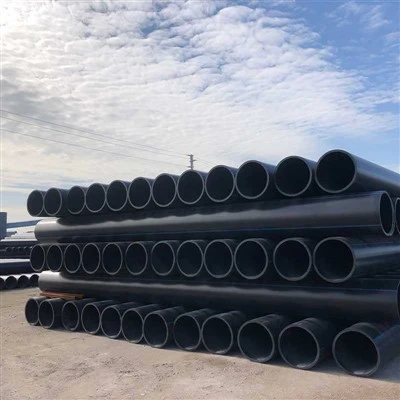
Whether you’re a homeowner doing a small landscape project, a contractor with multiple commercial jobs, or a municipal engineer planning a large water line, we’ve worked with all kinds of buyers. We don’t do generic “ballpark” quotes because we know every project is unique. Reach out to our team to discuss your needs, and we’ll help you get the best value for your HDPE pipes and fittings.
PVC Pipe & Fittings References:
ASTM International. (2022). Standard Specification for High-Density Polyethylene (HDPE) Pipe (F714).
Plastic Pipe and Fittings Association. (2023). HDPE Pipe Pricing and Market Trends Report.
U.S. Energy Information Administration. (2024). Ethylene Price Volatility and HDPE Manufacturing Costs.
National Sanitation Foundation. (2022). HDPE Fitting Performance Standards for Potable Water Systems.
Shanxi Kaisheng Plastic Co., Ltd.
As one of the most professional hdpe pipes and fittings manufacturers and suppliers in China, we’re featured by quality products and good price. Please rest assured to buy customized hdpe pipes and fittings made in China here from our factory. Welcome to contact us for quotation.
Address: No.72, Area S, Gate 1, Haohai Wumart, Fendong Street, Xiaodian District, Taiyuan City, Shanxi Province
E-mail: sxkssj8@163.com
WebSite: https://www.sx-kssj.com/
