Let’s talk about something that’s been top of mind for a lot of educators, training teams, and even startup folks lately: scaffolding for critical thinking. Wait, hold on—before you zone out thinking this is just another stuffy ed theory rant, let’s be real. When I hear “scaffolding,” I used to picture a rickety old construction ladder for a second, too. But here’s the thing: at our scaffolding supply company (yeah, we’re the ones that make the actual structures people need to build or work safely up high), our team’s been geeking out over this metaphor for years. It’s not just for building skyscrapers. It’s a blueprint for how to help people level up their critical thinking skills without feeling like they’re drowning. Scaffolding
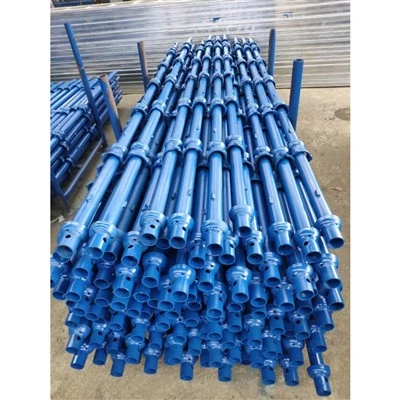
Let’s break this down plain and simple. Critical thinking isn’t just “being skeptical” of everything people say. It’s the messy, human process of breaking a problem into pieces, checking where info is coming from, spotting gaps in logic, and then building a solid, well-reasoned conclusion instead of just grabbing the first answer that pops up. Think about it: when you’re training a new warehouse picker, a new teacher, or even someone trying to nail a marketing strategy, they don’t walk in able to do that on day one. That’s where the “scaffolding” part comes in.
The whole idea ties back to that developmental psychologist Vygotsky, right? (Yeah, the guy who talked about the “zone of proximal development” — everyone’s favorite ed term we’ve all heard 100 times.) That zone is the sweet spot between what someone can do totally on their own and what they can’t even wrap their head around yet. Scaffolding is exactly the temporary support that fits right in there. And when it comes to critical thinking, that support isn’t a one-size-fits-all ladder—wait, no, our ladders are one-size-fits-all for job sites, but here, we tweak it for each person’s skill level.
Let me give an example to make it real. Say we’re training a group of small business owners to critically evaluate their sales data. If we just drop a spreadsheet of numbers and say “figure out why sales dipped,” half of them would freeze. That’s way outside their zone. But if we scaffold it? First, we give them a list of simple, guiding questions: “Did we run any big promotions that month?” “Did our top 3 suppliers change their pricing?” That’s the first layer of scaffolding—holding their hand to point at what to look for. Next, we give them a template to map those questions to data columns, so they don’t get lost in rows and rows of numbers. Then, we sit with them in small groups to walk through one business’s data together, pointing out how to spot a correlation vs. a coincidence. By the end, they’re not just guessing—they’re asking their own questions, checking their own facts, and building solid conclusions. And the best part? We can pull the scaffolding away gradually. Once they get the hang of it, they don’t need those templates or group checks anymore. That’s the point of scaffolding for critical thinking: temporary support that gets people to stand on their own.
Wait, but let’s not make this sound like it’s only for classrooms or training rooms. Our team sees this play out on job sites all the time, too. When a new construction worker is learning to read blueprints safely, they start with scaffolding that has big, high-contrast labels on each section. Then, once they can do that, we take the labels off and give them quick checklists for double-checking measurements. That’s the same exact process as critical thinking scaffolding, just for physical work instead of mental work. It’s not a separate thing—it’s a universal way to help people grow.
Now, let’s talk about what good scaffolding for critical thinking isn’t. It’s not giving someone all the answers for them. That would be like building a permanent ladder right next to a skyscraper instead of taking it down once the building is up. If you just tell a new employee “sales dipped because your promotion was a bad idea,” they’ll never learn to check their own data, ask their own questions, or figure that out next time. That’s “over-scaffolding”—and it does more harm than good. On the flip side, if you give someone zero scaffolding, drop a messy problem on their desk, and say “solve it,” that’s under-scaffolding. They’ll get frustrated, burn out, and just give up. The sweet spot is that gradual, tailored support.
We’ve run into this a lot with clients lately. Some schools come to us saying, “We need to teach critical thinking, but our teachers are stretched too thin to build their own scaffolding.” That’s where we step in. As a scaffolding supplier, we don’t just sell metal frames and planks for job sites—we’ve spent years developing practical, usable tools that translate that critical thinking scaffolding into something real. Think of it as our “mental scaffolding toolkit”: pre-made templates for group discussions, question banks tailored to different skill levels, and even quick training guides for teams that don’t know where to start. It’s not just theory—it’s stuff you can use tomorrow.
Let me throw another real example out there. Last quarter, a regional hospital reached out to us. They needed their nursing staff to improve their critical thinking for triaging emergency patients. Wait, triage is already super high-stakes, right? One wrong call can change everything. Their problem: new nurses were either skipping important details (under-scaffolding) or relying too much on checklists and not adapting when a patient’s symptoms were tricky (over-scaffolding). So we worked with them to build a scaffolding system for their training: first, new nurses worked with a pre-made “triage checklist” that broke down every key symptom to check. Then, once they mastered that, we added “variable scenarios” where the checklist had gaps, forcing them to ask “wait, this symptom doesn’t fit—what else could it be?” Then, gradually, we pulled the checklist back entirely, letting them rely on their trained skills. The hospital told us 2 months later, error rates for triage dropped 18% and new nurses reported way less burnout. That’s the power of this stuff.
You might be wondering—why does this matter so much right now? Let’s be honest. We’re living in a time where everyone is flooded with information. Social media, news, work emails, random articles—there’s more data thrown at us than we’ve ever had before. Critical thinking isn’t a “nice-to-have” anymore. It’s a survival skill, both at work and in daily life. But most people don’t learn it by just “practicing it.” They need that scaffolding to bridge the gap between where they are and where they want to be.
And here’s the thing about our scaffolding products—both physical and the mental tools we build for critical thinking—we design them with that gradual support in mind. No more one-off training sessions that people forget a week later. No more generic checklists that don’t fit your specific team. We work with you to figure out what your people’s “zone of proximal development” is, and build scaffolding that grows with them.
If you’re a school administrator, a corporate L&D lead, a small business owner, or even someone looking to level up your own team’s critical thinking skills—we can help. We’ve supported everyone from K-12 schools to Fortune 500 teams, adapting our scaffolding to fit whatever you’re working on. Whether you need physical structures for hands-on training or the mental scaffolding tools to teach critical thinking effectively, we’ve got you covered.

Ready to stop guessing at how to help your team build critical thinking skills the right way? Reach out to our team to chat through your specific needs, no pressure, no jargon. We’ll work with you to figure out the perfect scaffolding setup that fits your people, your goals, and your budget. Don’t let your team struggle under the weight of too much, or give up because there’s no support. Let’s build something that works—for them.
Formwork Tekko Clips References:
Vygotsky, L. S. (1978). Mind in Society: The Development of Higher Psychological Processes. Harvard University Press;
Brown, A. L., Collins, A., & Duguid, P. (1989). Situated Cognition and the Culture of Learning. Educational Researcher;
National Research Council. (2011). Education for Life and Work: Developing Transferable Knowledge and Skills in the 21st Century. The National Academies Press;
Gibbons, P. (2015). Scaffolding Language, Scaffolding Learning: Teaching English Learners in the Mainstream Classroom. Heinemann.
Rizhao Wellfit Scafform Co., Ltd.
As one of the most professional scaffolding manufacturers and suppliers in China, we have world-leading production equipment and strong manufacturing capabilities. Please feel free to buy high quality scaffolding at competitive price from our factory.
Address: No.7, Huasheng Road, Taoluo Town Industrial Zoon, Donggang District, Rizhao City
E-mail: sales@wfscafform.com
WebSite: https://www.wfscafform.com/
