If you’ve ever stood on a construction site, watching a backhoe loader bounce between digging a foundation trench for a new home, lifting a pile of broken concrete rubble, and smoothing out a dirt access road, you’ve probably wondered the same thing: is that machine really that easy to master? As a backhoe loader supplier who’s spent the last 12 years walking sites from suburban residential builds to rural highway projects, I’ve fielded this question from new operators, small business owners buying their first machine, and even seasoned contractors looking to streamline their fleet. The short answer? It’s simpler than you think—if you go into it with the right context, training, and realistic expectations. Let’s break down what makes backhoe loaders approachable, where new operators might trip up, and why they’re one of the most versatile pieces of equipment in the job site today. Backhoe Loader
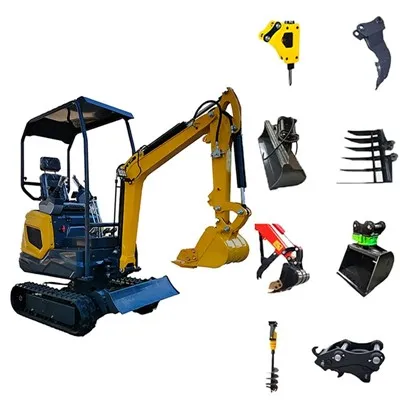
First, let’s ground this in how backhoe loaders are designed, because ease of operation starts with their core build. Unlike specialized machines that only do one thing (think a giant excavator built solely for deep digging, or a bulldozer built only for pushing material), backhoe loaders are built to do three jobs: dig with the rear hoe, lift and move material with the front loader, and navigate tight spaces that full-size heavy equipment can’t reach. That versatility is intentional from the factory floor—modern models are built with operator comfort and control in mind, not just raw power. When we design our backhoe loaders, we prioritize ergonomics over overcomplicated features, and that translates directly to how easy they are to use.
Take the control setup, for example. A common misconception is that backhoe loaders have dozens of confusing levers and switches that take months to memorize. Back when my dad started in the equipment business in the 1980s, that was true—old models had separate levers for every function, often requiring operators to learn hand-eye coordination that felt like learning a new sport. Today? Most models, including the ones we supply, use integrated, intuitive controls. The front loader is usually operated with two joysticks on the right side of the cab, and the rear hoe runs on either joystick or a separate, simplified lever system, with clearly labeled buttons for auxiliary functions like attaching a hydraulic hammer or a auger. Even the transmission is standard: most backhoe loaders have an automatic transmission for road travel, so you don’t have to shift gears manually while moving between tasks—one less thing to stress about for new operators.
I’ve seen this firsthand with a customer of mine, a small general contractor in Ohio named Jake, who bought his first backhoe loader last year after years of renting. Jake had no prior heavy equipment experience—he’d always subcontracted digging and loading work, but after a supply chain delay pushed his home build project 6 weeks behind, he decided the time was right to own a machine. He told me he spent two hours reading the operator’s manual, then practiced in a empty field behind his shop for another three, and by the end of the day, he was digging a 3-foot-deep trench for a water line and loading a pile of cleared brush into the front bucket. “I thought I’d need a 2-week training course,” he said in a follow-up call last month, “but it just clicked. The controls don’t fight you, and the cab is so quiet I could hear my radio while I worked.” That’s the reality for most new operators: the learning curve is steep at first, but it’s not impossible.
Of course, that’s not to say backhoe loaders are so easy that anyone can hop on and run one safely or effectively. The key word here is “operate,” and there’s a big difference between basic operation and mastering the machine. A lot of the confusion new operators face comes from not understanding how the machine behaves in different conditions, not the controls themselves. For example, the rear hoe has a longer reach than you might expect—if you don’t account for that, you’ll dig into a water line, a sidewalk, or even a fellow worker if you’re not paying attention. The front loader also has a blind spot above the bucket, so you can’t always see what you’re lifting if it’s tall. Those are not flaws in the design; they’re basic job site safety and operational principles that take a day or two to learn, not months.
That’s why training is such a big part of making backhoe loaders easy to operate. We don’t just sell machines and hand someone a manual—we work with every new customer to connect them with on-site training resources, either through our team of certified operators or local heavy equipment training programs. I’ve had customers who skipped training and tried to figure it out on their own, and those are the ones who end up damaging buckets, gouging driveways, or even getting stuck in soft mud because they didn’t adjust the tire pressure properly. The good news is that training doesn’t have to be expensive or time-consuming. Most certification courses for backhoe loaders are 1 to 3 days long, and they cover all the basics: how to operate controls safely, how to load and dig without damaging property, how to maintain the machine to keep it running smoothly. For small business owners, that’s a tiny investment compared to the money they save by owning a machine instead of renting it by the hour.
Another factor that makes backhoe loaders easy to operate is their size. Unlike full-size excavators or bulldozers that are 10 feet wide and require a special trailer to move between job sites, most backhoe loaders are 8 to 10 feet wide, light enough to drive on public roads with a standard driver’s license (in most countries, that is). That means you can drive it from your shop to a residential job site without hiring a separate transport, and you can maneuver around small backyards, narrow driveways, or tight city lots that full-size equipment can’t fit into. I had another customer, a landscaping company in Texas, that used to rent excavators for small backyard projects, but they switched to backhoe loaders two years ago. “We save at least $500 a week on transport and rental costs,” their owner Maria told me. “And our operators love it—they can turn the machine around in a 30-foot space, which we never could with the old excavator.” That size advantage doesn’t just make the machine easier to move—it makes it easier to operate in tight spaces, which is where most small jobs happen.
Let’s also talk about common myths that make people think backhoe loaders are hard to operate. One big myth is that they’re only for experienced operators. That’s just not true anymore. When we design our backhoe loaders, we build them for all skill levels, from first-time operators to seasoned contractors. We include features like rearview cameras, backup alarms, and load moment indicators that alert you if you’re lifting too much weight with the front loader, which takes a lot of the guesswork out of the job. Another myth is that they break down all the time and require specialized maintenance. While no heavy equipment is 100% trouble-free, modern backhoe loaders are much more reliable than models from 20 years ago. Most parts are standard across the industry, and basic maintenance like checking oil, changing filters, and greasing joints is something any operator can do in 15 minutes a day, no mechanic required.
I’ve seen this play out with a customer who runs a small excavation company in Michigan. He has three operators, all of whom started with no heavy equipment experience. He sends them through our 2-day on-site training course, and now they’re all running the backhoe loaders independently, doing everything from digging foundation trenches for new homes to clearing snow off commercial parking lots in the winter. “I used to think I needed to hire operators with 5 or 10 years of experience,” he told me last quarter. “Now I can train someone in a week, and they’re just as productive as the old-timers. The machine is that easy to learn.”
Of course, there are limits to how easy a backhoe loader is to operate. If you’re trying to dig a 10-foot-deep trench for a commercial building, a backhoe loader isn’t the right machine for that—you’d need a full-size excavator for that job. But for 90% of the jobs small to mid-sized contractors do: digging water lines, loading dirt and rubble, smoothing driveways, clearing brush, even lifting small construction materials, a backhoe loader is perfect, and it’s easy to master. The key is matching the machine to the job, and not expecting it to do something it’s not designed to do.
As a backhoe loader supplier, my goal isn’t just to sell a machine—it’s to make sure every customer knows exactly what they’re getting into, and that they feel confident operating the equipment. I’ve worked with customers who were terrified to buy a backhoe loader because they thought it would be too hard, and now they have one of their most productive pieces of equipment. I’ve also had customers who bought a used machine without training, and ended up wasting thousands of dollars on damage because they tried to do too much too fast.
So, to answer the original question: yes, a backhoe loader is easy to operate—if you approach it with the right mindset, take a little time to learn the basics, and use it for the jobs it’s designed to do. It’s not rocket science, and you don’t need a degree in engineering to run one. It’s a versatile, user-friendly machine that’s built to help small and mid-sized contractors get more done, without the complexity of specialized heavy equipment.
If you’re thinking about adding a backhoe loader to your fleet, or you’re ready to upgrade your current machine, our team is here to help. We can walk you through the different models, connect you with training resources, and answer any questions you have about operation, maintenance, and financing. No matter your skill level or the types of jobs you do, we’ll find the right backhoe loader that fits your needs. Reach out to us today to learn more and start a conversation about what we can do for your business.
Mini Dumper References
- Occupational Safety and Health Administration (OSHA). (2022). Backhoe Loader Safety Training Guidelines. U.S. Department of Labor.
- Construction Equipment Association (CEA). (2021). Operator Ease of Use in Modern Backhoe Loaders. CEA Technical Report.
- MachineryLink Solutions. (2023). Small Business Heavy Equipment Adoption Survey. MachineryLink Industry Data Report.
- International Organization for Standardization (ISO). (2020). Ergonomic Design for Construction Equipment Operator Controls. ISO 10997:2020.
Jining Sunsail Machinery Co., Ltd.
With abundant experience, we are one of the most professional backhoe loader manufacturers and suppliers in China. We warmly welcome you to buy high-grade backhoe loader made in China here from our factory. For price consultation, contact us.
Address: Room 410, Digital Industry Building, Rencheng District, Jining City, Shandong Province,China
E-mail: Sunsail_machinery@163.com
WebSite: https://www.sunsailmachine.com/
