Hey everyone, if you’re here because you’ve been scratching your head, wondering, “What size wire do I actually need for a pole mounted transformer?” — you’re not alone. As a transformer supplier who’s been deep in this game for over 12 years, I can tell you this question comes up at least a dozen times a week, and for good reason: pick the wrong wire, and you’re looking at overheating, voltage drops, or even a blown transformer before its time. We’ve seen so many projects get held up because someone guessed at wire size instead of doing the math right, and it’s always a headache to fix. Let’s break this down like we would with a customer on the phone, no confusing jargon, just real stuff that works. Pole Mounted Transformer
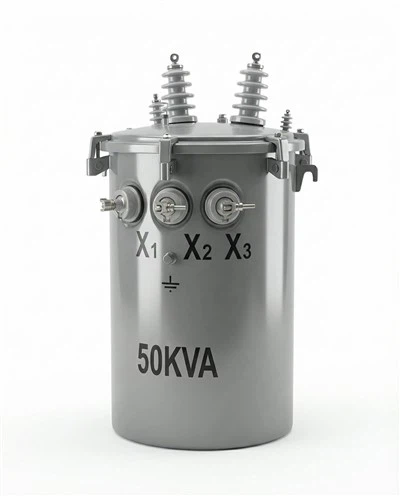
First off, let’s start with the basics: why wire size even matters here. A pole mounted transformer’s job is to take the high voltage from your utility line (that’s usually like 7,200 volts or 14,400 volts for residential areas) and step it down to the 120/240 volts you use for your home or small business. The wire connecting the transformer to the load (that’s your building’s electrical system) carries that low-voltage power — and if the wire is too thin, it can’t handle the amount of current you’re pulling. Current is measured in amps, right? Thinner wire has higher resistance, so when amps flow through it, it heats up. Too much heat, and the insulation on the wire melts, or the transformer’s windings take a hit. We’ve had customers tell us they went with a smaller wire to save a few bucks, and six months later they were replacing both the wire and the transformer because of a short circuit. Not worth the $20 they saved upfront.
Now, let’s talk about the factors that actually dictate wire size. It’s not a one-size-fits-all, and that’s where a lot of people mess up. The big ones are: the transformer’s kVA rating, the length of the wire run, and the allowable voltage drop. Voltage drop is key here — even if the wire can handle the current, if it’s too long, the voltage will drop so much that your lights dim, your appliances won’t run right, or your HVAC system will overwork. Most electrical codes say you can’t have more than a 3% voltage drop from the transformer to the main service panel, and some utilities even stick to 2%, so that’s a non-negotiable rule.
Let’s use a common example to make this concrete. Say you’ve got a 50 kVA pole mounted transformer. That’s a popular size for a small strip mall or a handful of homes. First, we need to calculate the full-load current (FLC) for that transformer. For a single-phase 50 kVA transformer, FLC is (kVA x 1000) / voltage. So 50,000 / 240 (since that’s the secondary voltage for most single-phase units) equals about 208 amps. For three-phase, it’s a tiny bit different, but let’s stick to single-phase first because that’s what most residential customers deal with. Now, if your wire run is 50 feet from the transformer to the service panel, what size wire do you need?
We use the NEC (National Electrical Code) ampacity tables here, but don’t worry — I’ll give you the quick numbers we use at the shop. For 208 amps, the minimum copper wire size is 2/0 AWG. If you’re using aluminum (which is a bit cheaper, but needs to be a size larger than copper), that’s 4/0 AWG. But wait — what if the run is longer? Say it’s 150 feet. Now voltage drop comes into play. Even though 2/0 copper can handle 208 amps, over 150 feet, the voltage drop would be around 5%, which is over the 3% limit. So you need a thicker wire. For 150 feet, you’d bump up to 3/0 copper, or 250 kcmil aluminum. That’s the real trick: ampacity is the base, but voltage drop adds a layer that you can’t ignore, especially for longer runs.
Another thing we see a lot: people mixing up primary and secondary wire sizes. The primary side (the high voltage coming from the utility) is way lower current, so smaller wire works there. For a 50 kVA transformer with a 7,200-volt primary, FLC is only about 6.9 amps, so 14 AWG is more than enough for the primary leads. The mistake here is using the same small wire for the secondary, which is carrying way more current. We’ve had a customer try that once, and within a month, the secondary wire overheated and burned through the insulation, taking out half the store’s electronics. Ouch. So always match the wire to the side’s current, not just the transformer size.
What about smaller transformers, like the 10 kVA ones used for a single home or a small garage? Let’s do that math. 10 kVA single-phase, 240 volts: FLC is 10,000 / 240 = ~42 amps. If the run is 30 feet, 6 AWG copper works (that’s what most electricians use for a standard 200-amp service, wait — no, wait, 42 amps would need at least 8 AWG, but 6 AWG is safe, and if the run is longer, say 100 feet, you need 4 AWG to keep voltage drop under 3%. See how quickly it changes? That’s why you can’t just memorize a number — you have to plug in the variables.
Now, let’s talk about material: copper vs aluminum. We get asked all the time which is better, and the answer is, it depends. Copper has better conductivity, so it can be smaller for the same current, which is nice if you’re running wire through a tight pole rig. It’s also more resistant to corrosion, which matters because outdoor pole mounted transformers are exposed to rain, humidity, and temperature swings. Aluminum is lighter and cheaper, but it needs to be a size larger than copper to handle the same current, and you have to use special connectors to prevent corrosion between aluminum and other metal parts — that’s a common failure point. We always recommend copper for secondary runs on pole transformers if the budget allows, but aluminum works great for shorter runs where cost is a big factor.
Also, don’t forget about ambient temperature. If your transformer is in a hot climate — like Arizona, Florida, or parts of Texas — the air around the transformer is hotter, so the wire’s ampacity goes down. The NEC has adjustment factors for that: if the ambient temp is over 86°F, you have to derate the wire’s ampacity. For example, 2/0 copper is rated for 195 amps at 86°F, but at 100°F, it’s only 180 amps. So if your FLC is 208 amps, that 2/0 won’t cut it anymore — you need to go up to 3/0 copper. We’ve seen this trip people up all the time in hot regions; they use the standard amp table and end up with wire that can’t handle the heat, leading to overheating.
Let’s walk through a real call we had last month to make this relatable. A guy was installing a 75 kVA pole transformer for a small apartment complex, and he thought 1/0 copper would work because it can handle 150 amps. He forgot the run was 200 feet, and the location was in Georgia, where summer temps hit 95°F. We crunched the numbers: 75 kVA single-phase is 312.5 amps FLC. At 95°F, 1/0 copper’s ampacity is 150 amps — way too low. The voltage drop over 200 feet with 1/0 would be almost 7%, which is way over code. We told him he needed 4/0 copper, which can handle 230 amps at that temp, wait no — actually, for 312 amps, he needed 250 kcmil copper, which is rated for 235 amps? No, wait, let’s get that right: 75 kVA three-phase is different. Wait, no, that customer had a single-phase 75 kVA, so FLC is 312.5. The ampacity for 4/0 copper at 90°C (which is standard for outdoor wire) is 230 amps, so that’s too low. 300 kcmil copper is 285 amps, 350 kcmil is 310 amps — so he needed 350 kcmil. That’s the exact number we gave him, and he came back a week later saying that fixed all his voltage issues and his electrician approved it. See how that works? It’s not guesswork, it’s numbers.
Now, common myths we hear all the time. Myth #1: “Thicker wire is always better.” No, not only is it unnecessary, but thicker wire is heavier and harder to install on a pole, and it’s more expensive. We once had a customer buy 500 kcmil wire for a 10 kVA transformer — that’s like 4 times thicker than he needed, and he wasted $1,500 on wire he never used. Myth #2: “Utility companies specify the wire size, so I don’t have to worry.” Most utilities set standards for their primary wires, but the secondary side (from transformer to your building) is your responsibility, so you have to get that right. Myth #3: “Aluminum is always a fire hazard.” If you install it correctly — use anti-oxidant compounds, proper connectors, and size it right — it’s just as safe as copper. The problem is when people skimp on size or installation, not the material itself.
So what’s the step-by-step you should follow when picking wire for a pole mounted transformer? Let’s make it simple:
- Get your transformer’s exact kVA and voltage rating (single-phase vs three-phase — don’t guess this!).
- Calculate the full-load current (FLC) using the formula: FLC = (kVA x 1000) / secondary voltage (for single-phase) or FLC = (kVA x 1000) / (secondary voltage x 1.732) for three-phase.
- Measure the exact length of the wire run from the transformer’s secondary terminals to your main service panel.
- Check the ambient temperature of the location where the transformer is mounted (hot climates mean derating wire ampacity).
- Use the NEC ampacity tables and voltage drop calculators to pick a wire size that meets both the ampacity and the 2-3% voltage drop rule.
- Pick the material (copper or aluminum) based on your budget and installation needs.
If that still feels like a headache, that’s where we come in. At our shop, we don’t just sell transformers — we help customers get the right wire size too, because we know how easy it is to mess up. We’ve worked with electricians, contractors, and property owners for years, and we’ve seen every mistake in the book, so we can walk you through this quickly over the phone. Whether you’re doing a small residential install or a large commercial project, we can send over a free sizing guide tailored to your setup, no obligation.
Wait, one last thing: always check your local electrical codes and your utility’s requirements. Some utilities have specific rules about wire size for secondary runs on their pole transformers, because they don’t want to take on liability if a bad wire causes an outage. We make sure to update our customers on the latest codes for their area, so you don’t get stuck with a wire that’s not approved.
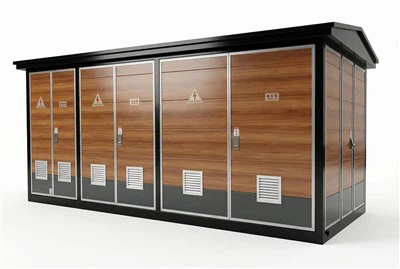
If you’re gearing up for a pole mounted transformer install, don’t let the wire size trip you up. This part is make or break for the whole project — get it right, and your transformer will run reliably for 20+ years. If you need help crunching the numbers, picking the right wire, or even just a second opinion, reach out to our team. We’re here to make this as painless as possible, because we know how stressful electrical projects can be. Don’t wait until you’re mid-install and realize your wire is too small — give us a call today to chat through your needs.
Box Type Substation References
National Electrical Code (NEC) 2023, Article 210 (Branch Circuits) and Article 450 (Transformers)
Copper Development Association. (2022). Conductors for Electrical Distribution: Selection and Application.
Aluminum Association. (2021). Aluminum Electrical Conductors: Installation and Design Guidelines.
Institute of Electrical and Electronics Engineers (IEEE). (2020). Standard for Pole-Mounted Distribution Transformers (IEEE C57.12.00).
Jiangsu Yuantong Electric Co., Ltd.
As one of the most experienced pole mounted transformer manufacturers and suppliers in China, we also support customized service. Please rest assured to wholesale bulk high quality pole mounted transformer in stock here from our factory. Contact us for more details.
Address: No. 202, Qiaogang Road, Xicheng Subdistrict, Hai’an City
E-mail: Trey@jsytelectric.com
WebSite: https://www.jsytelectric.com/
