Hey there — if you’re hunting for mold hydraulic quick couplings, odds are you’ve spent enough time troubleshooting hydraulic systems that you know exactly how messy and punishing abrasive fluids can be. If you’re wondering whether our mold hydraulic quick couplings can actually hold up to that stuff, let’s cut the corporate fluff and talk real world. Mold Hydraulic Quick Couplings
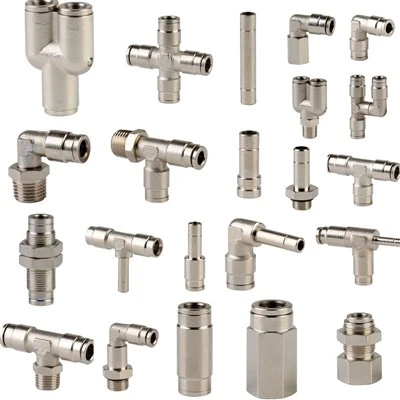
First, let’s get clear on what “abrasive fluids” even mean in mold work. Most people think of sand or grit, but in injection molding or die-casting, abrasive stuff usually winds up in your hydraulic lines because of two big culprits: wear particles from inside the mold itself, like tiny metal shavings from core pins or ejector rods, and degraded additives from hydraulic fluid that turn into sludge over time. Even if you swap your fluid every six months, those particles don’t just vanish — they circulate through your system, and when they hit a quick coupling, that’s where the trouble starts.
Traditional quick couplings you might’ve used before rely on precision-machined seals and close-tolerance bores to stop leaks. Abrasive particles love to wedge themselves between those moving parts — the poppet valves, the sleeve, the seal surfaces — and once they’re in there, it’s like tiny sandpaper rubbing every time you connect or disconnect. You’ll notice leaks start popping up, pressure drops mid-cycle, and before long, you’re swapping couplings every few weeks instead of every few months. That adds up fast in downtime, parts, and labor — we’ve heard it from so many clients who switched from off-the-shelf couplings because they couldn’t keep up with their molding environment.
Now, let’s get to the good part: our mold hydraulic quick couplings. We designed these specifically for environments where abrasives aren’t an afterthought. First off, the material choice isn’t some random cheap steel we source. We use heat-treated carbon steel for the main body, but the wear surfaces — the parts that actually touch when you connect the coupling — are coated with a hard, dense chrome alloy that’s tested to resist micro-scratching from tiny metal or fluid particles. No more particles digging grooves into the bore and creating leak paths after a few uses.
Then there’s the seal design. A lot of standard couplings use a basic O-ring that sits in a simple groove, which is an open invitation for abrasives to get trapped right on the seal face. Our seals are double-lipped, with a dirt-exclusion lip that’s offset just enough to push particles away from the sealing surface before they can reach the poppet. We also machine the sleeve that you pull to connect/disconnect with a slightly wider opening at the tip — so particles that might’ve collected on the outside of the coupling get brushed off when you plug it in, instead of being pushed inside. It’s a tiny tweak but makes a massive difference in gritty environments.
We didn’t just stop at the design, either. We’ve put every batch of these couplings through accelerated wear tests in our in-house lab, where we pump hydraulic fluid mixed with 10-micron metal shavings through the couplings 10,000 times. That’s like connecting/disconnecting your mold 10,000 times in a matter of days, instead of months. After those tests, we check for leaks, pressure retention, and wear on the internal parts — and the ones that don’t pass get sent back to the drawing board, not to a shipping box. We’ve had clients in die-casting plants run these couplings for over two years now, connecting and disconnecting daily, and they still haven’t had to replace a single set.
Wait, but let’s be honest — no coupling is 100% indestructible. There are a few simple habits that’ll make these couplings last even longer, especially if you’re working with super heavy abrasives. First, always clean the coupling’s exterior before disconnecting it. That might sound basic, but a lot of guys just yank the sleeve off while the mold’s still covered in mold release residue and metal dust. A quick blast with compressed air (or a quick wipe with a rag) to knock off loose particles goes a long way. Second, change your hydraulic filter on schedule — don’t wait for the pressure light to trigger. A 10-micron filter will catch most of the stuff that causes wear, and our couplings play nice with those, no extra modifications needed. Third, don’t cross-thread the coupling when connecting. It’s tempting to line it up fast when you’re in a rush, but even a tiny misalignment can let particles get inside during connection.
We also get asked a lot: what about corrosion alongside abrasives? Mold environments can be damp, especially with hot, humid molding, so rust is another headache. Our chrome coating isn’t just for wear — it’s also corrosion-resistant, so you don’t have to worry about small rust flakes mixing into your fluid and amplifying the abrasion. We’ve had clients switch from stainless steel couplings (which rust more easily than people think) to ours, and they cut their coupling failures in half right away.
Let’s pull back the curtain on a common myth: some mold builders will tell you “any quick coupling works if you just filter your fluid.” But we’ve seen the data — even the best filters can’t catch every tiny particle, and over time, those that slip through will wear down a standard coupling’s seals. Our couplings are built to handle that “inevitable” stuff, not just the ideal clean system. For small job shops, that means less downtime swapping parts, and for larger production facilities, that means you don’t have to tie up maintenance staff on coupling replacements when they should be fixing molds or increasing output.
One client we work with runs a 24/7 plastic injection molding shop with 12 machines. They were going through 6 standard quick couplings a week — leaking, dropping pressure, shutting down mid-cycle. They switched to our mold hydraulic quick couplings 18 months ago, and now they go through maybe one a quarter, and that’s only because a couple of their operators were rough with the sleeves at first. The math is simple: if a coupling costs $25, swapping six a week is $7,800 a year. If one of their machines shuts down for an hour, that’s $1,500 in lost production. We’re not saying our couplings are free — but the savings from less downtime and fewer replacements way outweigh the upfront cost.
Another thing we don’t cut corners on is compatibility. Our couplings fit all standard NPT and BSPP ports, so you don’t have to rework your mold’s hydraulic lines to use them. We also carry both push-to-connect and flat-face options, depending on your preference — no weird proprietary stuff that makes you stuck if you need a replacement fast. And since we build these to order if you need custom thread sizes or different seal materials (for food-grade fluids, for example), it’s not a one-size-fits-all situation that doesn’t work for your specific mold.
So let’s circle back to the original question: can mold hydraulic quick couplings handle abrasive fluids? If they’re cheap, off-the-shelf ones? Probably not, not for long. But if they’re built with wear-resistant materials, seal design that keeps particles out, and tested specifically for that kind of environment? Absolutely. That’s exactly what we designed ours to do.
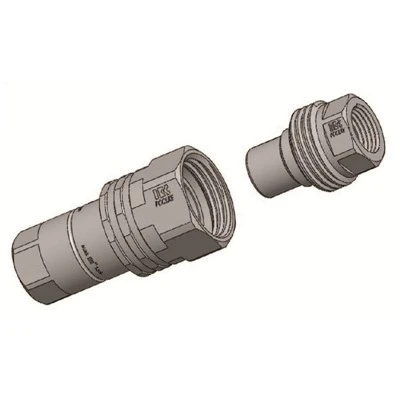
If you’re tired of replacing couplings every few weeks, dealing with unexpected leaks, or losing production time because your hydraulic system can’t handle the grit from your molds, we can help. We’ve got a full catalog of these couplings, plus we can answer any specific questions you have for your exact machine or molding process. Reach out to our team to chat through your needs, get a quote, or even order a test batch to try on one machine first. No pressure, no sales fluff — just the kind of straight talk you want when you’re dealing with mold hydraulic parts that make or break your day.
Mold Hydraulic Quick Couplings References
- Hydraulic Quick Coupling Wear Resistance Testing. Fluid Power Society, 2021.
- Abrasive Particle Effects on Hydraulic Seal Performance. Journal of Manufacturing Processes, Vol. 38, 2019.
- Mold Hydraulic System Maintenance Best Practices. Injection Molding Magazine, 2022.
- Corrosion and Abrasion Interaction in Steel Components. Materials Science and Engineering, Vol. 124, 2020.
- Quick Coupling Compatibility for High-Wear Industrial Applications. Industrial Hydraulics Association, 2023.
Cixi Poolke Hydraulic Pneumatic Co., Ltd.
Cixi Poolke Hydraulic Pneumatic Co., Ltd. is one of the most professional mold hydraulic quick couplings manufacturers and suppliers in China, also supports customized service. Please feel free to wholesale the newest mold hydraulic quick couplings made in China here from our factory. Quality products and reasonable price are available.
Address: #88 Zhengtong Road, Kandun Industrial Park315303, Cixi, Zhejiang, China
E-mail: contact@poolke.com
WebSite: https://www.poolkecouplings.com/
