If you’ve ever stood on a shop floor at 2 a.m., watching a manual surface grinder strain to hit a 0.001mm tolerance on a custom part, you know there’s no one-size-fits-all solution in precision manufacturing. For 12 years, I’ve run an automatic surface grinder supply business, and the question I get more than any other—from aerospace part makers, mold shops, medical device producers, and even small job shops that thought they could never afford custom machinery—isn’t whether an automatic surface grinder can be customized. It’s how customized can they actually get, without breaking the bank, without leading to unexpected downtime, and without ditching the reliability that makes automated grinders worth the investment in the first place. Let me pull back the curtain on what customization actually looks like for automatic surface grinders, the mistakes I’ve seen customers make over the years, and why it’s not just possible—it’s often what makes or breaks a part order. Automatic Surface Grinder
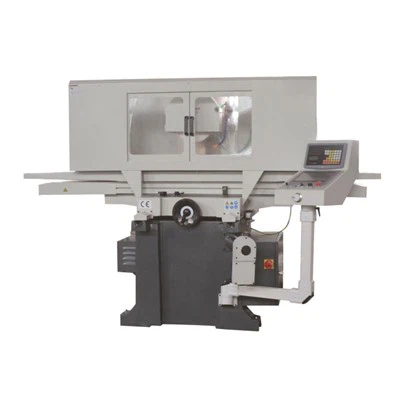
Let’s start with the basics: when I say “automatic surface grinder,” I’m not talking about a cookie-cutter machine that grinds flat metal all day every day. The core of any automatic grinder is the CNC control, the grinding head, the worktable, and the coolant system—but every part of that system has levers that can be adjusted, swapped, or built from scratch to match a specific job. Early on in my business, I had a customer who made small, precision cutting blades for surgical tools. They were using a standard automatic grinder, but every batch had 10% waste because the blades were thin, warped stainless steel, and the standard machine’s worktable clamping pressure was too high. The clamping would bend the blades just enough that the ground surface came out out-of-tolerance. They tried soft rubber pads, manual clamping adjustments, even swapping the worktable—but nothing worked. We didn’t have to sell them a whole new machine. We redesigned the worktable’s clamping system to use vacuum chucks with variable, pressure-regulated zones that applied only the exact force needed to hold each blade, without bending it. That small custom change cut their waste to less than 1% and let them take on contracts they’d previously turned down because their equipment couldn’t handle thin, delicate parts.
That’s the first key point about customization for automatic surface grinders: it doesn’t have to be full, end-to-end overhauls. Most of the time, it’s modular tweaks to match specific production needs. A common request we get is for custom automation integration. A customer in the automotive industry, for example, might need their grinder to work with a parts loader that matches their existing assembly line, so workers don’t have to manually load parts. A standard grinder comes with a basic robot interface, but if their line uses a specific brand of cobot or a gravity-fed parts tray, we can adjust the machine’s input/output (I/O) ports, modify the worktable width to fit their part batches, and even program the CNC control to sync with their line’s production management software. Last year, a mold-making client came to us needing to grind complex, irregular mold cavities that weren’t flat—standard surface grinders are made for flat or slightly contoured parts, but their molds had gentle curves that required custom wheel paths. We worked with them to program a custom G-code suite that let the grinder’s head adjust its angle and depth in real time, instead of just moving up and down vertically. That customization let them grind the curved cavities in one setup, instead of three separate setups with manual adjustments, cutting their production time per mold by 40%.
Of course, there are limits to customization—something I’ve learned the hard way with new customers who walk in saying they want a grinder that can grind ceramic insulators, titanium aerospace brackets, and plastic injection molds all in one, with no trade-offs. Early on, I tried to accommodate a customer who asked for a machine that could handle parts ranging from 0.1mm to 100mm thick, with a switch between wet and dry grinding in 10 seconds. The custom controls we built had too many moving parts, and within six months, the machine was breaking down every two weeks. We ended up working with them to adjust their request: instead of a single grinder that could do everything, we modified two existing automatic grinders with custom wheel systems—one for thin, delicate parts, one for thick, dense materials—and added a quick-change conveyor that moved parts between them. It was a more practical solution that worked better for their long-term production, even if it wasn’t the all-in-one machine they’d originally wanted. That’s the lesson I pass on to every new customer: customization doesn’t mean building a machine for every possible job. It means building a machine that works for your specific jobs, today and for the next three to five years.
Another area where we see a lot of demand for customization is coolant systems—something most people don’t think about, but it’s a make-or-break part of surface grinding. Different materials need different coolants, and different production environments have strict regulations. For example, a medical device manufacturer can’t use coolant that’s oily or has high levels of metal particles, because that would contaminate their parts. An aerospace shop grinding titanium needs a coolant that can withstand high temperatures and prevent workpiece thermal damage, because titanium is prone to burning during grinding. A standard grinder’s coolant system comes with a one-size-fits-all filter and pump, but we can adjust that: add in-line filters with specific micron ratings, install coolant chillers for high-heat applications, even build closed-loop systems that recycle 95% of the coolant to meet environmental regulations. A customer who makes pacemaker components came to us because their standard grinder’s coolant was leaving residue on the ground parts, requiring extra cleaning steps that added time to their process. We swapped their open coolant system for a closed-loop system with deionized water and a magnetic filter that removed all metal shavings without leaving residue. The result? They cut their part cleaning time by 75% and improved their overall part quality to meet FDA requirements.
Now, I know what some of you are thinking: if customizing an automatic surface grinder is this easy, why don’t more shops do it? The answer is twofold: fear of downtime, and fear of hidden costs. When a shop invests $50,000 to $150,000 in an automatic grinder, they expect it to run for 10+ years with minimal issues. The idea of custom modifications can feel risky—what if the customization causes the machine to break, leading to weeks of downtime while you wait for repairs? What if the cost of the custom parts adds 50% to the machine’s price, making it more expensive than buying a whole new, specialty grinder? Over the years, I’ve developed a process that minimizes both risks. First, we start with a detailed consultation: we spend a week on your shop floor, watching your current production, talking to your operators, reviewing your part specs, and identifying your biggest pain points. We don’t just take your word for what you need—we see your machine running, the parts you’re grinding, the problems you’re facing. Then, we create a custom quote that breaks down every cost, including the cost of testing the modification on a demo grinder before installing it on your machine. We also offer a 12-month warranty on all custom modifications, just like we do on our standard machines. For small shops that can’t afford a whole custom machine, we offer retrofitting: upgrading your existing automatic grinder with custom parts, instead of buying new. Last year, we retrofitted three manual grinders from the 1990s with automatic controls and custom worktables, saving each customer 60% of the cost of a new automatic grinder, while giving them the precision and automation they needed.
I want to be honest, though—customization isn’t for every shop. If you’re a job shop that runs the same 10 small steel parts every day, with no plans to change your product line, a standard automatic surface grinder will work perfectly fine. It’s reliable, it’s affordable, and it can hit all the tolerances you need. But if you’re a shop that takes on a mix of custom projects, or if you’re looking to expand into new markets that demand higher precision, thinner parts, or specific production requirements, customization isn’t just a luxury—it’s a competitive advantage. A few months ago, I had a customer who was bidding on a large contract for satellite component parts. The contract required a tolerance of 0.0005mm—half the tolerance their standard grinder could hit, and a level of precision that only a handful of shops in the country could deliver. They came to us, and we modified their automatic grinder with a custom linear encoder system that improved positioning accuracy by 3x, and adjusted the wheel head to use a diamond wheel with smaller grit, which gave them a smoother, more precise grind. They won the contract, and they’ve since become one of our long-term clients, because they know we can adapt their equipment to meet whatever precision demands come next.
The biggest myth I hear about automatic surface grinder customization is that it’s only for large aerospace or automotive companies. That’s not true. Last year, I worked with a small mold shop with only five employees, making custom molds for small consumer products. They had a standard automatic grinder, but every time they had to grind a mold with a deep cavity, the standard machine’s worktable couldn’t reach the full depth, so they had to switch to a manual grinder, which took twice as long and had higher error rates. We modified their automatic grinder’s Z-axis travel (the distance the grinding head moves up and down) to add an extra 100mm of travel, for less than 10% of the cost of a new grinder. Now, they can grind all their molds on one machine, and their lead times have dropped by 30%. That’s the power of customization for small businesses: it doesn’t have to be complex, it just has to match what you actually need to do.
If you’re considering whether to customize an automatic surface grinder for your shop, here are a few questions to ask yourself: What are your current production bottlenecks? What tolerances do you need to hit that your current machine can’t? Are you looking to expand into new product lines or markets? What’s your long-term plan for your shop (next 3-5 years)? The answers to these questions will tell you whether a standard machine will work, or if customization is the right move for you.
At the end of the day, the goal of an automatic surface grinder is to make your production faster, more precise, and less costly. Customization is just the process of tailoring that tool to your unique needs, instead of forcing your needs to fit a one-size-fits-all tool. If you’re tired of watching your grinder waste time on setups, or missing tolerances on custom parts, or paying extra for cleaning and processing steps that shouldn’t be necessary, it’s worth exploring what customization can do for you.

If you’re ready to talk about your specific production challenges and how a customized automatic surface grinder can help, I’m here to work with you every step of the way. We’ll start with a free consultation to assess your needs, walk you through all possible customization options, and make sure you get a solution that fits your budget and your long-term goals.
Hydraulic Surface Grinder References
American Society of Mechanical Engineers. (2020). Precision Machining Standards for Surface Grinding. ASME B5.20-2020.
Manufacturing Engineering and Society. (2022). Customization Trends in Metalworking Equipment. Journal of Manufacturing Processes, 81, 452-461.
National Institute of Standards and Technology. (2021). Calibration and Tolerance Requirements for Surface Grinders in Medical Device Manufacturing. NIST Technical Note 2008.
Wuxi Mingxu Machinery Equipment Co., Ltd.
As one of the most professional automatic surface grinder manufacturers and suppliers in China, we’re featured by quality products and good price. Please rest assured to buy the best automatic surface grinder for sale here from our factory. Also, custom service is available.
Address: No. 5-5 Jinke Wealth Plaza, Changjiang North Road, Xinwu District, Wuxi City, Jiangsu Province
E-mail: yingyingmxjd@163.com
WebSite: https://www.mingxu-china.com/
