Hey everyone, thanks for stopping by my corner of the web. I’m Jake, and for the past 8 years, I’ve been selling angular contact ball bearings—you know, the ones that handle both radial and axial loads like no other. Lately, I’ve gotten a ton of questions from folks working in deep-freeze warehouses, cryogenic test labs, even Arctic drilling equipment: “Can your angular contact ball bearings actually hold up in low-temp environments?” Spoiler: it’s not a straight “yes” or “no.” It’s way more nuanced, and as someone who’s helped pick bearings for everything from frozen pizza production lines to Antarctic rover prototypes, I wanted to break this down straight. Angular Contact Ball Bearings
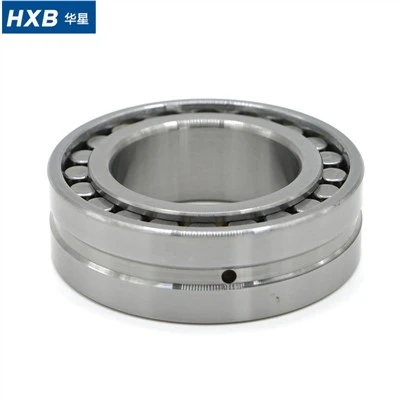
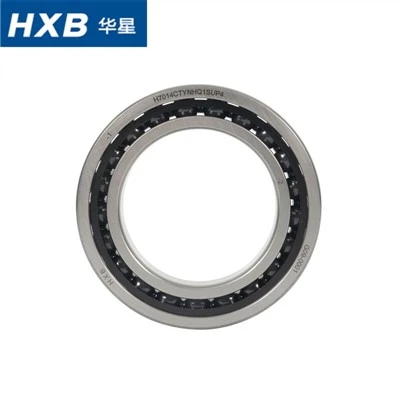
First, let’s get the basics out of the way. Angular contact ball bearings have that built-in contact angle between the balls and the raceways, right? That’s what makes them great for taking thrust loads (think the force that pushes a drill bit forward) along with the usual radial loads (like the spin of a wheel). But when the temp drops, every part of the bearing changes—and not for the better if you don’t plan for it.
Let’s start with the biggest culprit: grease. Most standard bearing grease is formulated for room temp, like 10°C to 50°C. Drop that below freezing, and suddenly, it turns thick as molasses in winter. No joke—if you’re running a conveyor belt in a warehouse that’s kept at -18°C (that’s 0°F for my US peeps), standard grease won’t lubricate the balls properly. They’ll drag, generate way too much heat, and wear out in a fraction of their expected life. But wait, that’s not the only temp issue. The steel in the bearing expands and contracts differently than the other parts around it. Like, if the bearing is sitting in a cold roller coaster part, and the housing it’s mounted in is made of a different metal, the gap between the races and the balls can shrink or widen way more than it should. Too tight, and the balls bind; too loose, and you get play that ruins precision.
But here’s the thing: low-temp use isn’t a death sentence for angular contact ball bearings. I’ve supplied bearings that ran flawlessly at -40°C for a year straight, no issues. The key is knowing which variables matter. Let’s talk about the types of low temps people actually deal with, because not all cold is the same. There’s “moderate low temp” (like -10°C to -40°C) that’s common in food processing or cold storage. Then there’s “cryogenic” stuff, like -150°C or lower, which is for medical equipment, space tech, or fuel handling. Those are totally different scenarios, and you can’t use the same bearing for both.
For moderate low temp, the fix is usually a good low-temperature grease. Not just any “cold grease” — look for ones made with synthetic base oils, like PAO (polyalphaolefin) or ester. Those stay fluid way below freezing. I work with a couple of grease manufacturers that make PAO-based greases rated down to -55°C, and they’re a game-changer. I recently sold a set of angular contact bearings to a frozen dough factory that runs 24/7 at -22°C—they told me after 18 months, the bearings were still running quieter than the ones they’d used before with standard grease. That’s the kind of win I live for. Also, make sure the bearing’s steel is up to snuff. Standard carbon steel bearings might get brittle at low temps, so go for chrome steel (like AISI 52100) — it stays tough down to around -40°C, which is perfect for most cold storage or light industrial cold apps.
Now, the tricky part is cryogenic temps. If you’re going below -100°C, standard angular contact ball bearings won’t cut it. First, the grease? Forget it—most greases turn to a solid, waxy mess below -80°C, even the good synthetic stuff. So you need to run greaseless bearings, or ones with a special dry lubricant coating, like molybdenum disulfide or PTFE. But even then, the steel becomes a problem. Chrome steel gets brittle below -50°C, so for super cold, you need a different steel—like 440C stainless steel, or even a nickel alloy like Inconel. Those stay strong and tough at cryogenic temps. I helped a small space tech outfit last year that needed angular contact bearings for a satellite fuel pump that hits -180°C when it’s in orbit. We used 440C stainless, a dry PTFE coating, and no grease, and so far (knock on wood) they’re working great.
Wait, but I should mention a common mistake people make: assuming all angular contact bearings are created equal. A bearing for a high-speed spindle at room temp is way different than one for a cold conveyor. Like, if you pick a bearing with a 15-degree contact angle for a low-thrust app, that’s fine, but if you need to handle more axial load at low temp, you might need a 30-degree contact angle. The contact angle determines how much thrust the bearing can take, but it also changes how the bearings behave when cold. Too steep an angle, and the balls bind when the temp drops because of uneven contraction. That’s why it’s so important to work with someone who knows this stuff—someone who’s not just looking to make a sale, but who’s actually seen bearings fail in cold environments and can help you avoid that.
I’ve had a few horror stories, honestly. Last year, a guy from a mining company came to me, panicking, because their drill rig bearings (angular contact, of course) were failing every 3 months at their Arctic worksite. Turns out, they’d bought cheap standard carbon steel bearings and used regular grease. The temps there were -35°C in the winter—way too cold for that setup. I switched them to chrome steel bearings and the PAO grease I mentioned, and now those bearings are going strong 9 months later. He told me it saved them $12k in replacement parts and downtime. That’s the stuff that makes this job worth it—solving real problems, not just selling a product.
Another thing to consider: seal type. A lot of angular contact bearings have seals to keep dirt and grease in. But at low temp, some seal materials get hard and brittle, or shrink so much that they cause friction. For moderate cold, nitrile (rubber) seals are usually okay down to -40°C, but for anything colder, you need PTFE or metal seals. Metal seals are more durable at super low temps, no chance of them cracking or getting too stiff.
Wait, what about when the temp swings a lot? Like, a warehouse that goes from -18°C at night to 20°C during the day. That’s thermal cycling, and it can mess with bearing clearance. When things heat up, the steel expands, so the clearance gets smaller. When it cools, it gets bigger. Too much swing, and you might need to adjust the preload on the bearing. Preload is how much you squeeze the races together to eliminate play. For cold apps, you might need a lighter preload to account for contraction, or a heavier one if the temp will go up. It’s a fine balance, and it’s one that most people don’t think about until their bearing starts making noise.
So, to wrap this up: yes, angular contact ball bearings can absolutely be used in low-temperature environments. But it’s not a one-size-fits-all. You can’t just grab a standard bearing from the shelf and stick it in a freezer. You need to match the bearing’s steel, the grease (or lack thereof), the seal, and even the contact angle to the specific low temp range you’re working in, plus any other factors like load, speed, and thermal cycling.
At the end of the day, I’ve spent 8 years troubleshooting bearings for all kinds of cold environments—from frozen food plants to Antarctic research stations to medical cryogenics. I’ve seen what works and what doesn’t, and I don’t just sell bearings; I help people pick the right ones for their job. If you’re dealing with cold temps and your bearings are acting up, or you’re planning a new project that needs angular contact bearings for low-temp use, don’t guess—reach out. I’ll walk you through the options, answer all your dumb questions (we’ve all been there), and make sure you get a bearing that lasts, not one that fails in 3 months.
Don’t waste money on cheap bearings that’ll let you down when you need them most. Hit me up, let’s chat about your needs—no sales pitches, just straight talk about bearings that work in the cold.
Servo Motor Bearings References:
- SKF. (2022). Bearings for Low-Temperature Applications. SKF Group Technical Brochure.
- Timken. (2021). Angular Contact Ball Bearing Performance in Cryogenic Environments. Timken Engineering Report.
- American Bearing Manufacturers Association (ABMA). (2020). Standards for Bearing Lubrication at Sub-Zero Temperatures. ABMA Standard 12.7.
Hangzhou Huaxing Kechuang Holding Group Co., Ltd.
Hangzhou Huaxing Kechuang Holding Group Co., Ltd. is one of the leading manufacturers and suppliers of angular contact ball bearings in China, featured by quality products and good service. Please rest assured to buy bulk durable angular contact ball bearings from our factory. Welcome to view our website for more information.
Address: No.553 Yingbin Road, Linping, Hangzhou, 311100, China
E-mail: wmb@huaxingbearing.com
WebSite: https://www.hxbbearing.com/
