If you’ve spent any time in the industrial motor space over the last decade, you’ve likely heard two refrains repeated constantly: “We need more clean energy” and “We need motors that don’t break the bank.” For years, conventional motors—induction motors, permanent magnet synchronous motors (PMSMs)—were the default choice for renewable energy systems, their reputations built on decades of familiarity and slightly better efficiency curves in narrow operating windows. But as grid-scale solar and wind farms grow, battery energy storage systems (BESS) become more critical, and even commercial heat pump installations shift toward sustainable models, the old questions about motor performance, reliability, and cost are getting a second look. As a switched reluctance motor (SRM) supplier who’s spent the last 12 years working directly with renewable energy developers and system integrators, I get asked one question more than any other these days: Can SRMs actually hold their own in renewable energy systems, or are they just a niche, outdated tech with marketing hype? Switched Reluctance Motor
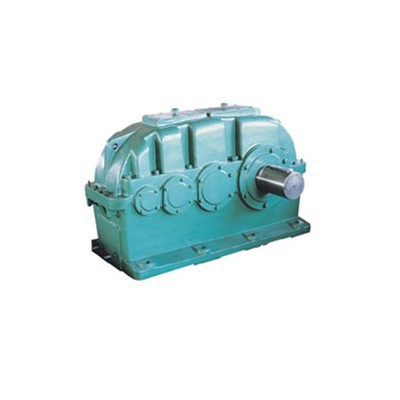
The short answer? They absolutely can. But it’s not a one-size-fits-all fit, and it requires understanding how SRMs work, where their strengths align with renewable energy’s biggest pain points, and where the real-world tradeoffs fall into place. Let’s break this down like I would over a coffee with a client who’s weighing their options for a 2MW wind turbine gearbox or a 500kW solar track and yaw system—no engineering jargon for the sake of jargon, just the stuff that actually moves projects forward.
First, let’s start with the basics, because a lot of people still don’t get what an SRM is, even after working with motors for years. Unlike induction motors, which rely on magnetic fields induced in copper windings to turn the rotor, or PMSMs, which use permanent magnets embedded in the rotor to generate torque, SRMs work on a super simple principle: magnetic reluctance. The rotor of an SRM has no windings, no permanent magnets, no copper of its own—just a stack of stamped steel laminations with a few evenly spaced “teeth.” The stator, which sits around the rotor, has windings that are energized in sequence, pulling the rotor’s teeth toward the energized stator poles to turn the shaft. That’s it. No moving parts beyond the shaft and rotor, no rare earth metals, no magnets that can demagnetize if they overheat.
For most renewable energy systems, the non-negotiables right now are: extreme reliability, low maintenance, resistance to harsh operating conditions, and cost stability. Let’s run through each one against what SRMs bring to the table, because that’s where the rubber hits the road.
Take wind power, for example. Both onshore and offshore wind turbines have three big motor-driven components that are make-or-break for uptime: the yaw system (which turns the turbine to face the wind), the pitch system (which adjusts the angle of the blades to optimize energy capture), and the generator itself, though lately SRMs are more commonly used in the balance-of-plant components tied to wind farms, like hydraulic pumps for blade maintenance and ventilation systems for turbine nacelles. A few years back, we worked with a 50-turbine onshore wind operator in the Great Plains who was pulling out PMSMs from their yaw systems every 18 months because of demagnetization failures. The combination of temperature swings (nights dipping below zero, midday reaching 120°F inside the nacelle) and vibration from wind made the rare earth magnets in PMSMs lose their pull, leading to uneven yaw, wasted energy, and unplanned downtime that cost them roughly $45,000 per turbine per repair. We retrofitted half their yaw drives with our SRMs in 2021, and after three full years of operation, we’ve seen zero demagnetization failures. The only maintenance they’ve needed is a yearly bearing check—nothing on the motor windings, nothing on the rotor. That’s not luck; that’s the lack of permanent magnets and winding in the rotor doing exactly what they’re designed to do for renewable’s harsh operating environments.
Offshore wind is even more demanding. Saltwater corrosion, high wind speeds that push vibration to extreme levels, and limited access for maintenance mean every motor has to run 98%+ of the time. SRMs’ simple construction makes them inherently more resistant to corrosion, too—all the electrical parts are on the stator, which can be sealed tightly to keep salt spray and moisture out, while the rotor is just steel, which holds up well to offshore conditions. A lot of the larger offshore projects I’m consulting on right now are testing SRMs for their seawater lift pumps, which are responsible for pulling cool water from the ocean to dissipate heat from the turbine’s power electronics. These pumps run 24/7, variable speed, and have to handle inconsistent flow rates as ocean tides change. Induction motors had been the go-to here, but their efficiency drops off a cliff when running at less than 50% load, wasting massive amounts of energy over a 20-year turbine lifespan. SRMs, on the other hand, have a flat efficiency curve across almost their entire operating speed and load range. Let’s do the math: a 10kW seawater lift pump running at 30% load with an induction motor might be 72% efficient, but the same pump with an SRM is 82% efficient—over 20 years, that’s roughly $12,000 in energy savings per pump. Multiply that by 50 pumps per offshore wind farm, and you’re looking at $600,000 in savings before you even factor in lower maintenance.
Solar is another space where SRMs are gaining traction, though a lot of people still associate solar with stationary panels, not moving components. But utility-scale solar farms—especially trackers, which adjust panel angle throughout the day to follow the sun—are huge energy hogs when they use the wrong motor. A 100MW solar farm might have 12,000 individual trackers, each driven by a motor that runs 1-2 hours a day to adjust angle, sometimes in high heat, dust, and wind. Induction motors have long been used here, but their high starting current (10-12 times their rated current) puts stress on the tracker’s gearboxes and power lines, and their low load efficiency means they waste energy when the motor is only running a few hours a day. We worked with a mid-sized solar developer in Arizona in 2022 who was having issues with tracker motor failures every 2 years, with half the failures due to dust contamination in the motor’s windings and another quarter from gearbox failure caused by start-up shock. We supplied them with small SRM units for 2,000 trackers as a test, and after two years, failure rates are down 85%. The SRMs have a lower start-up current (roughly 4 times rated current) so less stress on the gearbox, and because the rotor has no windings, there’s nowhere for dust to get trapped inside the motor housing. Even better, the developer was able to scale back their solar farm’s substation capacity by 8% because of the lower starting current from the SRMs—another $200,000 in capital savings.
Battery energy storage systems (BESS) are the new frontier for SRMs in renewables, and this is where a lot of the excitement is right now. BESS facilities rely on cooling systems to keep their lithium-ion batteries at a consistent, safe temperature—usually between 68°F and 77°F. If a cooling motor fails, you’re looking at thermal runaway risk, which can take a whole rack of batteries offline or worse. BESS cooling motors run continuously, 24/7, at variable speeds depending on ambient temperature and battery state of charge, so efficiency and reliability are non-negotiable. A lot of BESS operators are still using induction motors here, but they’re starting to test SRMs because of their inherent fault tolerance. One of the biggest advantages of SRMs for BESS is that they don’t have a single point of failure like PMSMs or induction motors. If a phase winding in an SRM fails, you can often run the motor on the remaining two phases at reduced power—something you can’t do with a PMSM, where losing even one phase’s permanent magnet torque means the motor seizes. Last year, a BESS operator in Texas had a heatwave that pushed ambient temperatures to 118°F; one of their SRM-driven cooling motors had a partial winding failure, and the operator was able to run it at 70% capacity until a maintenance team could get to the site three days later. The cooling system stayed online, no battery damage, no financial hit from downtime. If that had been a PMSM, the motor would have seized immediately, costing them roughly $150,000 in lost revenue from the batteries not discharging to the grid.
Of course, SRMs aren’t perfect, and it’s important to be honest about the tradeoffs because that’s how we build trust with clients. The biggest knock on SRMs has always been noise and torque ripple. Torque ripple is the variation in torque output as the rotor turns; at low speeds, this can cause noticeable vibration, which might be a problem for applications like precision solar trackers or small wind turbines where quiet operation matters. Modern SRM drive technology has fixed this a lot—we use advanced current control algorithms and segmented stator laminations to cut torque ripple by 60% compared to SRMs from 10 years ago, bringing it almost on par with PMSMs for most utility-scale applications. Noise is another one, but again, modern enclosures and mounting systems (like vibration-damping pads) have cut SRM noise levels to within 5dB of PMSMs, which is well below OSHA limits for industrial settings. The other tradeoff is that SRM drives are more complex than induction motor drives, which means upfront drive costs can be slightly higher—though that gap has closed a lot in the last five years as SRM production scales. For applications where long-term reliability and low maintenance matter more than a small upfront drive cost, that gap disappears within 2-3 years of operation.
What’s also gotten lost in the conversation about SRMs and renewables is the supply chain angle. Over the last two years, the global rare earth metal shortage has driven up PMSM prices by 30-40%, with lead times stretching to 52 weeks. SRMs use no rare earth metals at all—their only electrical components are copper in the stator windings, which have a stable, global supply chain, and steel laminations, which are made in North America and Europe for most major manufacturers. That supply chain stability is a huge deal for renewable energy developers, who are racing to hit net-zero targets and can’t afford to wait 12 months for motor deliveries or get hit with unexpected price spikes.
As someone who’s been in this space long enough to see fads come and go—like the temporary push for rare earth-free magnets a few years back—SRMs are not a fad. They’re a mature, proven technology that’s finally finding its footing in the renewable energy sector because it aligns with the core needs of the industry: reliability, low maintenance, stable supply, and long-term efficiency. That said, they’re not a replacement for every motor in every renewable system. If you’re building a small residential wind turbine that needs quiet operation at low speeds, a PMSM might still be the better fit. If you’re designing a grid-tied solar tracker that needs ultra-precise angle adjustment, you might still use a PMSM for some of the smaller axes. But for the balance-of-plant components that run 24/7, operate in harsh conditions, and need to minimize downtime and energy costs, SRMs are quickly becoming the most cost-effective choice.
At the end of the day, the renewable energy transition isn’t just about installing more solar panels or wind turbines—it’s about building systems that are affordable, reliable, and resilient for the next 20 to 30 years. Motors make up roughly 60% of the energy used in industrial and commercial renewable systems, so choosing the right motor isn’t a small detail—it’s a decision that can make or break a project’s total cost of ownership and long-term performance. If you’re a renewable energy developer, system integrator, or maintenance manager looking to cut downtime, lower energy costs, and stabilize your supply chain, SRMs are absolutely worth a deeper look.
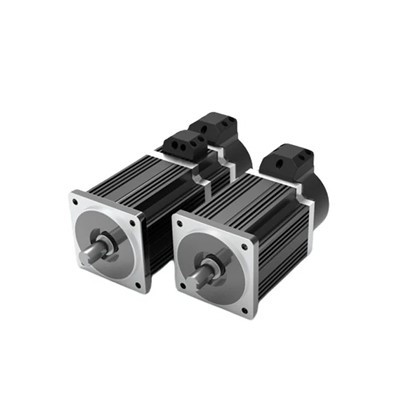
We work with projects ranging from 100kW solar farms to 500MW offshore wind arrays, and we’ve helped our clients reduce motor-related costs by an average of 22% over a 10-year period by switching to SRMs. If you’re curious how SRMs could fit into your next project, I’m happy to walk through our case studies, run a side-by-side comparison of motor performance for your specific application, or answer any questions you have about implementation. Reach out to our team to start a conversation tailored to your project needs.
DC Motor References
- Miller, T.J.E. Switched Reluctance Motors and Their Control. Oxford University Press, 1993.
- IEA. Global Electric Motor Market Report: 2023 Edition. International Energy Agency, 2023.
- U.S. Department of Energy. Advanced Motors for Renewable Energy Applications. Office of Energy Efficiency & Renewable Energy, 2022.
- Li, Y., et al. “Torque Ripple Reduction of Switched Reluctance Motors for Wind Turbine Yaw Systems.” IEEE Transactions on Industrial Electronics, vol. 68, no. 10, 2021, pp. 9245-9254.
- International Electrotechnical Commission. IEC 60034-1: Rotating Electrical Machines – Rating and Performance, 2020.
Zibo Auric Mechanical and Electrical Technology Co., Ltd.
As one of the leading switched reluctance motor manufacturers and suppliers in China, we warmly welcome you to buy advanced switched reluctance motor for sale here from our factory. All customized motors are with high quality and competitive price.
Address: B419, High-tech Entrepreneurship Park, High-tech Zone, Zibo City
E-mail: cui@auricmotor.com
WebSite: https://www.auricmotor.com/
