If you’ve ever driven past a wind farm at dawn, the first thing that catches your eye isn’t the spinning blades—it’s the towers themselves, tall and sleek, rising from the ground like steel giants. But stand at the base of one of those towers, and you’ll soon realize the trick to their stability isn’t just in the steel above. As a tubular tower supplier, I get asked this question more times a week than I can count: How deep do tubular tower foundations actually go? Tubular Tower
It’s not a trivial question. A tubular tower’s foundation isn’t just a concrete slab or a steel pole pounded into dirt. It’s the unsung part of the whole structure, the piece that keeps the tower from tipping in 100-mph winds or shifting when the ground freezes and thaws. I’ve been in this business for 12 years, and I’ve seen the difference between a foundation that’s dug too shallow (which becomes a costly repair in three to five years) and one that’s engineered just right. Let me break this down like I do for every new project our team works on.
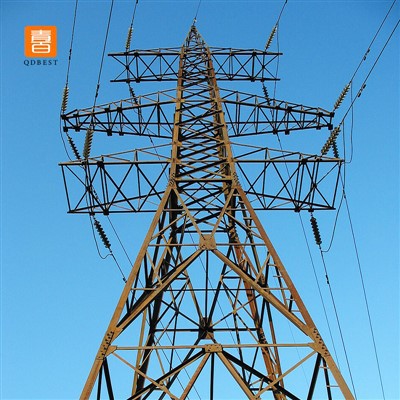
First, let’s start with the basics: what’s a tubular tower, anyway? Unlike old lattice-style towers that look like giant Erector sets, tubular towers are seamless, cylindrical steel tubes. They’re lighter, easier to transport, and sturdier for medium-to-large wind projects—most of the 2.5 to 5 MW turbines you see across U.S. farmland and European plains use them. But their shape changes how forces hit the foundation. Lattice towers spread wind and weight across multiple supports; a tubular tower’s entire load funnels straight down through a single, circular base. That means the foundation has to handle concentrated pressure, not scattered force.
Now, to the heart of the question: depth. There’s no one-size-fits-all number, but I can tell you the range we work with every day, and what factors push that range up or down. For most onshore tubular tower projects in moderate climates, foundations go between 10 and 20 feet deep. Wait, that sounds shallow, right? I used to think so too, until I worked on a project in southern Iowa a few years back where the soil was thick, compact glacial till. We dug 12 feet down, and the foundation held through two tornado touchdowns that season. But contrast that with a site in northern Minnesota, where the ground is soft peat that sits on top of hard granite. There, we had to go 28 feet deep—past the peat, through a layer of loose sand, to anchor the foundation to the granite bedrock. If we’d stopped at 20 feet, the tower would’ve shifted six inches in a year, and that’s enough to throw the turbine’s alignment off so it stops producing power.
Let’s get specific about the two most common foundation types for tubular towers, because depth changes with each. The first is the bored pile foundation, which is what 70% of our projects use. Here, we drill a cylindrical hole into the ground, pour concrete into it, and then attach the tubular tower’s steel base to a steel rebar cage embedded in that concrete. For bored piles, depth depends on two big factors: soil bearing capacity and frost line. Soil bearing capacity is just how much weight the dirt can hold before it compacts. In sandy soil, it’s lower—so we need a deeper pile to spread the load. In clay, it’s higher, so we can go shallower. The frost line is where things get tricky in cold climates. If you build a foundation above the frost line, when the ground freezes, it expands and pushes the foundation up. When it thaws, it sinks back down. That “freeze-thaw cycle” over years can crack the concrete and tilt the tower. So in places like Canada or the Upper Midwest, we have to go below the local frost line, which can be as deep as 4 feet in mild areas and up to 8 feet in places like northern Saskatchewan. Add that to the pile depth, and suddenly you’re looking at 18 to 25 feet just for frost protection, before even accounting for the turbine’s weight.
The second type is the screw pile foundation, which is growing in popularity for smaller projects or sites with hard rock where drilling is expensive. Screw piles are giant steel screws, kind of like a huge bolt, that we twist into the ground with a rig. For these, depth is measured by how many screw turns you need to reach stable soil, not just a specific foot number. On a site in West Texas with hard caliche (a layer of compacted limestone) just 8 feet down, we twisted 12-foot screw piles, three turns deep, and that was enough. But on a site in coastal North Carolina, where the soil is soft sandy loam that shifts with hurricane storm surges, we twisted 20-foot screw piles, four full turns, to reach dense clay that wouldn’t move. The upside of screw piles is you don’t have to pour concrete, which cuts site time by half—but the depth is non-negotiable; if a screw pile isn’t anchored deep enough, a storm can pull it right out of the ground.
I’ve learned a lot of hard lessons about foundation depth over the years. Early in my career, I worked on a wind farm in central Texas where our team tried to save time and money by digging bored piles only 10 feet deep. The soil there is expansive clay, which swells when it rains and shrinks when it’s dry. Within two years, the foundations had shifted, and three of the 10 turbines were out of alignment. We had to dig down another 8 feet to reach the more stable subsoil, which cost us the project manager a promotion and taught our team a rule we still follow: never cut depth corners, even if the soil looks solid on the surface.
Another key point: the tubular tower’s height affects foundation depth. A 100-foot tubular tower needs a deeper foundation than a 80-foot one, because it has more steel and a larger turbine on top, so the load is heavier. A 100-foot tower for a 3 MW turbine will usually have a foundation 15 to 20 feet deep, while a 120-foot tower for a 5 MW turbine needs 20 to 25 feet. Wind speed matters too. If a site is in a high-wind area—like the Great Plains, where gusts can hit 120 mph—we add 20 to 30% more depth to the foundation to withstand the uplift force. That’s the force that tries to pull the tower up out of the ground, not just push it down. Uplift is a big reason offshore wind foundations are even deeper—we’re talking 50 to 100 feet or more, because offshore winds are stronger, and the waterlogged soil has lower bearing capacity.
Wait, let’s talk about what’s inside that hole, because depth isn’t just about how far down we dig—it’s about what we put there. For bored piles, we add a rebar cage that extends 4 to 6 feet above the concrete into the tower’s base. That means even if we dig 15 feet deep, the actual embedded part of the foundation is 11 to 12 feet, with 3 to 4 feet above ground for connecting. So sometimes, when people say “the foundation is 15 feet deep,” they’re counting the part that’s above ground too. That’s a common misconception, and it leads to a lot of confused calls from project managers. We always clarify: when we quote depth, it’s the total length from the ground surface to the bottom of the pile, so they know exactly how much space we need on-site.
What about sites with rocky terrain? If we hit bedrock at 15 feet, we don’t have to dig deeper unless the bedrock is loose. In fact, drilling into bedrock can save us time, because we can anchor the foundation bolts directly into the rock, instead of pouring a deep concrete pile. But loose bedrock—like fractured granite that shifts with earthquakes—means we have to go deeper, to reach solid, unbroken bedrock. A project in the Appalachians a few years back had loose shale just 10 feet down, so we drilled 22 feet down to solid sandstone, which was stable enough to hold the foundation.
Let me also address a question I get from homeowners sometimes—though most of my clients are wind farm developers, not residential builders: can tubular tower foundations be deeper than 25 feet? Yes, but only in special cases. We did a project off the coast of Denmark for a offshore demonstration turbine, where we built a foundation that went 80 feet deep—mostly into compacted sand and gravel, to resist both wind and wave forces. That’s way beyond what we do for onshore projects, but offshore has entirely different engineering demands.
Now, why does this matter to you, if you’re a project manager or developer reading this? Because foundation depth is tied to three big costs: time, materials, and repairs. If you dig too shallow, you’ll spend more on repairs down the line. If you dig too deep, you’re wasting money on extra concrete or steel, and delaying your project. Our team’s engineers run soil tests at every site we work on before we even draw up a foundation plan. They take core samples from 10 to 30 feet down, test the soil’s bearing capacity, check the frost line, and map bedrock depth. That data tells us exactly how deep to go, not just a guess based on standard numbers.
I’ve seen too many cut corners here. A developer I knew a few years ago chose a local contractor who offered a lower price by digging foundation holes 5 feet shallower than recommended. Within three years, four turbines had to be taken down and rebuilt, costing twice the initial savings. That’s why we don’t just supply the tubular towers—we also work with our clients to design the foundation that goes with it, because we know the two are inseparable. A great tower is useless if it’s standing on a bad foundation.
Let’s wrap this up with a clear, easy-to-reference guide for onshore tubular tower foundations, since that’s what most of our work is:
- Moderate climates (no extreme frost or soft soil): 10 to 18 feet deep
- Cold climates (below freezing for 3+ months): 18 to 25 feet deep (below frost line)
- High-wind sites: Add 2 to 5 feet for uplift resistance
- Sites with soft soil or peat: 20 to 30 feet deep, until reaching stable subsoil or bedrock
- Screw piles: 10 to 25 feet, measured by screw turns to stable soil
If you’re planning a tubular tower project, the worst thing you can do is go off a generic online article that says “foundations go 15 feet deep.” That might work in one part of the country, but not where your site is. The right foundation depth is as unique as your project’s location, and it needs to be engineered to match.

At the end of the day, tubular towers are only as strong as their foundations. We’ve supplied thousands of towers across North America and Europe, and every single one of them is paired with a foundation we engineered to fit the site. If you’re working on a new wind farm, upgrading an existing one, or planning a small community wind project, we can help you nail down the right foundation depth and supply the tubular towers that will stand for 20+ years. Reach out to our team to discuss your project details, and we’ll walk you through every step—from soil testing to tower installation—so you don’t have to worry about how deep that foundation needs to go.
The Monopole Tower References
- U.S. Department of Energy. (2021). Onshore Wind Turbine Foundation Design Guidelines. Office of Energy Efficiency & Renewable Energy.
- International Electrotechnical Commission. (2019). IEC 61400-12-1: Wind Turbines – Part 12-1: Power Performance Measurements of Electricity-Producing Wind Turbines.
- American Society of Civil Engineers. (2020). Wind Turbine Foundation Design for Soil Conditions. Journal of Geotechnical and Geoenvironmental Engineering.
- European Wind Energy Association. (2022). Onshore Wind Foundation Best Practices Report.
Qingdao BEST Steel Structure Co., Ltd.
Qingdao BEST Steel Structure Co., Ltd. is one of the most professional tubular tower manufacturers and suppliers in China. We warmly welcome you to buy customized tubular tower made in China here from our factory. If you have any enquiry about OEM service, please feel free to email us.
Address: Jiaobei Industrial Park, Qingdao, China
E-mail: salesmanager@qdbsstower.com
WebSite: https://www.qdbsstower.com/
